


Site Development
The Foundation Every Landscape Depends On
Before a single plant goes in the ground, before a patio stone is set or a lawn takes root, there is the work that determines whether all of it will last—or whether it won’t. Site development is where every Hampton Rustic project begins, and it may be the most important work we do.
Most homeowners never see it once it’s finished. It lives underground, beneath the lawn and the hardscapes and the carefully chosen plantings. But it is the reason a patio stays level after ten winters, the reason your foundation stays dry after a nor’easter, the reason the lawn drains properly rather than pooling in the corners. Get this work right, and everything that follows thrives. Cut corners here, and no amount of beautiful planting can compensate.
At Hampton Rustic Landscapes, site development is led by founder Matt Stengel, who has spent over two decades mastering the engineering principles that underpin every lasting landscape on the East End. Drainage systems, grading, subgrade preparation, elevation mapping, French drains, dry wells, catch basins, retention ponds, swales—these are the disciplines Matt has built a career around, and they are what separate a landscape that endures from one that requires constant, costly repair.
The Hampton Rustic Difference
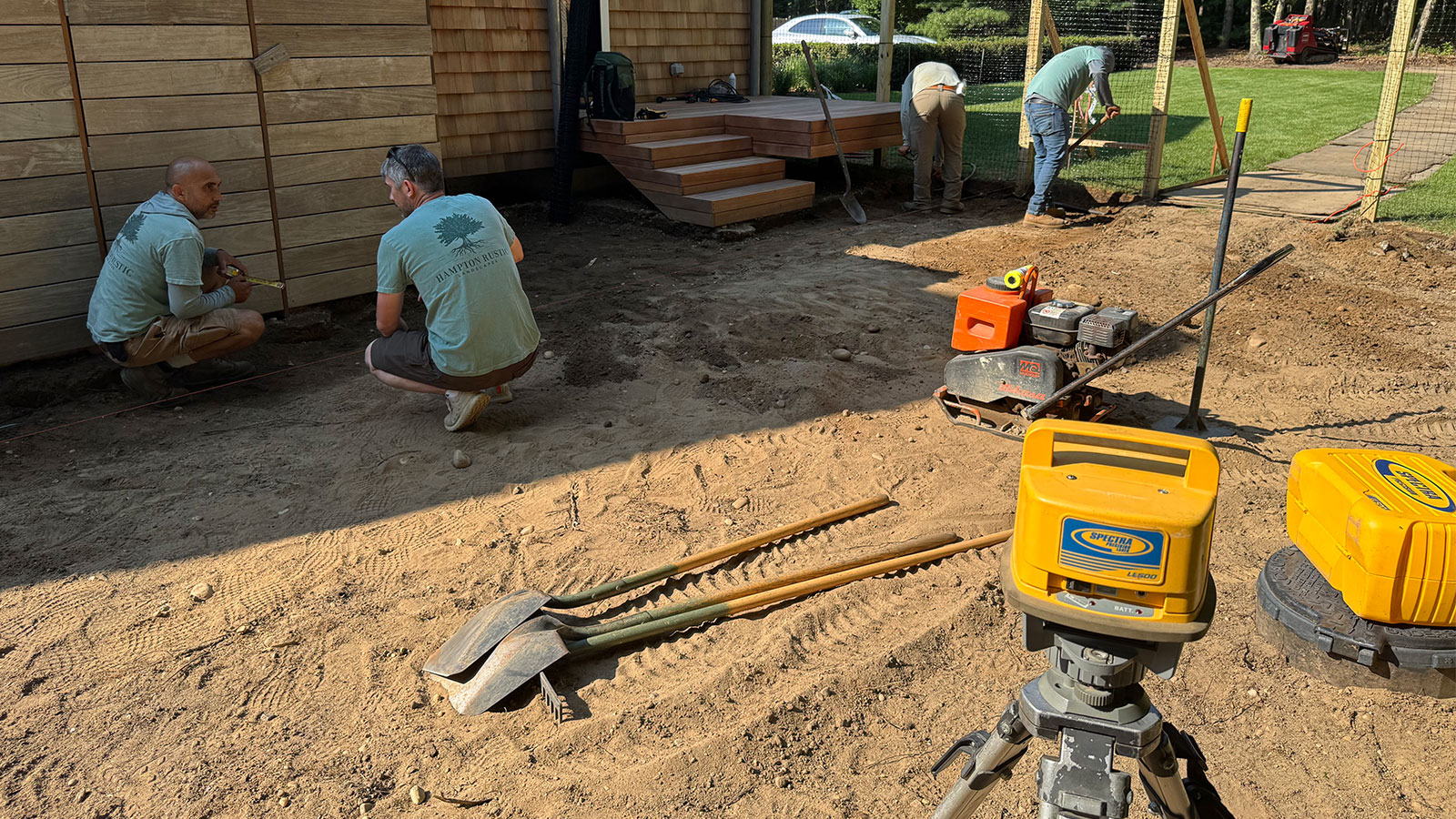
Matt Stengel’s hands-on expertise. Site development is not delegated. Matt personally conducts the initial site evaluation, takes laser elevation readings, develops the drainage plan, and oversees installation from the first grade to the final backfill. His depth of knowledge in hydraulics, soil science, and Hamptons-specific site conditions is what clients are hiring when they call us.
A scientific approach, not guesswork. We bring a transit laser to every site evaluation, record precise elevations, and document all findings on the site plan before any work begins. Drainage isn’t eyeballed—it’s engineered, with grades and pitches calculated to move water predictably away from foundations, hardscapes, and lawn areas toward properly placed collection points.
The invisible infrastructure that protects your investment. The drainage system, the subgrades, the elevation relationships between your front step and your pool deck—none of this is visible once the project is complete. But it determines whether your landscape performs beautifully season after season, or settles, buckles, and floods. We take the time to get it right because we know what it costs when it isn’t.
Deep familiarity with East End regulations. Work near wetlands, dunes, or Nature Conservancy land on the East End is heavily regulated by the towns of Southampton and East Hampton. Matt is licensed through both, has established relationships with town contacts at each, and navigates the permitting and compliance requirements that can stall—or completely derail—a project for owners who aren’t prepared. Re-vegetation, dune stabilization, wetlands setbacks: we know the rules, and we follow them.
Property protection throughout the process. A job site that isn’t carefully managed can do as much damage as it repairs. We build plywood access roads into existing properties before any heavy machinery moves through, protecting driveways, lawn areas, and plant beds from the wear of equipment and foot traffic. When the work is done, those roads come out one board at a time, and the site is cleaned and restored before we leave.
How the Process Works
The Site Evaluation
Every project begins with a comprehensive walkthrough. Matt meets with the homeowner or property manager, walks the entire property, and spends time understanding both what exists and what the client needs. This initial evaluation covers existing elevations and soil composition, drainage patterns across the property, and any problem areas—particularly pooling near the foundation or in low-lying areas.
Soil samples are collected and sent for testing. A recent survey and site plan are reviewed. And questions are asked that most contractors never think to ask: Where does water collect during a heavy rain? Are there areas near the house that stay wet? Has anything changed on neighboring properties recently that might be redirecting runoff?
Setting Elevations from a Single Reference Point
One of the less obvious principles of site development is that everything—every grade, every drainage pitch, every surface elevation—flows from a single reference point: the height of the front step.
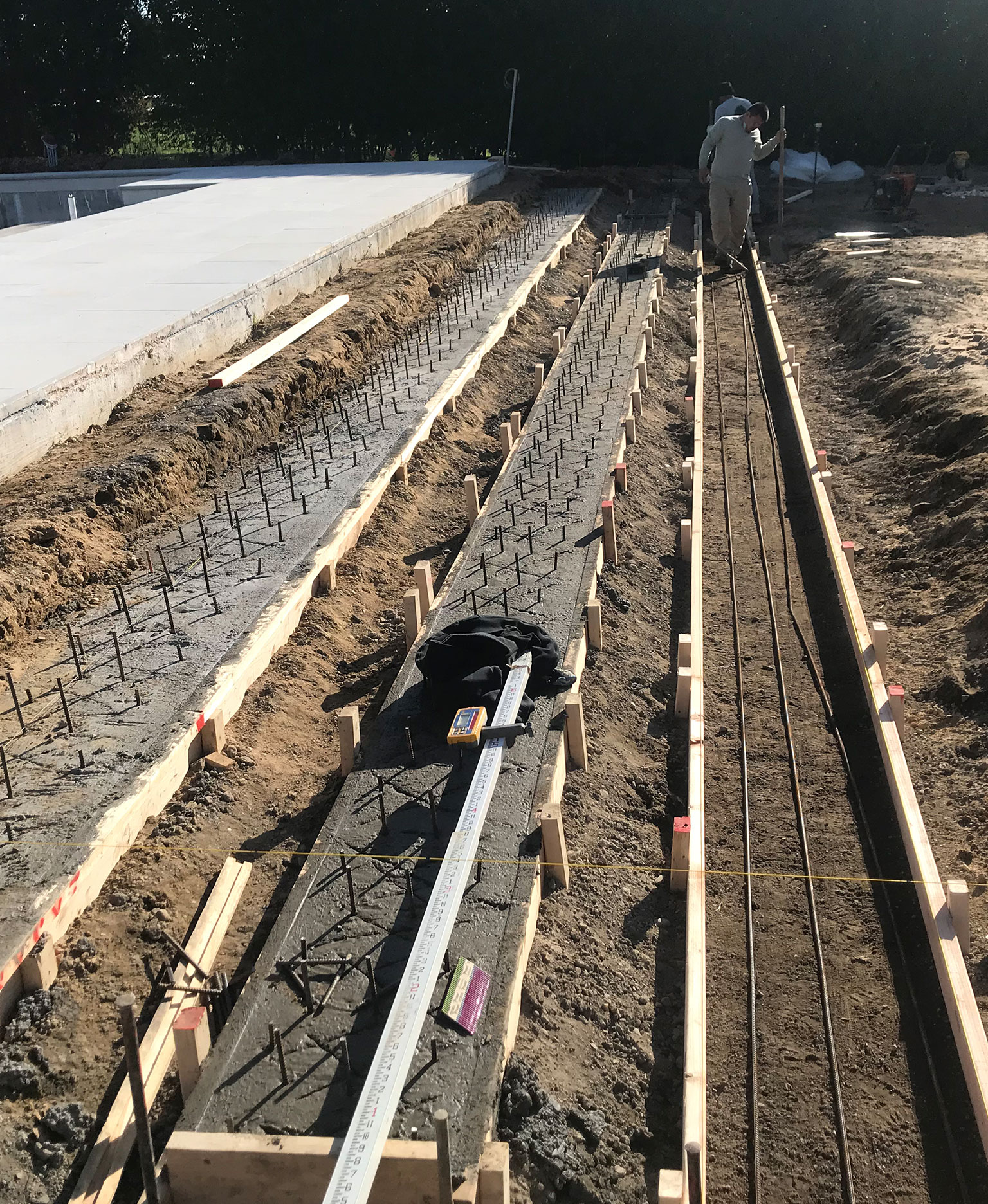
That step elevation establishes the surrounding grades, which in turn determine where water moves and how it behaves across the entire property. From there, sub-grades beneath driveways, walkways, and patios are all set in relationship to that original height. Matt uses a transit laser to calculate and record these elevations precisely before any earth is moved, creating a documented record that guides every phase of the work that follows.
Subgrade Preparation
What lives beneath your hardscapes matters enormously— and it’s something most homeowners don’t know to ask about. A patio that settles unevenly, a pathway that buckles with frost heaves, a driveway that develops low spots over time: these failures almost always trace back to subgrade work that wasn’t done properly or at all.
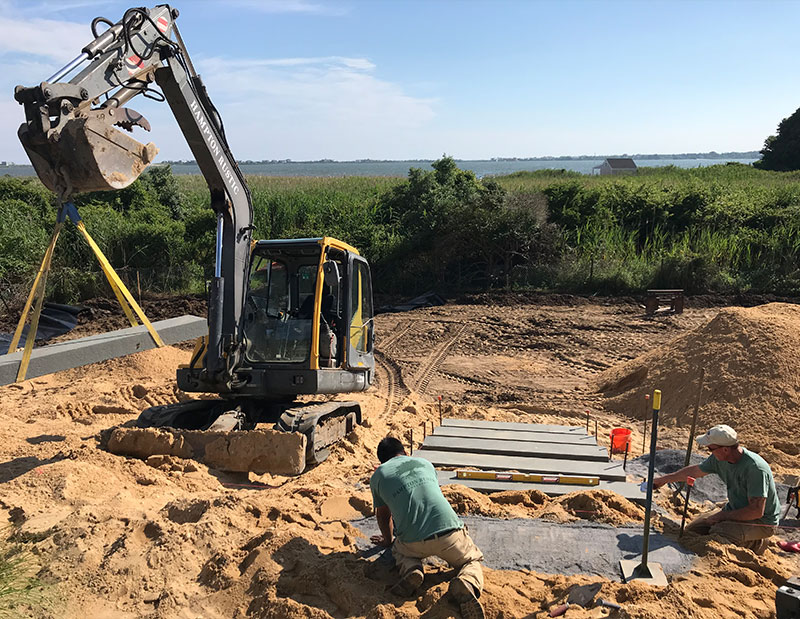
Before any surface material is installed, we excavate the existing soil—typically six to twelve inches depending on the application—and replace it with the appropriate layered subgrade. This generally includes a drainage sand layer, followed by a compacted crushed stone or processed stone base, each set at precise depths and elevations to ensure long-term stability and proper drainage. When this work is done correctly, surfaces stay level, water moves off them cleanly, and the material above holds up year after year.
The Drainage System
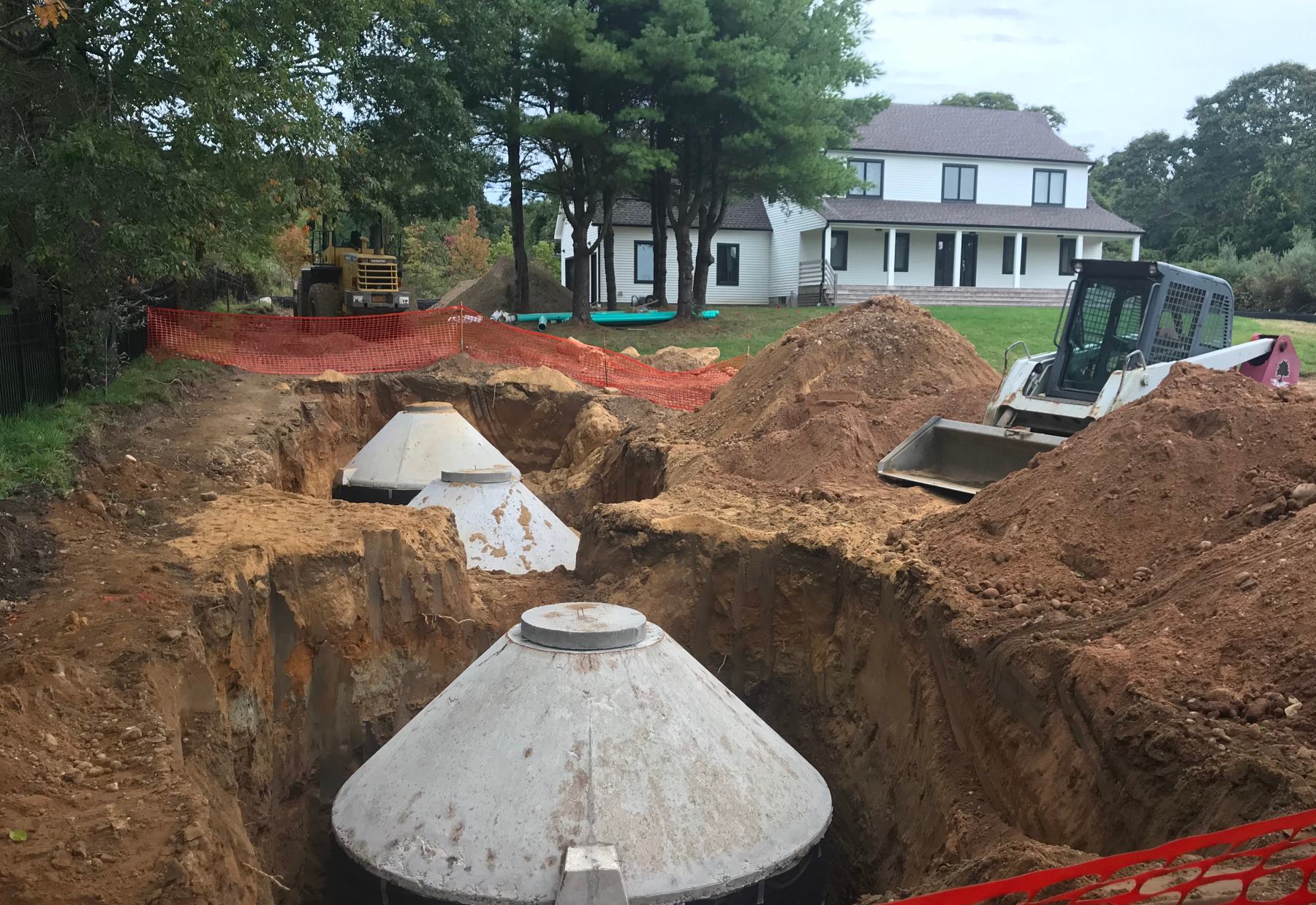
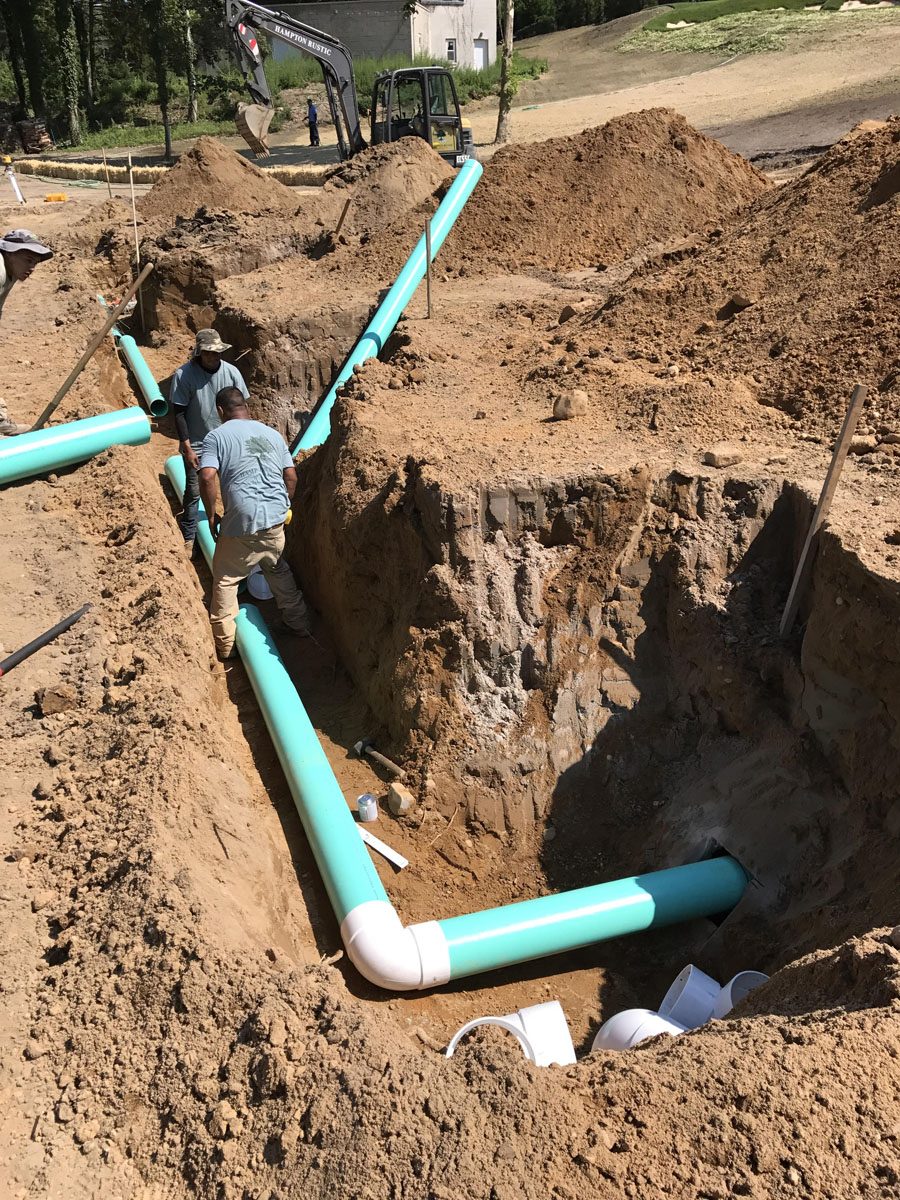
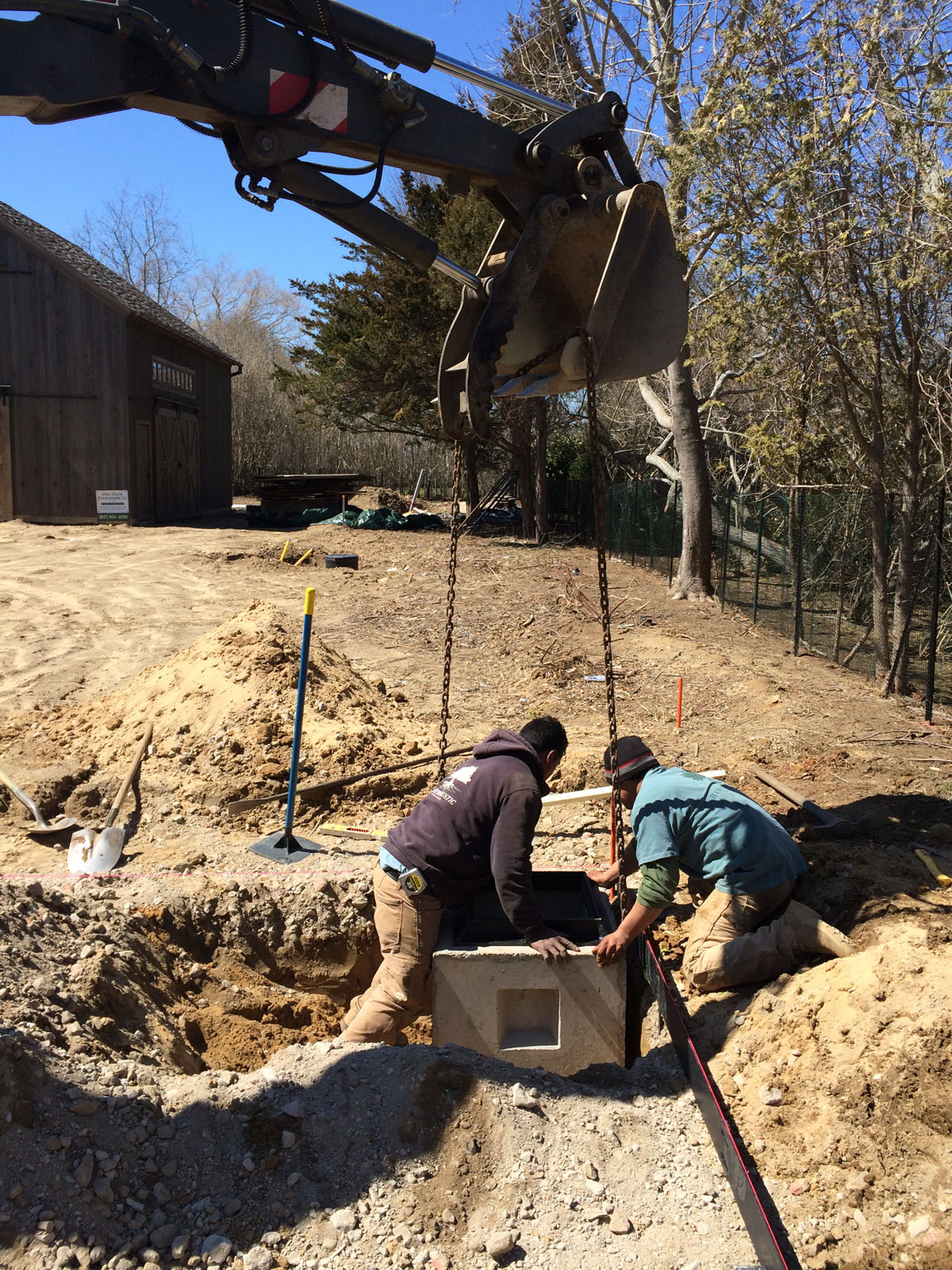
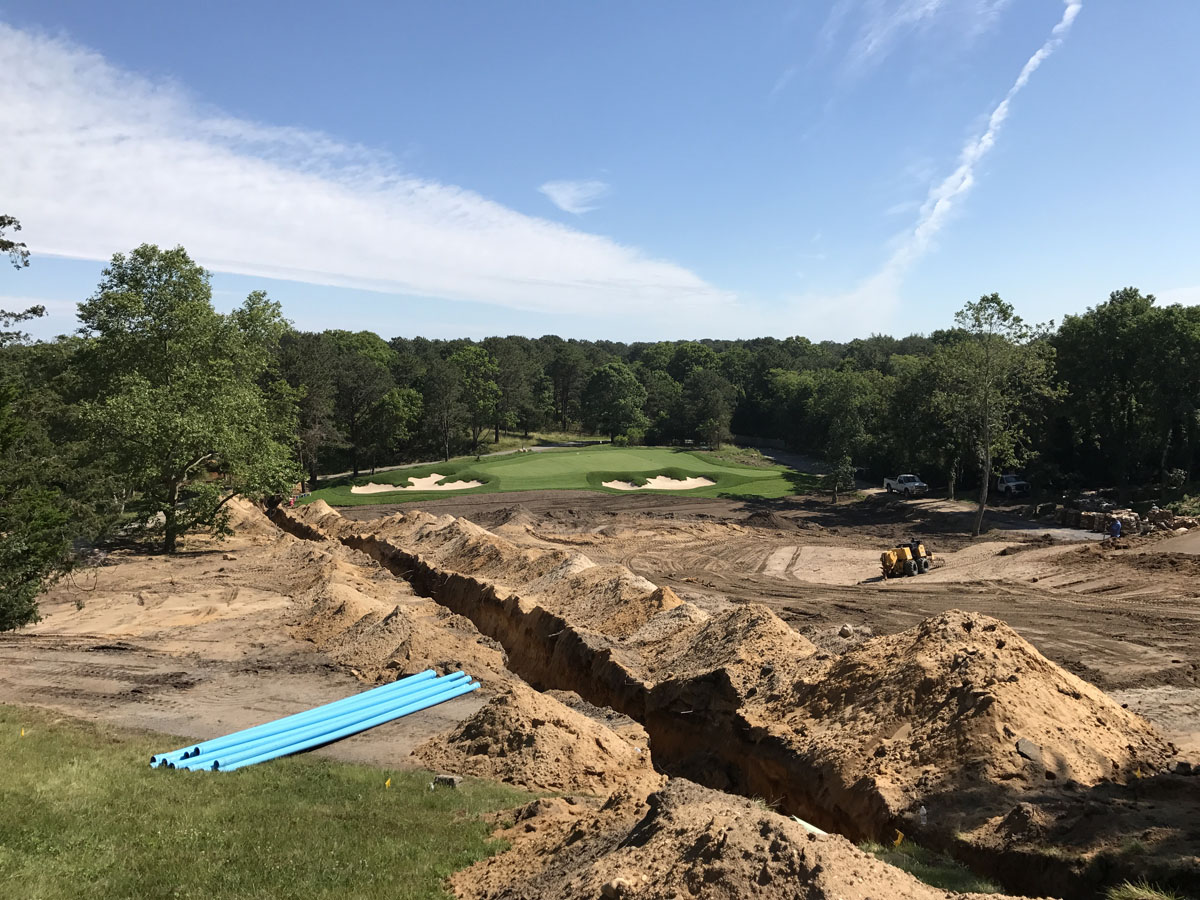
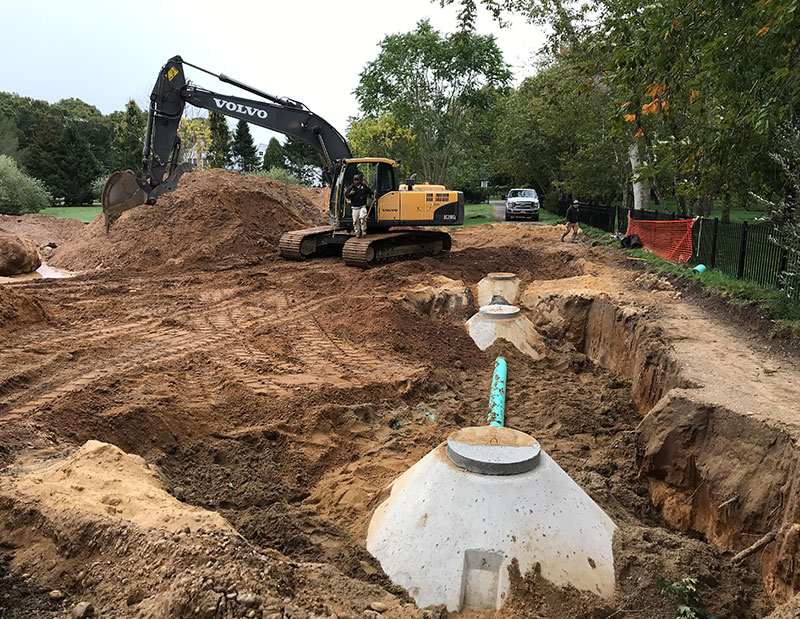
A well-engineered Hamptons property will have five or six drainage collection points built into the landscape, and most visitors would never notice them. French drains, dry wells, catch basins—these elements work together as an invisible network that collects and disperses water across the property.
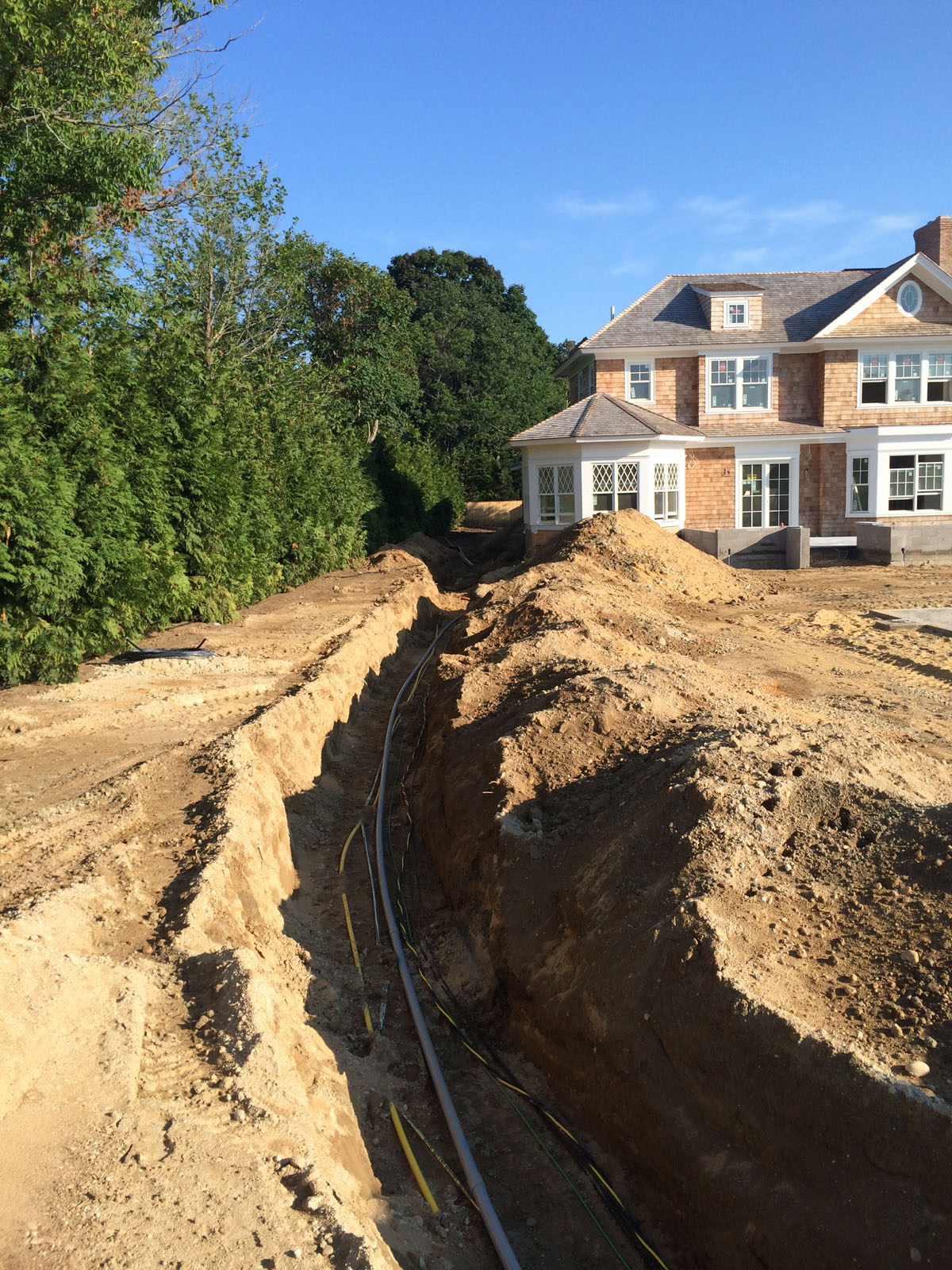
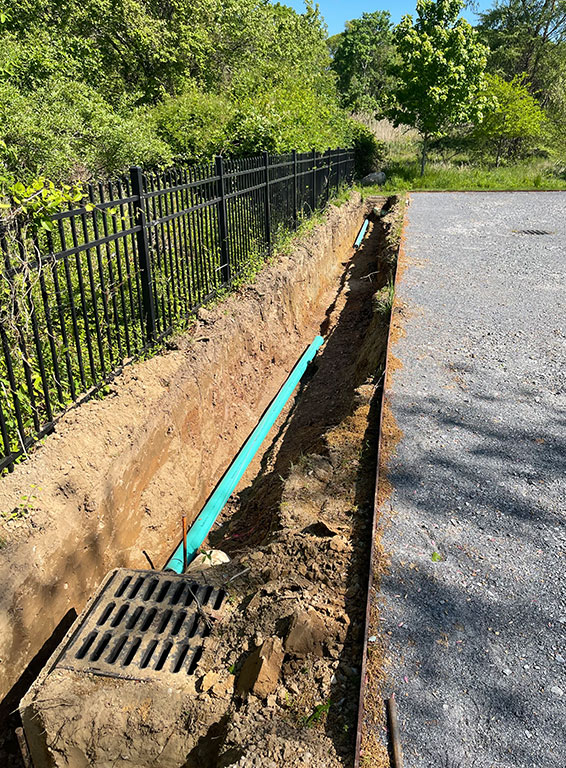
Roof runoff travels from gutters through downspouts that connect underground to drainage pipes. Those pipes run through buried trenches to French drains or dry wells, where water slowly percolates back down into the aquifer below. Soil and subgrades are shaped and graded to naturally funnel surface water toward these collection points. When you look carefully at a properly drained property, you begin to see how every surface—every slight pitch, every subtle contour—is oriented to move water to the right place.
These systems serve the entire property. At the end of pool season, when water needs to be drained to prevent freeze damage, the same dry wells handle the volume cleanly. There’s no flooding the turf, no searching for somewhere to redirect the hose—it goes into the drain and disappears.
When Site Work Is Complete
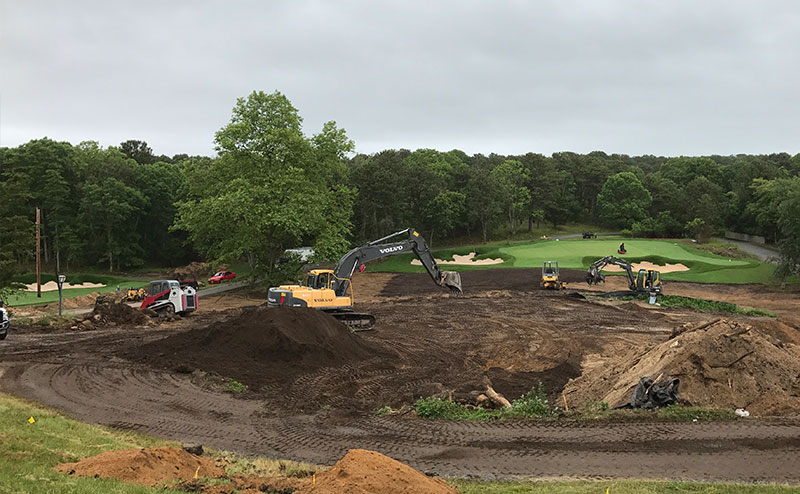
There is a moment on every job site when the underground work is finished and the visible landscape is about to begin. The dry wells are installed. The trenches are backfilled. The contours of the graded soil are exposed, and you can see—clearly, before any lawn or plantings obscure it—exactly how the property will drain and settle. That’s when Matt knows the site is ready.
From that point, the project transitions to landscape installation: lawn establishment, plant beds, hardscapes, and everything above ground. Most of the time, sod is used to stabilize the soil quickly and create an immediate lawn surface. But the sequence matters, and site development always comes first.
Renovation and Repair Site Work
Not every site development project starts with bare earth. Many of our calls come from homeowners who have noticed something has changed—water pooling where it didn’t before, a patio that’s begun to settle, a section of lawn that never fully drains after a heavy rain.
When site work is needed on an established property, the process begins differently. We build plywood access roads from the point of entry to the work area, protecting the driveway, lawn, and any existing plant beds from equipment traffic. Excavated soil is set on plywood boards with burlap to contain and protect it while the drainage work is underway—adding drains, installing dry wells, correcting grades, or rerouting underground pipes. Once the work is complete, everything is backfilled and restored, the plywood roads come out one board at a time, and the property is cleaned and re-established as we exit.
These renovation projects are often triggered by changes that happen outside the property line:
- Neighboring construction that redirects runoff or changes natural drainage patterns
- Road repaving that raises surrounding grade and alters the relationship between the street and the driveway
- Storm damage following hurricanes or nor’easters, which can overwhelm existing drainage infrastructure or introduce saltwater inundation that eventually kills plant material and destabilizes soil
On the East End, storm-related site work is particularly common. Properties near the water that experience saltwater flooding often require complete re-grading and infrastructure repair once the damage is assessed—removing saturated material, reinforcing dune and beach grass barriers, and re-establishing the drainage network before new planting can begin.
Wetlands, Dunes, and Regulatory Compliance
Site development near wetlands, tidal areas, or dunes on the East End requires navigating a regulatory landscape that is strict, detailed, and non-negotiable. Anything in a wetland setback, any dune re-vegetation, any work on a Nature Conservancy-adjacent property must be reviewed and approved by the town before a shovel goes in the ground.
This is not something to manage after the fact. Homeowners who bypass these requirements—whether knowingly or not—may find they cannot sell their property or obtain a Certificate of Occupancy until the issue is remediated. That remediation can cost multiples of what the original permitted work would have required.
Hampton Rustic Landscapes is licensed through both Southampton and East Hampton. Matt has established working relationships with the environmental departments at both towns and understands the full scope of what each project requires from a compliance standpoint. When a re-vegetation project or dune stabilization is needed, we handle the permitting process, coordinate with town officials, and ensure that every aspect of the work meets current standards—protecting both the property and the investment our clients have made in it.
Signs That Site Work May Be Needed
Site development issues often go unaddressed because the symptoms are easy to attribute to other causes. If you’ve noticed any of the following, it may be worth having Matt walk the property:
- Standing water on lawns, patios, or near the foundation after rain
- Uneven or settling hardscape surfaces—patios, walkways, or driveways that have shifted
- Persistent wet areas that take days to drain
- A neighbor recently completed construction or landscaping work nearby
- The town or municipality repaved or regraded a road adjacent to your property
- Your property experienced flooding or storm surge from a hurricane or nor’easter
- Drainage that worked well for years has recently changed
These are not always cosmetic problems. In many cases, they’re early indicators of drainage or grade issues that will compound over time if left unaddressed.