


MASONRY
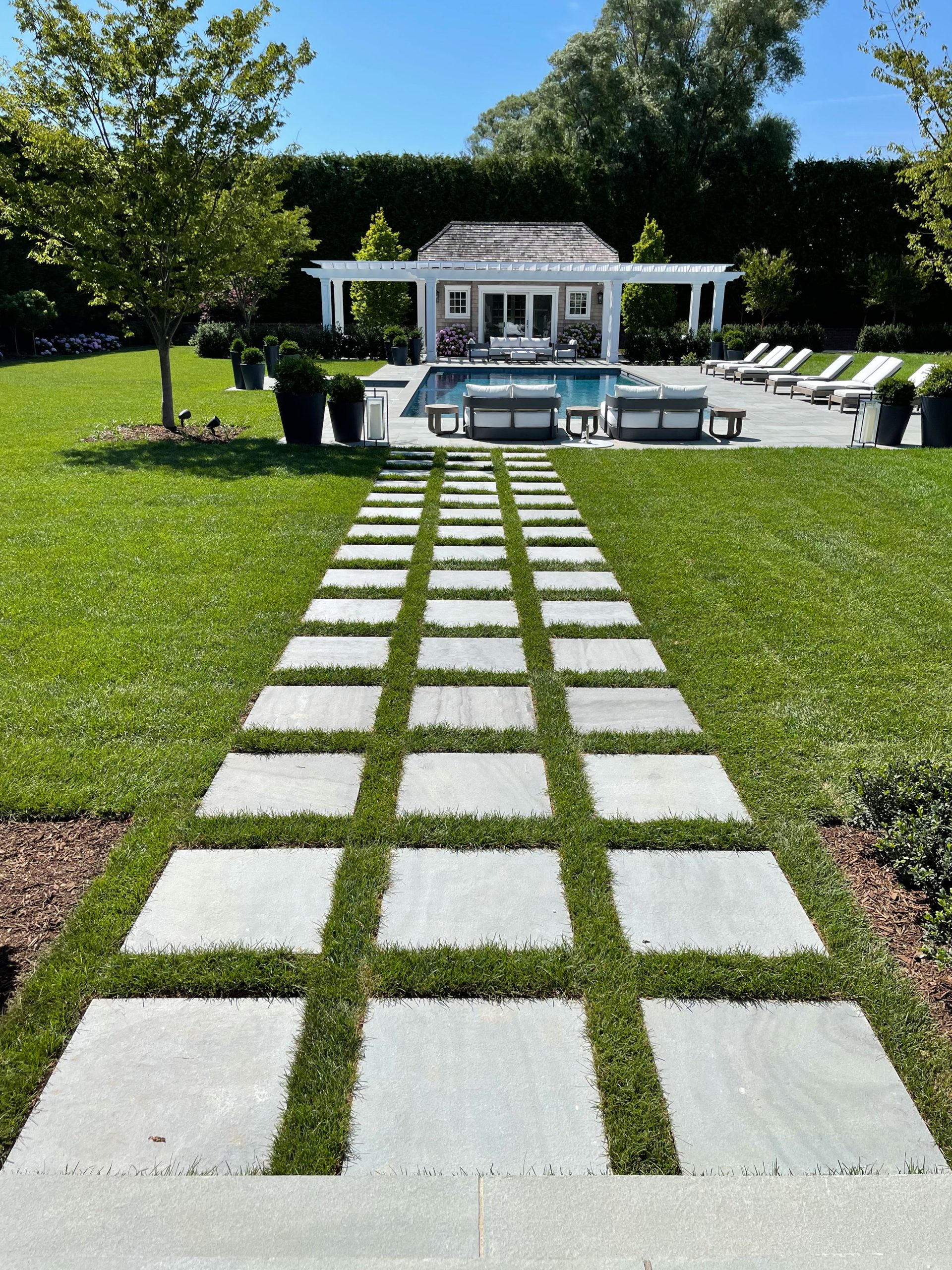
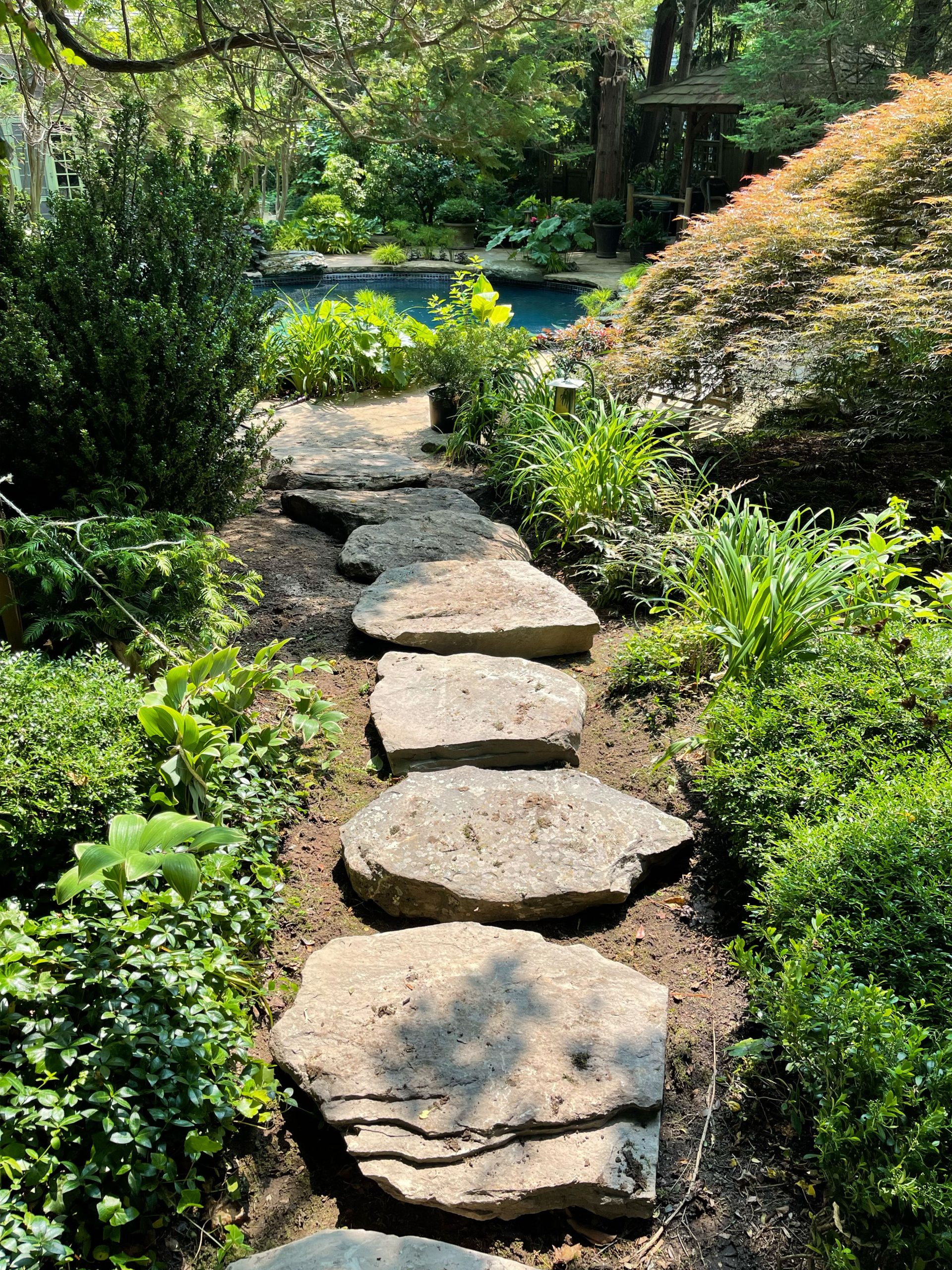
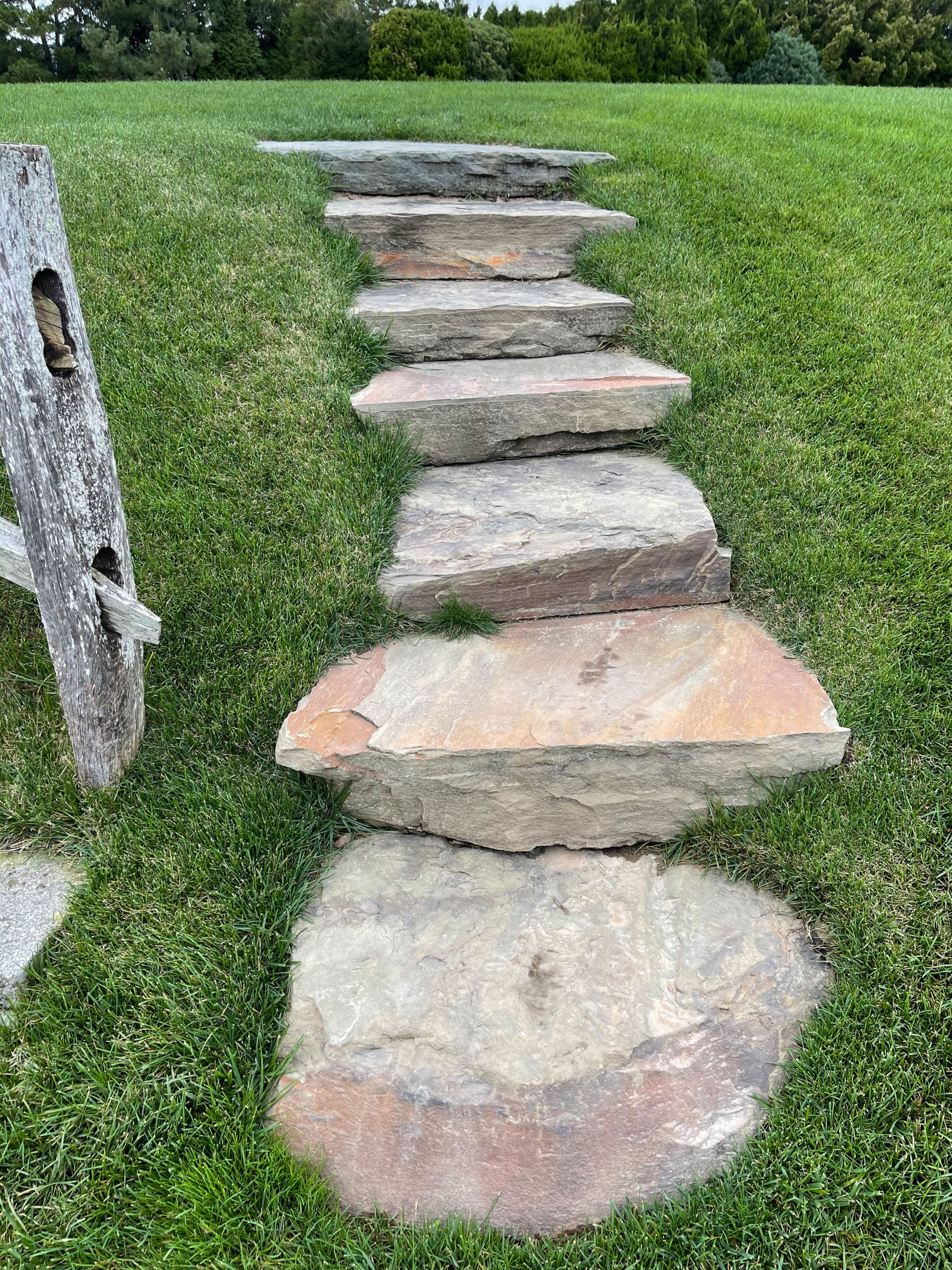
Every well-designed Hamptons property carries masonry throughout it — stone walkways that connect a pool to a terrace, transition steps that ease a grade change between lawn and garden, Belgian block aprons that frame a driveway with quiet permanence. These elements are functional and aesthetic at once, and when they’re done right, you stop noticing them. They simply feel like the property.
But masonry doesn’t exist in isolation. The longevity of any stone installation is determined less by the stone itself than by what’s beneath it and around it: the grade, the drainage, the sub-base preparation. Without getting those fundamentals right first, even the most beautifully laid bluestone will shift, settle unevenly, and require constant resetting. At Hampton Rustic Landscapes, masonry begins the same way every other phase of landscape work does — with the ground, the water, and the grade.
For smaller-scale masonry — pathways, transition steps, stone edging, retaining walls — we handle the work in-house, with the Hampton Rustic team overseeing every phase from drainage assessment through final installation. For larger-scale hardscape projects involving outdoor kitchens, fireplaces, or significant patio construction, we coordinate with a trusted network of licensed masons, managing design intent, drainage coordination, and project continuity so that the masonry work integrates seamlessly with the broader landscape plan.
The Hampton Rustic Difference
Drainage is addressed before a single stone is laid. Most masonry failures aren’t craftsmanship failures — they’re drainage failures. Water that has nowhere to go will find its way under your stonework, and the freeze-thaw cycle will do the rest. We assess grade and drainage first, establish or adjust drainage systems where needed, and build the masonry from that foundation. It’s the difference between stone that stays put and stone that requires resetting every few years.
We know your property. When masonry is part of a larger Hampton Rustic project — or when it’s added to a property we already maintain — we bring complete knowledge of where irrigation lines run, how drainage flows, and what the site’s quirks are. An outside mason brought in for a single job doesn’t have that context. We do, and it prevents the kind of costly mistakes that come from treating masonry as a standalone project rather than an integrated part of a living landscape.
Right-sized expertise for every project. Not every masonry project requires a dedicated masonry contractor, and not every project should be handled without one. We do the smaller, detail-oriented work — pathways, transition steps, edging, retaining walls — in-house, with the same precision and attention to sub-base preparation that we bring to every phase of landscape installation. When a project calls for a specialized mason, we coordinate that partnership and remain actively involved through every stage.
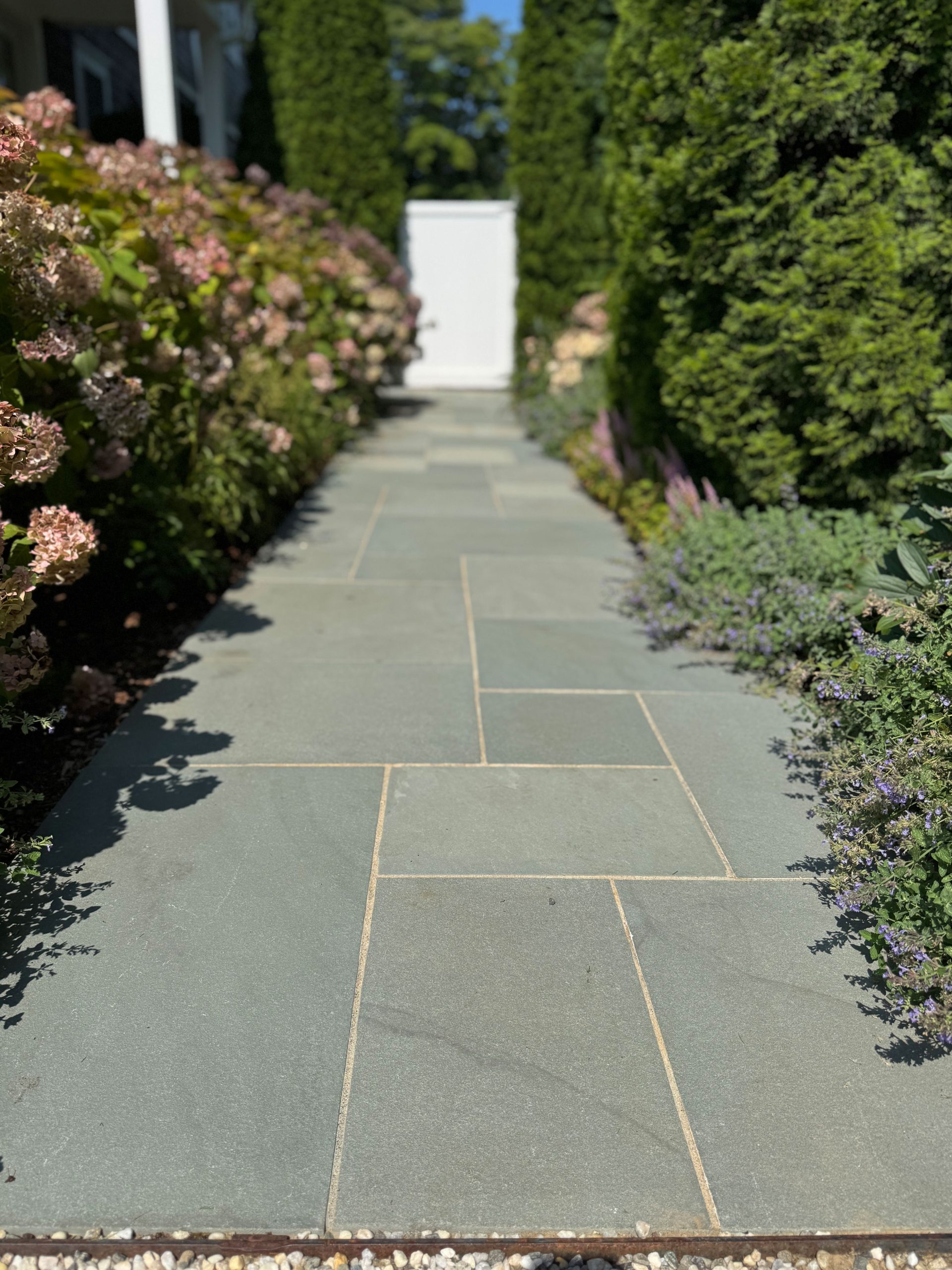
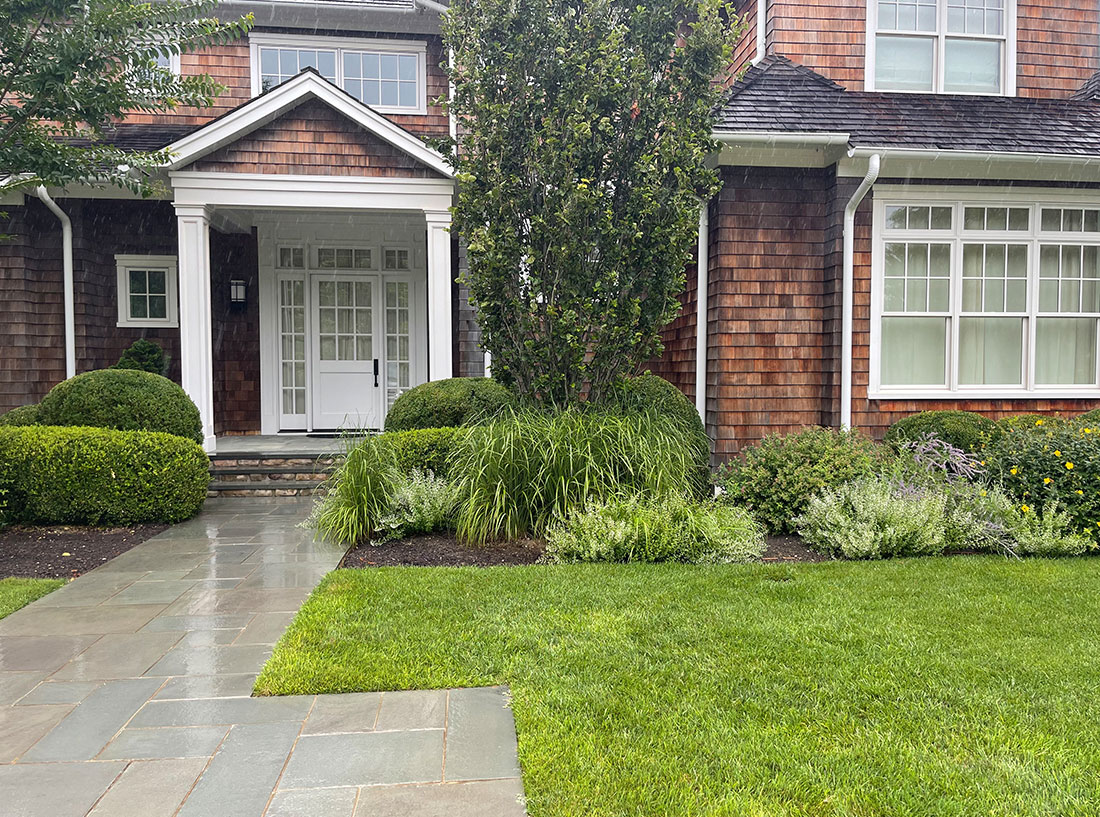
Material selection guided by real-world performance. Pennsylvania bluestone has become the standard across East End estates for good reason: it’s durable, readily available, and its neutral gray tone works with virtually any landscape palette without competing with it. It also doesn’t retain heat the way marble or more exotic stone can — a practical concern around pools that is sometimes overlooked in the design phase. We understand the performance characteristics of every material we work with, including how lot coverage regulations affect what you can and can’t do with concrete-set versus sand-set installations.
Masonry maintenance is built into how we work. Pathways set in stone dust rather than concrete require periodic attention — frost heaves after hard winters, stone dust that needs replenishment in the joints, biological growth that builds on the stone surface over time. Because we’re already on your property as part of a maintenance program, we monitor for these issues, address them proactively, and handle the hand-washing and adjustment work before it becomes a more significant repair.
The Process
1. Site Evaluation and Drainage Assessment
Every masonry project begins with a careful look at drainage and grade. If we’ve done prior work on the property, much of this information is already established — we know the drainage layout, the elevation references, and where water moves. For new clients or first-time masonry additions, we walk the site, assesses how water drains, and determines what grade work or drainage system adjustments are needed before any excavation begins. This evaluation also accounts for lot coverage regulations, which affect whether a project can be set in concrete or requires a sand-and-stone-dust installation.
2. Excavation and Sub-Base Preparation
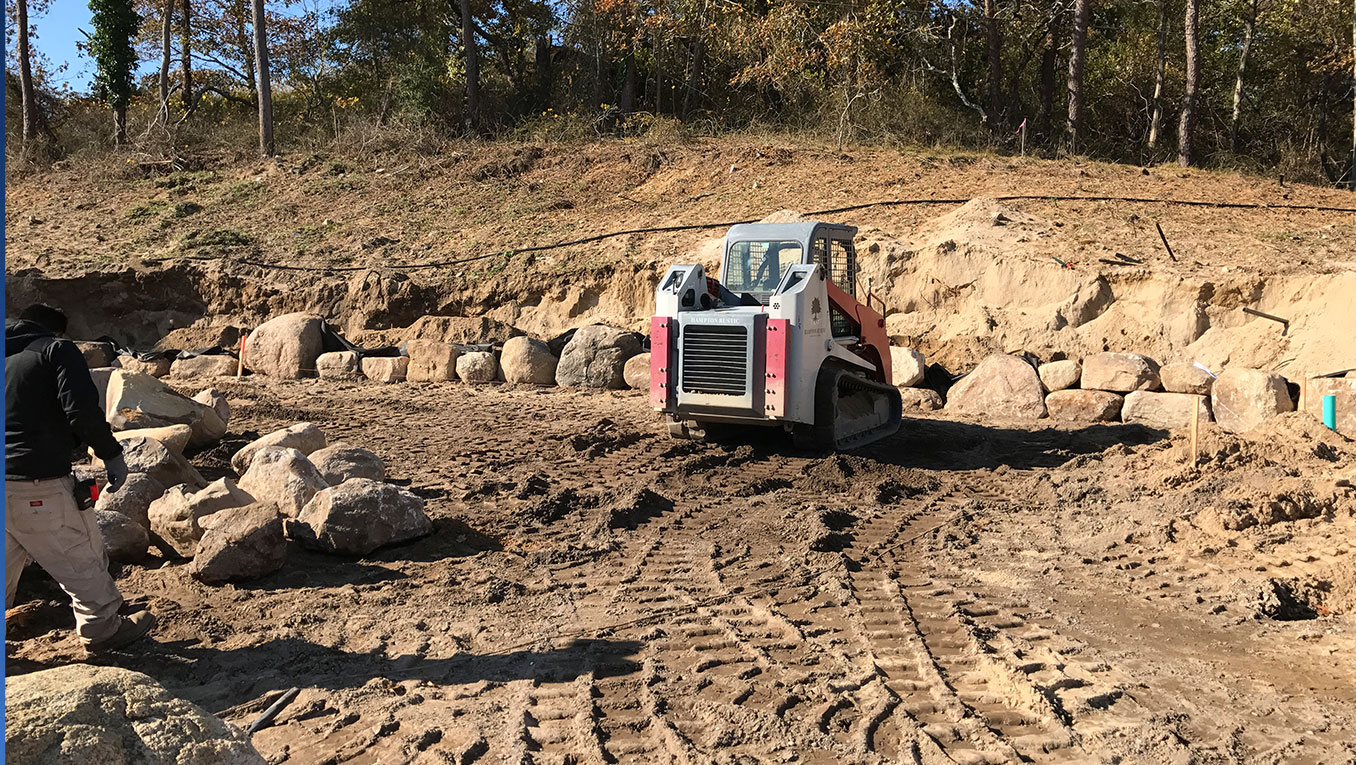
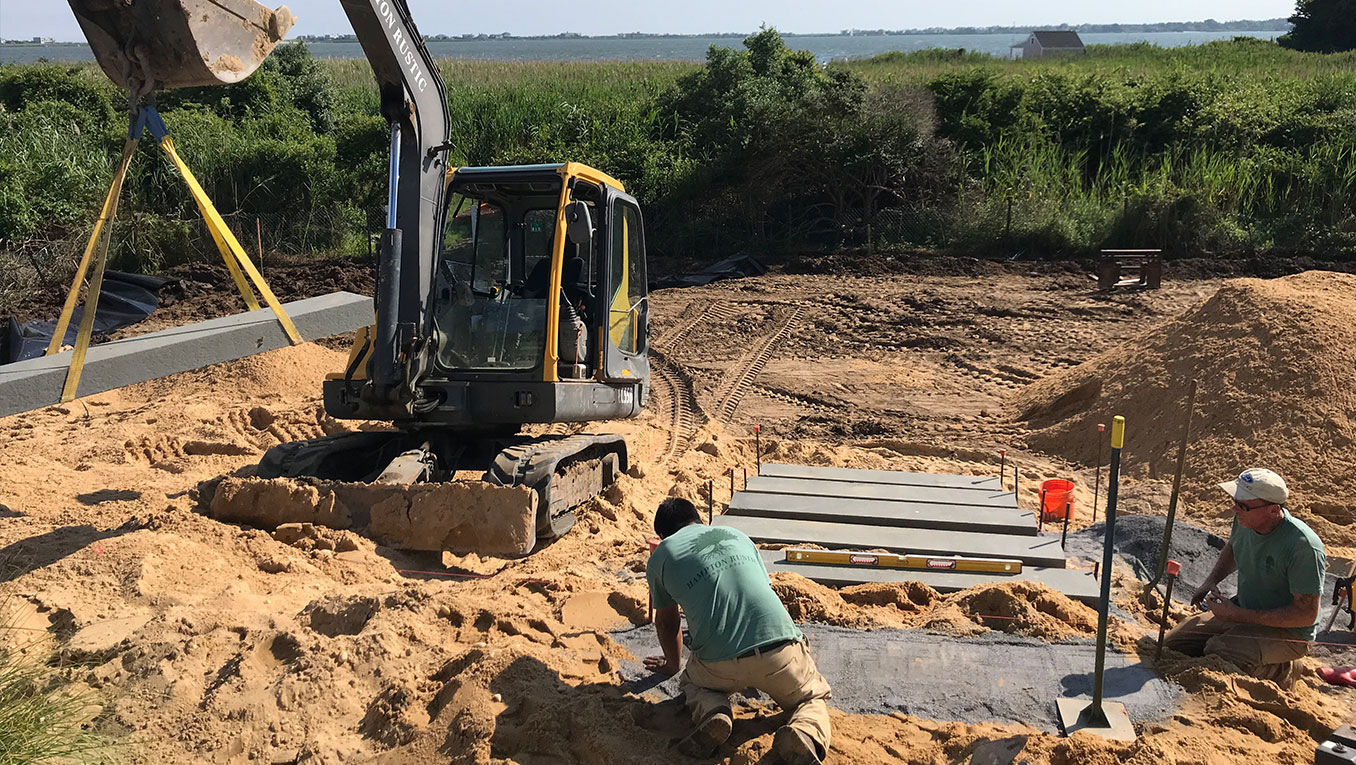
What’s below the stone is what determines how long it lasts. Depending on the scope of the project, we excavate twelve to eighteen inches below the finished surface. That excavation is filled in layers: a drainage sand base is installed first, compacted thoroughly, and then topped with a layer of stone dust — a fine, powdery material that compacts extremely well and has the added benefit of being uninviting to ants and other insects. Once both layers are fully compacted, the surface is ready to receive stone. The consistency of this sub-base is what allows the finished installation to carry foot traffic, absorb weather cycles, and remain level over time.
3. Stone Selection and Material Specification
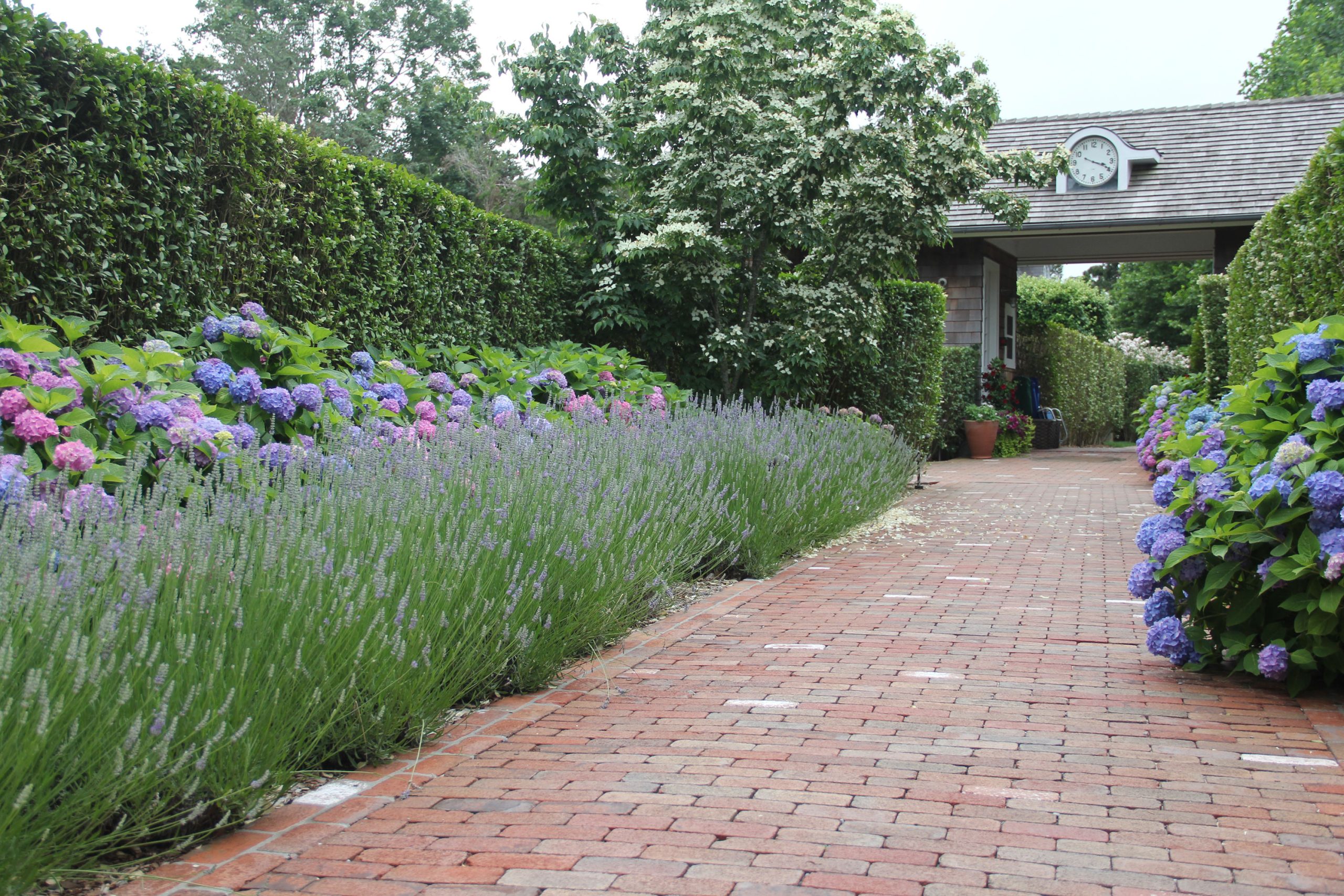
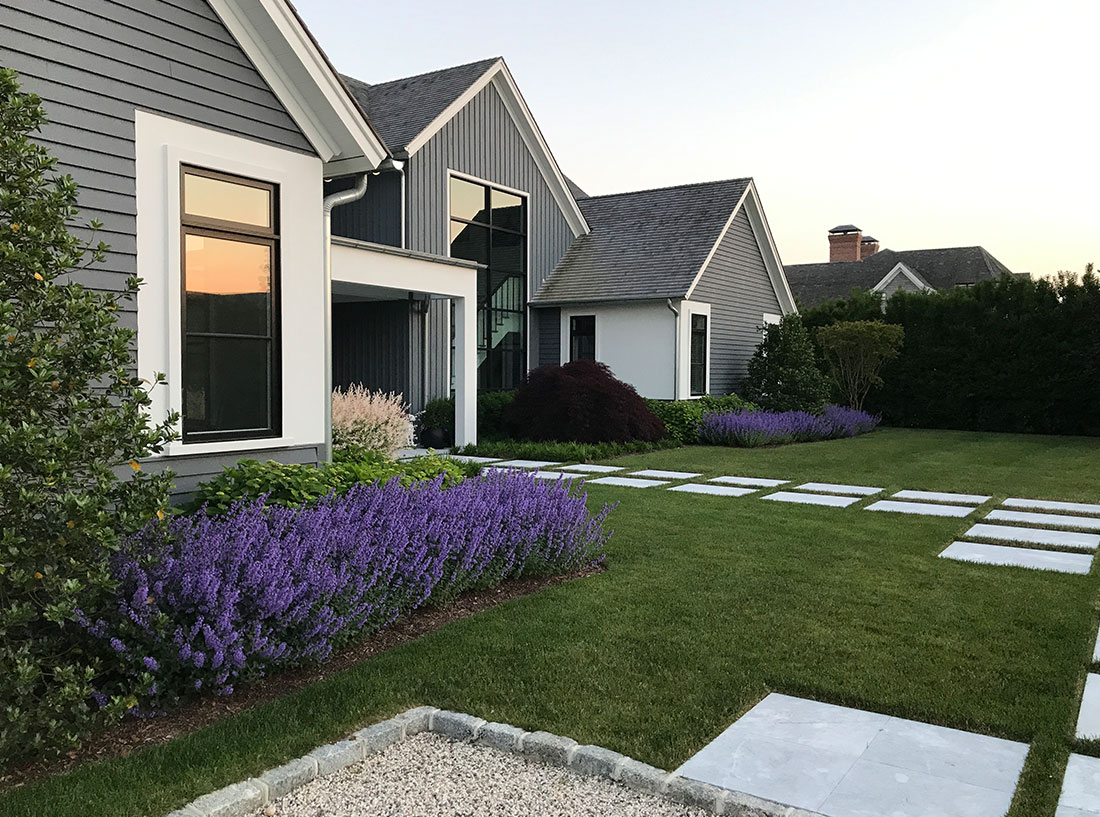
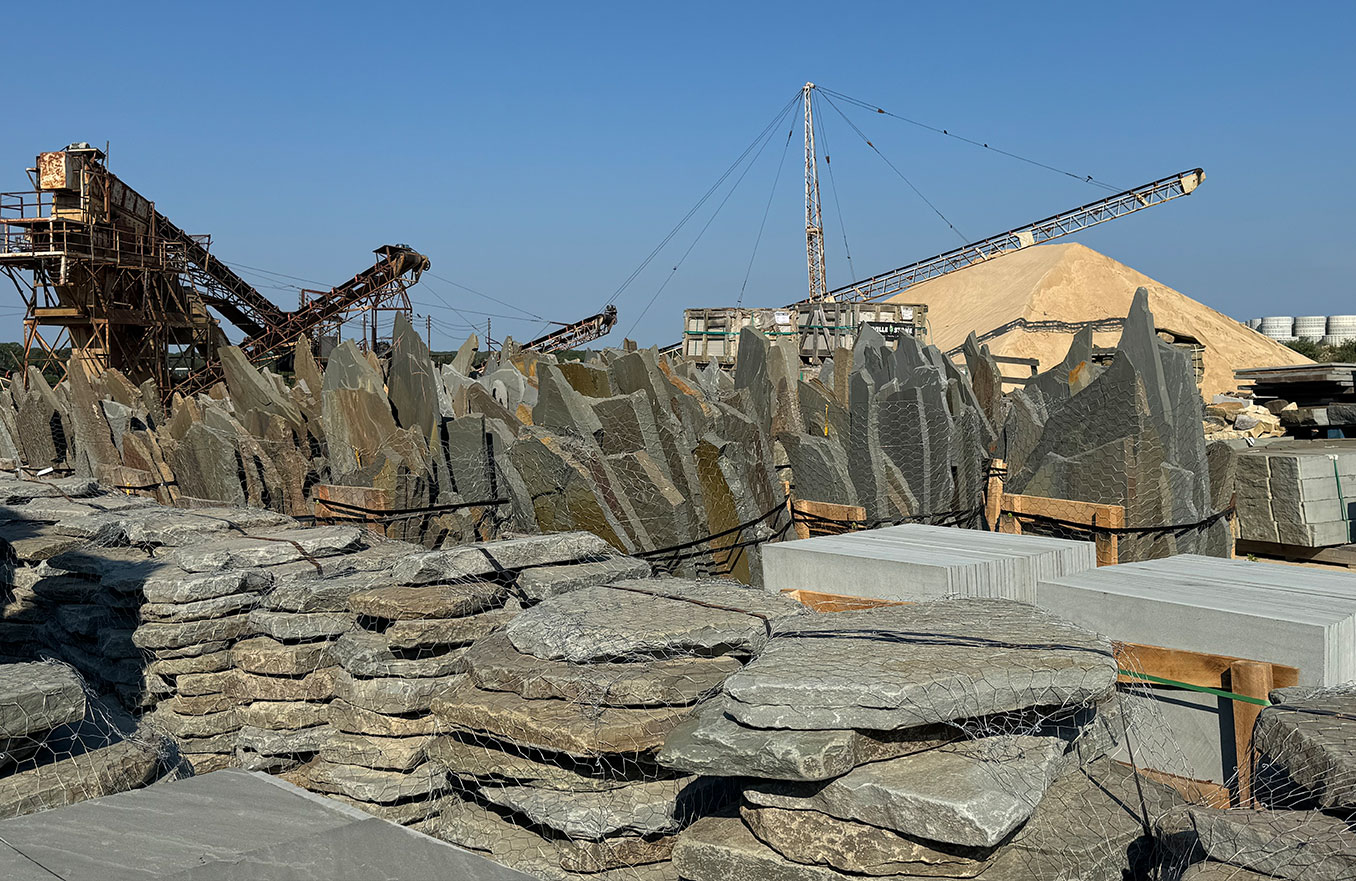
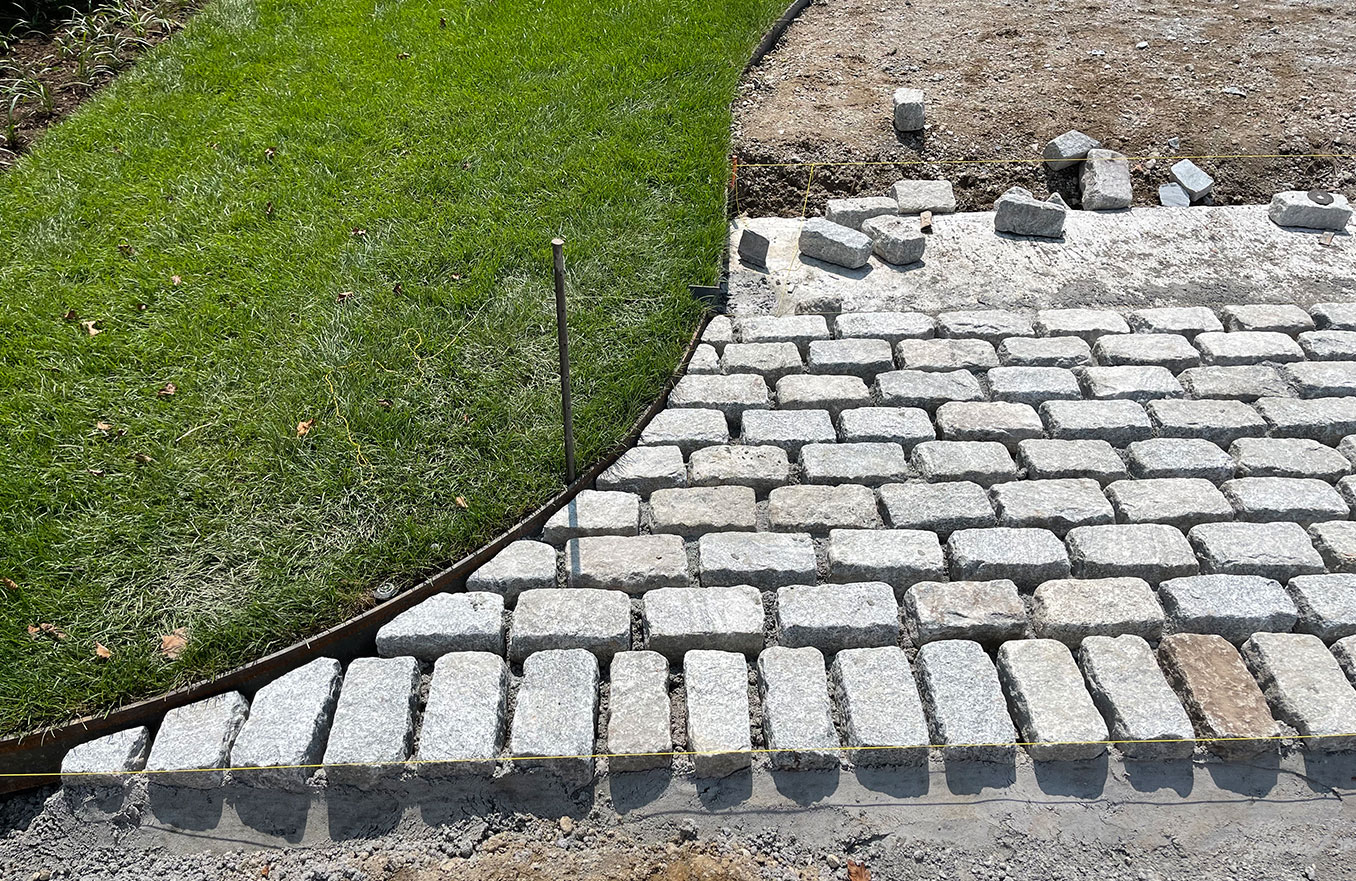
Pennsylvania bluestone is the most commonly specified material on East End estates, and for good reason. It’s durable, neutrally toned, and doesn’t hold heat the way harder or more polished stones do — a meaningful consideration for pool surrounds and barefoot traffic areas. Old English brick offers a different character entirely: recycled, no longer manufactured, and distinctive in the way only reclaimed materials can be, though its scarcity makes it a more specialized choice. For edging, we use three-quarter-inch steel in custom-bent configurations rather than the lighter-gauge material found at big-box retailers. The difference in durability is substantial — the heavier gauge stands up to vehicles, maintenance equipment, and years of seasonal ground movement without bending or shifting. Belgian block aprons at driveways provide a traditional East End finish that frames the entry and holds the driveway edge cleanly.
4. Installation and Joint Finishing
Stone is set over the compacted sub-base, carefully placed and adjusted for level and alignment. For installations without concrete-set joints, additional stone dust is swept across the surface and worked into the gaps between stones, where it settles and locks the material in place. Projects requiring concrete masonry joints are handled where appropriate — and where regulations permit — with careful attention to the joint work that determines both the appearance and the longevity of the installation. Retaining walls, whether poured concrete or block construction, are finished to integrate with the surrounding landscape: painted in dark, receding tones and planted along their tops with trailing material — vines, grasses, low-growing perennials — that soften the structure and help it disappear into the property.
5. Seasonal Monitoring and Ongoing Care
Sand-and-stone-dust installations require more attention in the first three to five years, as the sub-base materials continue to compact and settle into their final position. During this period, we monitor for frost heaves after winter — ground movement from the freeze-thaw cycle that can raise or shift individual stones — and make corrections as needed. Stone dust in the joints is replenished periodically, and biological growth that accumulates on stone surfaces over wet seasons is addressed through hand-washing with Simple Green and scrub brushes. We avoid pressure washing on bluestone, which can chip and erode the surface; hand-washing preserves the material while keeping it clean and safe underfoot. As the sub-base fully stabilizes, the maintenance requirement decreases significantly.
Understanding Lot Coverage and Regulatory Considerations
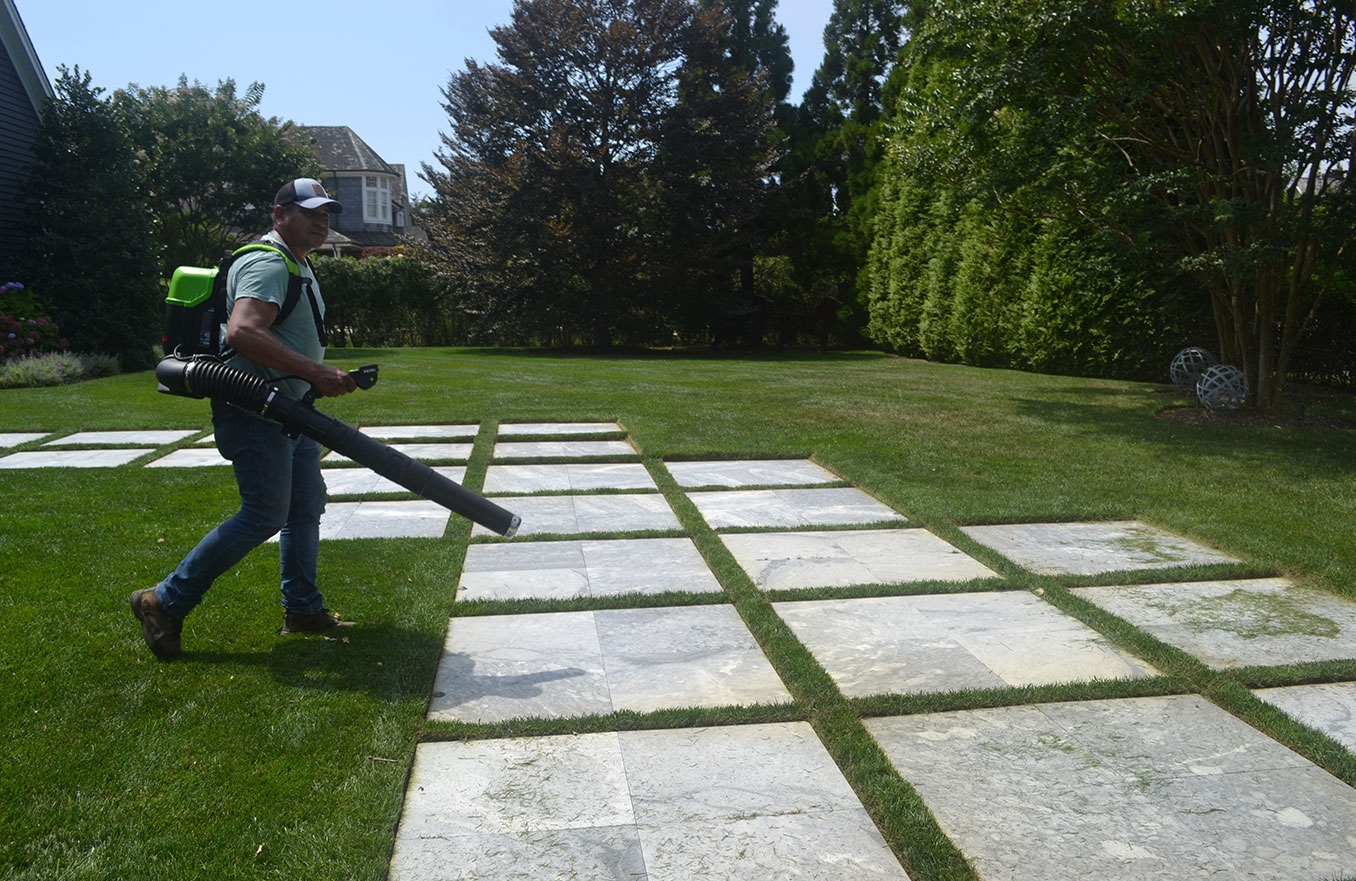
On many East End properties, lot coverage is a real constraint. Masonry set in concrete — including patios, walkways with cemented joints, and paved surfaces — counts toward a property’s allowable lot coverage and typically requires a permit. Gravel, stone-dust-jointed pathways, and grass-separated stepping stones do not. This distinction matters when a property is approaching its coverage limit, and it affects how we specify each project.
For parking areas where hardtop coverage would exceed the limit, grass-blocking systems offer a practical solution — interlocking plastic grid panels filled with soil and seeded, which provide a firm surface that supports vehicle weight without counting as impervious coverage. We’ve installed these on several estate properties where parking demand and coverage regulations were in direct tension, and they perform well when properly installed and maintained.