

Beyond Hydrangeas: Five Plants That Quietly Define Great Hamptons Landscapes
FROM THE GARDEN
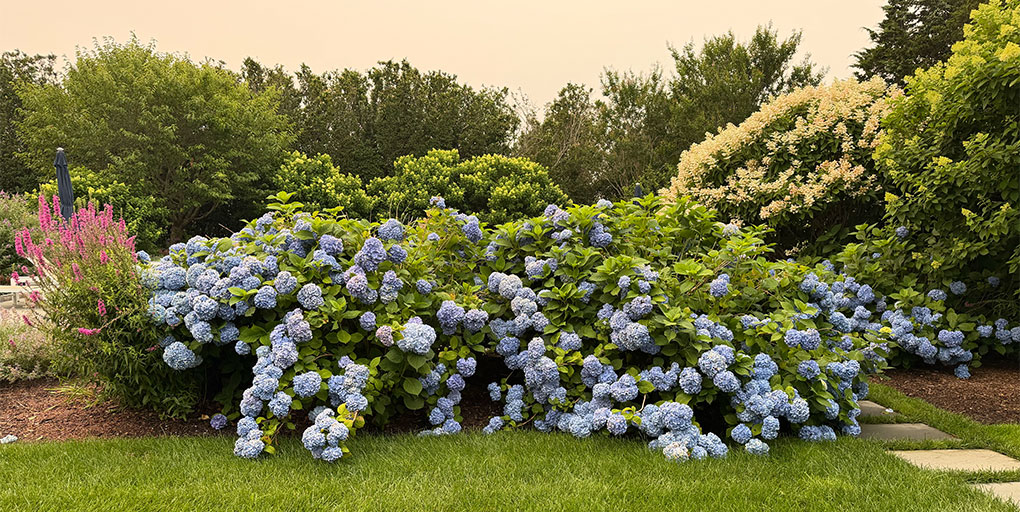
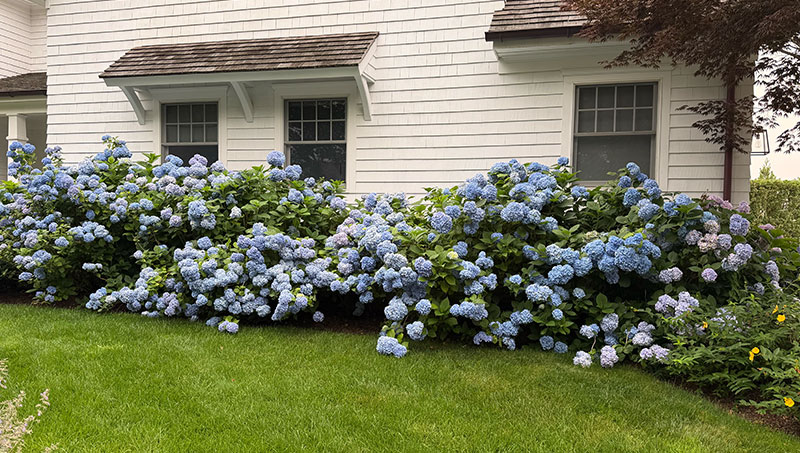
Drive down nearly any lane on the East End in July and you will find them: great mounded blooms of blue leaning over a white picket fence, set against cedar shingle that has gone the soft, silvered gray only decades of salt air can produce. It is, without much argument, the flower most associated with this place. Roses come and go with the decade, and the trends of one era look almost embarrassing in the next, but the hydrangea has never fallen out of favor. It simply belongs here, the way a good pair of jeans belongs in a closet no matter what else is fashionable that season.
There is a reason for that staying power beyond nostalgia. The soil, the light, and the water on the East End happen to be exactly what a hydrangea wants, which is part of why the plant reads as so effortlessly regional. And yet, walk two neighboring properties in July and you may find one wall of hydrangea in full, saturated bloom and the next looking thin, pale, or barely flowering at all, despite what appears to be the same sun, the same rainfall, the same salt-laden breeze off the water. The difference almost never comes down to luck. It comes down to four things, and this month we want to walk through exactly what they are.
THE HAMPTON RUSTIC APPROACH
Most hydrangeas on the East End thrive in the same basic recipe: organic, well-drained soil and full sun, both of which we have in abundance here. The variable that trips people up is water, specifically how it is delivered. A hydrangea watered at its base, with the moisture pushed down through well-drained soil, sends its roots downward in search of it. A hydrangea watered from above by a lawn sprinkler keeps its roots shallow, right at the surface, because that is where the water is. Come the height of summer, that top layer of soil is the first to dry out, and a plant with a shallow root system has nothing left to draw on.
This is also why so many perfectly healthy hydrangeas appear to be dying on a hot afternoon and are not. The big-leaf macrophylla varieties, the classic Nikko Blue among them, lose enormous amounts of water through their broad foliage, especially when planted along bluestone or brick walkways that radiate heat back onto the plant. A hydrangea that droops at two in the afternoon and has puffed back up by evening is behaving exactly as it should. Only a plant that is still flagging the following morning has a real problem, usually a failed irrigation line, and that is the moment to call in help rather than assume the worst. New installations are the exception; for their first two to three years, before the root system has had time to establish itself, they are simply thirstier and need closer attention, particularly through their first couple of summers.
If watering habits explain why a hydrangea struggles to stay hydrated, pruning explains why it fails to bloom at all, and it is by far the more common complaint we hear. Hydrangeas fall into three categories: those that bloom on old wood, like the Nikko Blue; those that bloom on new wood, which can be cut back hard each fall; and reblooming varieties such as Limelight and Endless Summer, which flower on both and tolerate a harder pruning than their old-wood cousins. A crew that does not know the difference will look at an old-wood variety in November, see bare brown stems, and prune it back thinking it is dead. It is not. A few inches down, hidden in what looks like leafless wood, sit next year’s flower buds, and once they are cut away there is no fertilizer or extra watering that will bring them back. The plant will simply skip a season. The tell, for anyone unsure of what they are looking at, is a small scratch along the stem: green or white beneath the surface means the wood is alive and should be left alone, while dry, brown wood can be selectively removed.
Beyond soil, water, and pruning sits a fourth variable that no maintenance schedule can fully control: the season itself. A hard winter, a run of nor’easters, salt-heavy winds off the water, or an unusually wet or dry summer will all show up in how a hydrangea performs the following year, and there is only so much a homeowner can do about the weather. What a knowledgeable landscaper can do is watch for it, recommending burlap ahead of a severe cold snap or adjusting an irrigation schedule after weeks of heavy rain rather than reacting once the damage has already been done. It is the same principle we wrote about last month regarding the difference between a maintained property and a managed one: anticipating a problem is worth far more than repairing it after the fact, especially with a mature hydrangea that can run well over a hundred dollars to replace.
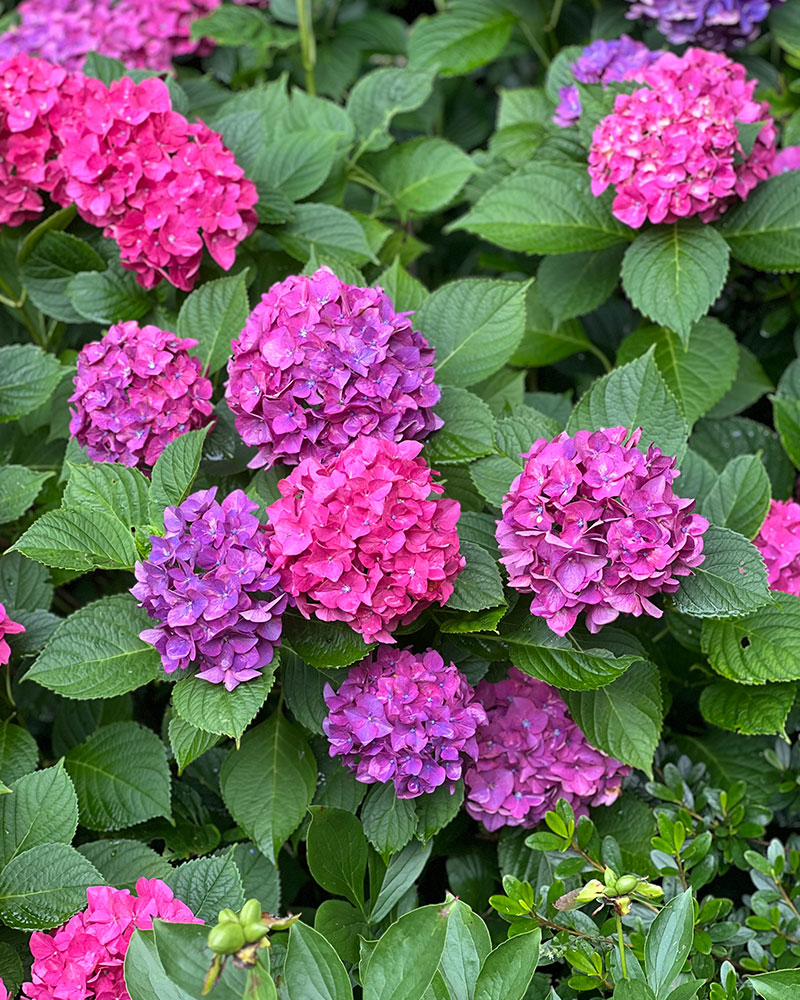
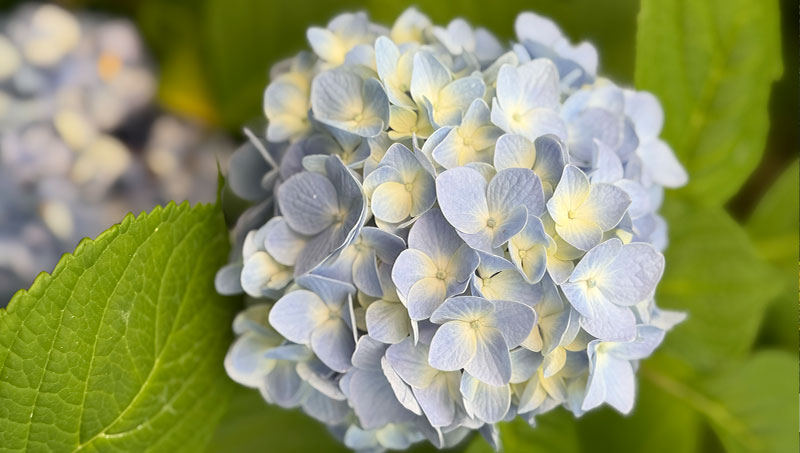
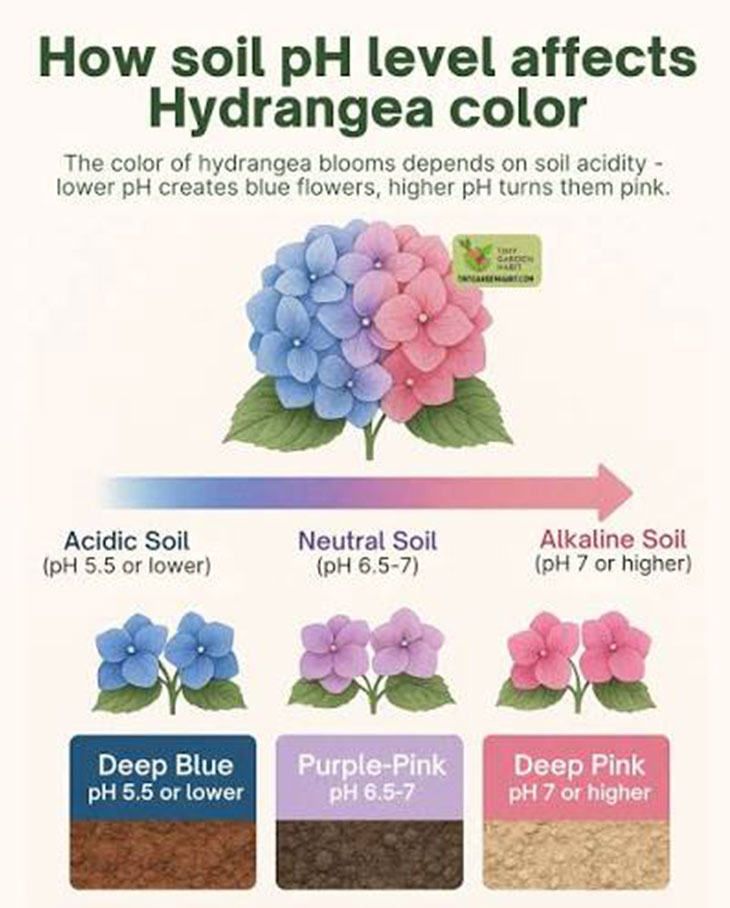
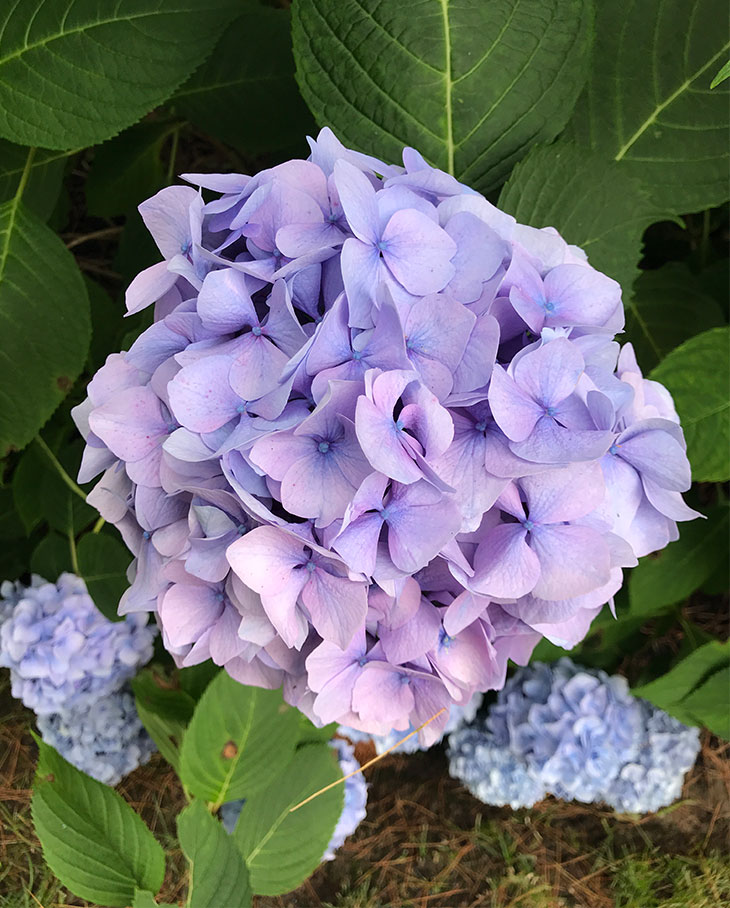
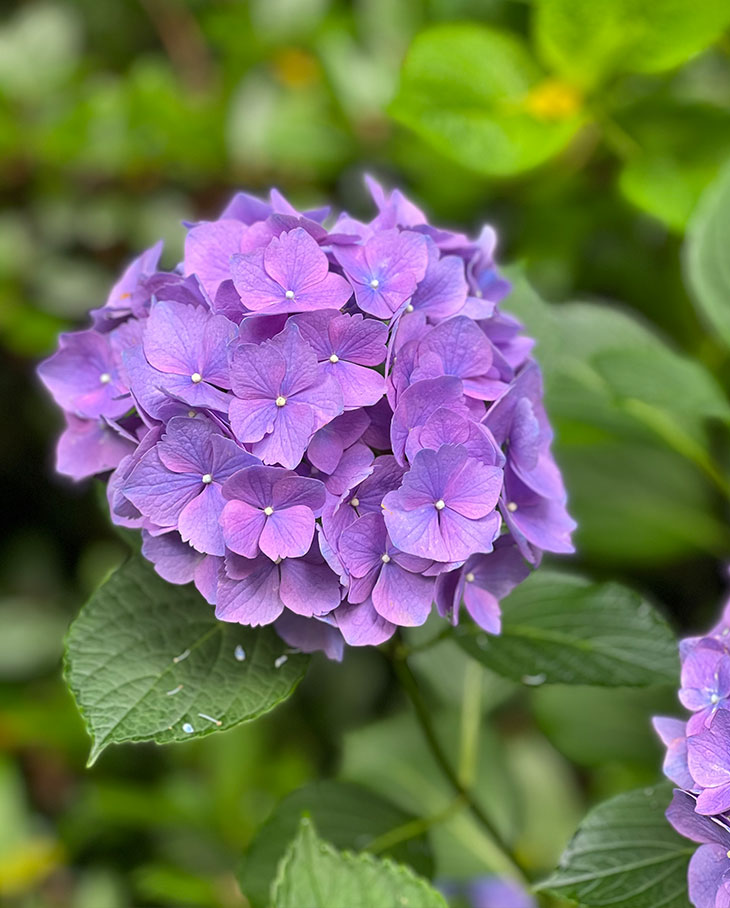
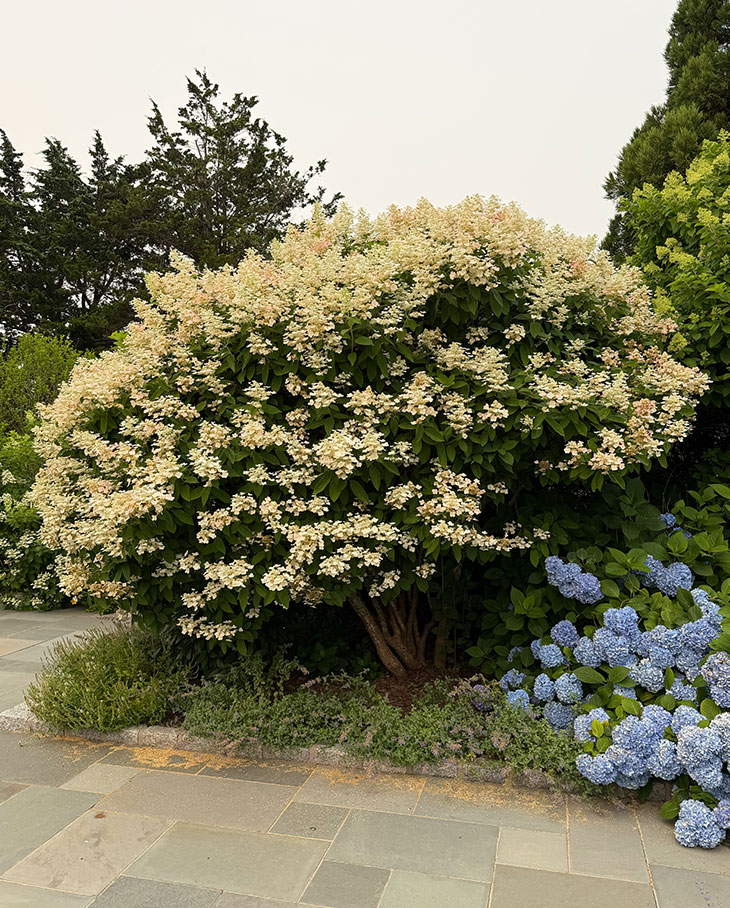
One last note, mostly for fun: the ability to shift a hydrangea’s color between blue, purple, and pink belongs only to the big-leaf macrophylla varieties, and it comes down to soil pH and aluminum. Acidic soil with added aluminum sulfate produces that classic robin’s-egg blue; alkaline soil treated with lime pulls the color toward pink and fuchsia. Skip the treatment for even a year or two, as aluminum leaches out of soil over time, and the blooms fade to a washed-out, in-between shade rather than the saturated color most people picture. Oakleaf and lacecap varieties, by contrast, don’t respond to any of it. Their color is fixed no matter what goes into the soil beneath them, which is one more detail worth knowing before you reach for a bag of blue hydrangea fertilizer expecting it to work on the wrong plant.
OUR PICKS AROUND TOWN

This month, we want to recognize a partner that keeps our crews properly equipped for the installation work behind everything above: James, Robin & Dean at Power Equipment Plus in Southampton When we take on a large hydrangea installation, or any project that calls for specialty equipment beyond our own fleet, Power Equipment Plus in Southampton is our go-to. We rent trenching equipment and mulching machines from them, along with an extra Toro Dingo when a job calls for more than one, and we buy our steel tools, hedge trimmers, and leaf blowers there as well, including the lithium battery equipment now required in villages with strict noise ordinances. It’s the kind of relationship that lets us show up to a job properly outfitted no matter its scale, and their team has always been a pleasure to work with.