

What We Leave Behind: The Art of a Thoughtful Fall Cleanup
FROM THE GARDEN
October on the East End arrives quietly. The farm stands along Montauk Highway trade sweet corn for pumpkins, the light over Mecox Bay turns soft and amber by late afternoon, and the first flocks of migratory birds drifting down from Canada begin settling into the estuaries for the season. Everything outside seems to be preparing. The squirrels are busy, the birds are busier, and the gardens themselves are slowly turning inward.
For many of our clients, this is also the season of leaving. The pool is closed, the house is shut, and the property is entrusted to us until spring. What happens next matters more than most people realize, because when the homeowner leaves, the landscape stays behind.
THE HAMPTON RUSTIC APPROACH
October on the East End arrives quietly. The farm stands along Montauk Highway trade sweet corn for pumpkins, the light over Mecox Bay turns soft and amber by late afternoon, and the first flocks of migratory birds drifting down from Canada begin settling into the estuaries for the season. Everything outside seems to be preparing. The squirrels are busy, the birds are busier, and the gardens themselves are slowly turning inward.
For many of our clients, this is also the season of leaving. The pool is closed, the house is shut, and the property is entrusted to us until spring. What happens next matters more than most people realize, because when the homeowner leaves, the landscape stays behind.
Anyone can strip a property in the fall. Cut every perennial to the ground, rake out every leaf, prune every shrub, and the result looks neat as a pin. But a spotless property in October is not always a healthy one in June. At Hampton Rustic, we think of fall cleanup as stewardship rather than tidying, and the real skill lies in knowing what to remove, what to leave, and when.
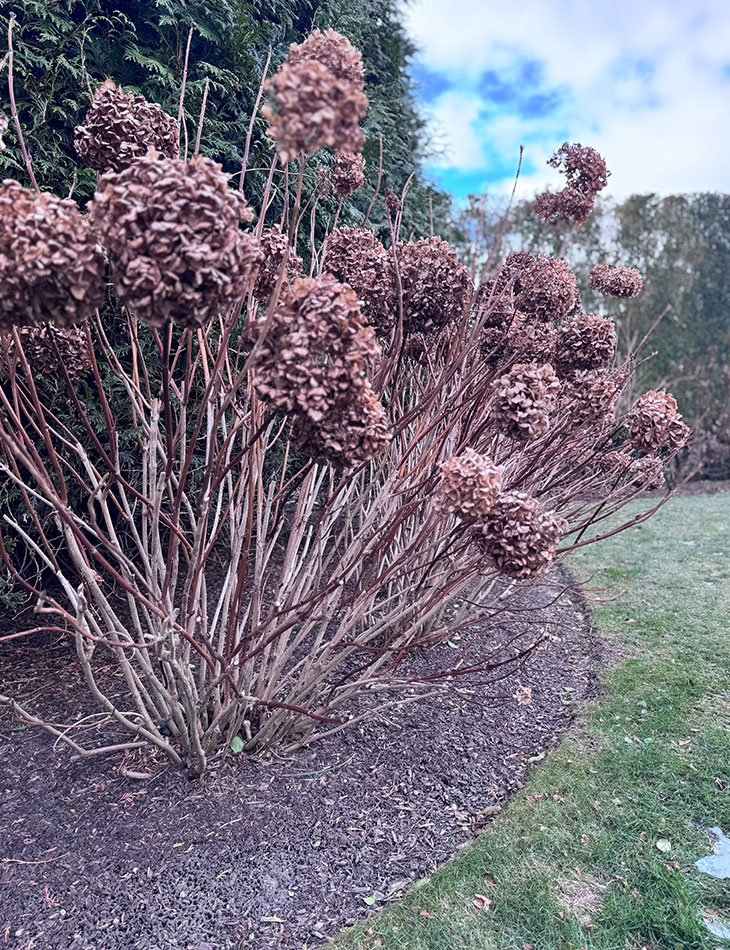
Hydrangeas are the classic example. Cut them back in October and you have just removed next year’s flower buds, trading a full season of blooms for a cleaner look in winter. In the fall we remove only diseased or damaged wood, and we save the selective pruning for spring.
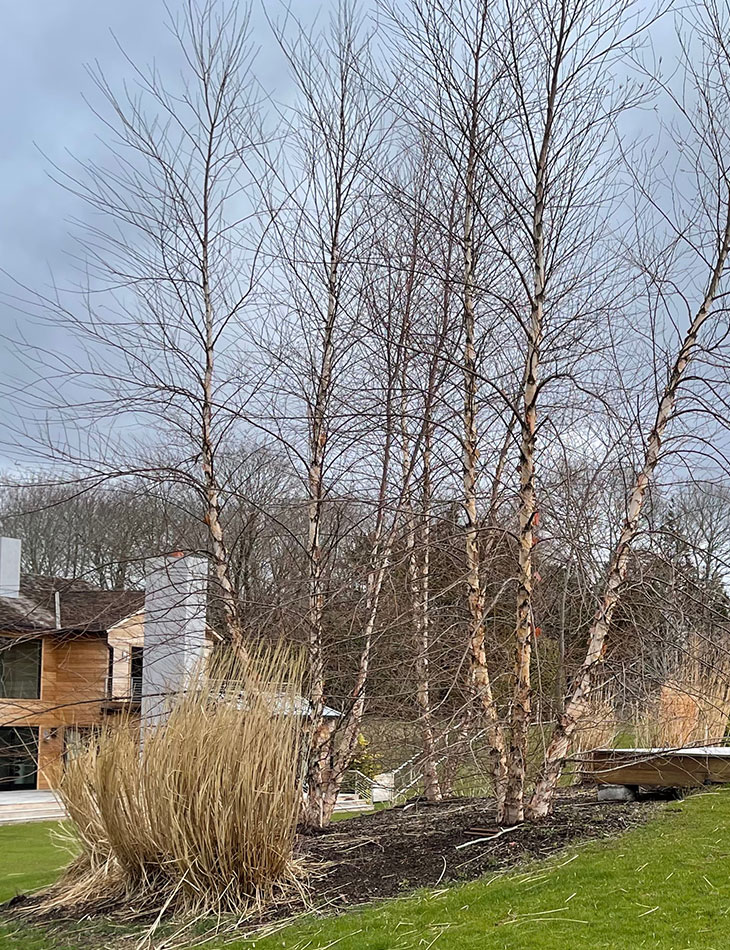
Ornamental grasses are a different case. Left standing, they give a winter landscape its architecture: dry plumes moving in the wind long after everything else has gone quiet, and something beautiful to greet a homeowner who comes out for an off season weekend. On coastal properties they shelter wildlife too. On one estate we care for along Mecox Bay, ducks return each year to nest in a corner beside the house. We leave the grasses standing there to protect the nests from the winter wind and cut them back in spring instead.
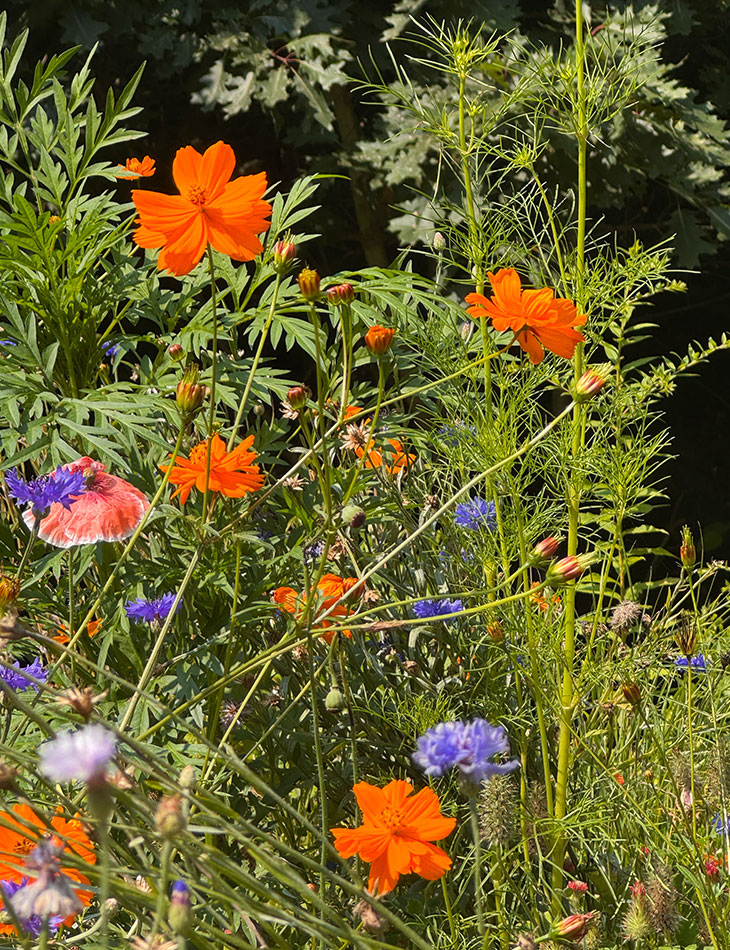
Perennial meadows, which have grown popular in recent years, need the same patience. They have to go to seed so they can sow themselves over winter, so the cutbacks wait until spring.
Leaf litter is another case. Closer to the coast, where soils run sandy and lose moisture quickly, a layer of fallen leaves holds water and returns nutrients to the soil. It also helps buffer plants against the frost heaves that come with the East End’s big temperature swings. Leaving it in planting beds through winter saves the homeowner the cost of mulching a property no one will see until spring.
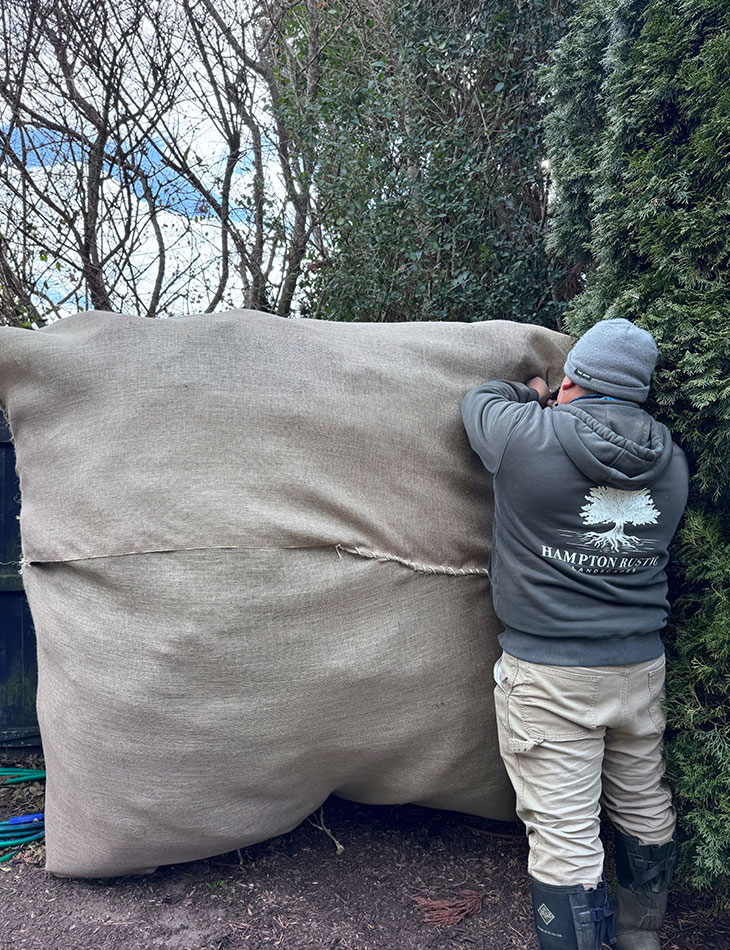
None of this means doing less. Leaves still come off the lawn, diseased material goes, and certain plants genuinely need their fall pruning. The lawn gets its aeration now, and thatch removal waits for spring. Fall is also when we like to peel back the beds and look hard at drainage, so problems are solved before the spring thaw instead of after it. Winter protection follows the same logic. We protect the vulnerable broadleaf evergreens, hollies and boxwoods especially, where salt air, wind, or deer pressure call for it, rather than wrapping an entire property out of habit.
A coastal estate needs different care than a property in Northwest Woods, and both differ from a garden in Southampton Village. A one size fits all cleanup may look clean, but it can quietly cost a homeowner blooms, soil health, and money for seasons to come. Knowing the difference is what decades on the East End are for.
OUR PICKS AROUND TOWN

This month we’re highlighting a product rather than a place: Wilt-Pruf, an antidesiccant spray we’ve relied on for the past few years with excellent results. It forms a protective barrier on foliage that reduces moisture loss and guards against winter burn, the browning caused by cold temperatures, drying winds, and salt exposure. On our coastal properties, and on the boxwoods that line gardens from one end of the Hamptons to the other, that protection makes a visible difference come spring.
We’ve also found it to be a smart alternative to traditional burlapping in the right situations. Burlap is labor intensive, costly, and frankly not much to look at, especially on large specimen shrubs, long hedges, or plants in hard to reach spots. Wilt-Pruf offers a more discreet and cost effective option where it makes sense. Timing is everything, though. It has to go on before temperatures settle below freezing and the ground hardens, which makes now the moment to schedule it.