

If You Want Color in June, the Work Starts Now
FROM THE GARDEN
April in the Hamptons is a study in anticipation. The forsythia has had its moment, the tulips are finishing their run, and the land seems to be holding its breath — waiting for what comes next. For those of us in the landscape, this pause is not rest. It is preparation.
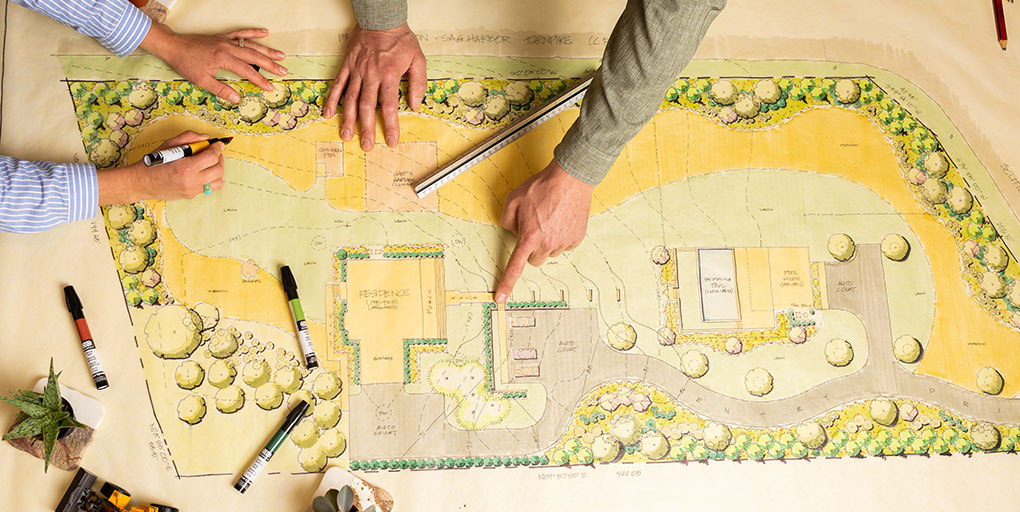
The clients who call us in June wondering why their property lacks color are, almost without exception, the ones who waited until June to start thinking about it. The guests who arrive to a garden in full, effortless bloom — the ones where the peonies are fat and the lavender is already humming with bees — they are the ones who sat down with our team in April.
THE HAMPTON RUSTIC APPROACH
Every exceptional summer garden we create begins with a single conversation about color. Before a plant is ordered, our team meets with each homeowner to establish a palette. Do they want the timeless elegance of purple, white, and blue — deep periwinkle, soft violet, crisp white — with the lush movement of ornamental grasses woven throughout? A wash of soft pinks? Something more relaxed, where texture and form matter more than any particular hue? Most clients lead with color first. They know what they want to feel when they look out at the garden, and our job is to build toward that feeling.
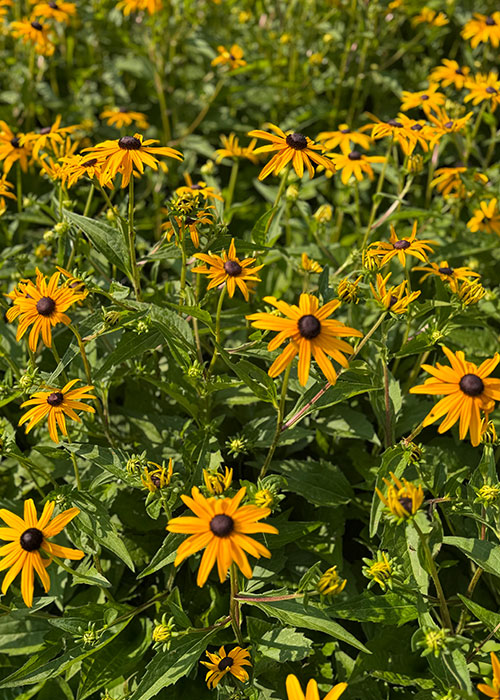
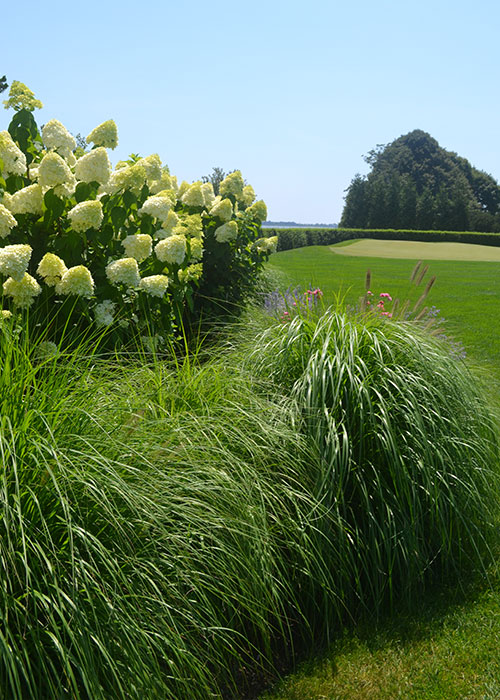
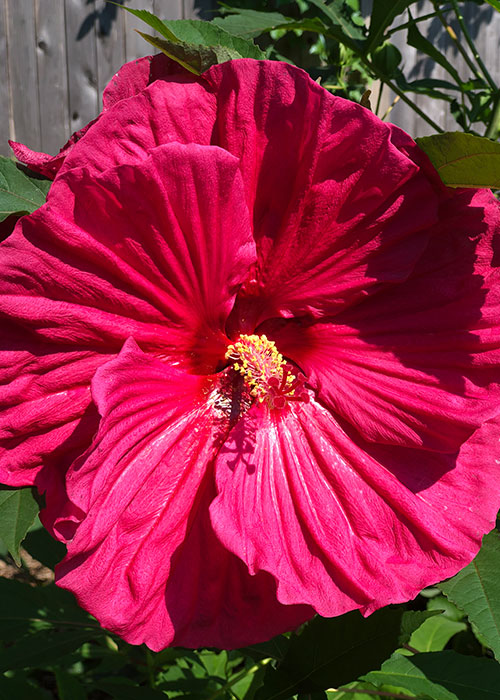
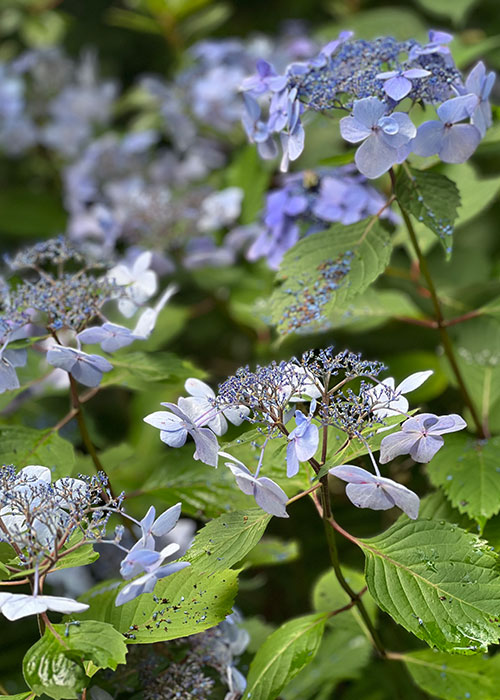
From that palette, we construct a succession planting plan — one of the most important tools in our approach. Rather than designing a garden that peaks once and fades, we sequence plantings so that color rolls through the property from early June through September. In June, the show typically opens with soft peonies, the dramatic tall purple globes of allium, climbing roses, and sweeps of lavender. By July and into August, Nikko Blue and lace cap hydrangeas take the stage, joined by deep purple May Night salvia. As August settles in, the dinner plate hibiscus comes into its own — particularly the Marshmallow Moon variety, with blooms the size of a dinner plate in brilliant white — alongside black-eyed Susans, ornamental grasses catching the late-summer light, and Montauk daisies carrying color into early fall. That rolling sequence doesn’t happen by accident. It is designed, plant by plant, weeks before the first shovel breaks ground.
Before the first plant arrives, two things must be confirmed: deer protection and irrigation. A significant planting investment left unprotected on the East End is simply a deer feeding program. And plants going into the ground without a properly functioning irrigation system are already working against themselves. Both need to be in place now, so that when our crews arrive with plants in hand in late May, the work is clean: plant, mulch, fertilize, and let the succession begin.
Ordering early matters for another reason. Preferred varieties sell. A client who waits until May to finalize their plant list often finds that the specific peonies or the allium they had in mind are gone. Securing the palette now ensures you get exactly what you envisioned, not a substitute.
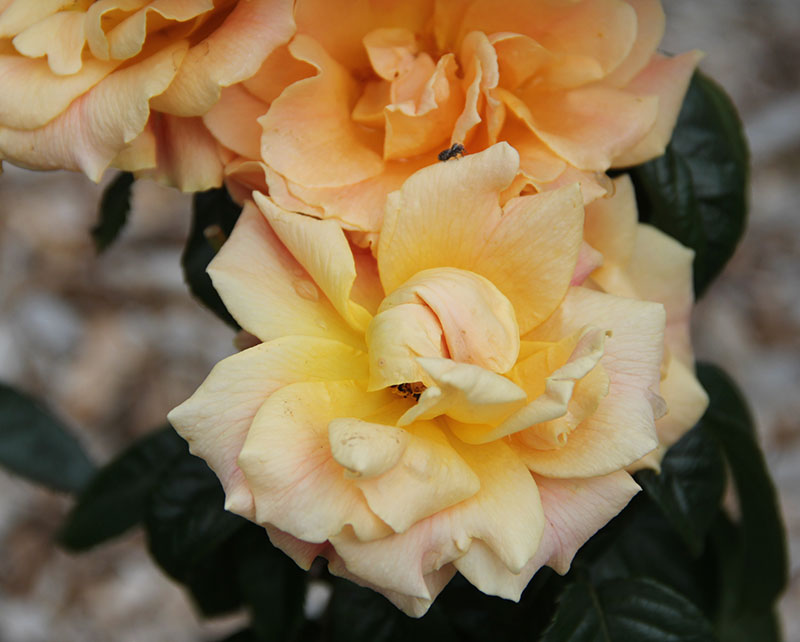
There is also a conversation worth having in April that many homeowners don’t anticipate until they are deep into a busy summer: maintenance. Roses are beautiful, and many clients want them — but roses require weekly deadheading, regular aphid treatments, and consistent crew visits throughout the season. For clients who value privacy and prefer not to have regular traffic on the property, we often steer toward hydrangeas, Montauk daisies, and ornamental grasses. The visual impact is tremendous, and the maintenance footprint is minimal. Understanding that tradeoff before planting day makes for a much more satisfying summer.
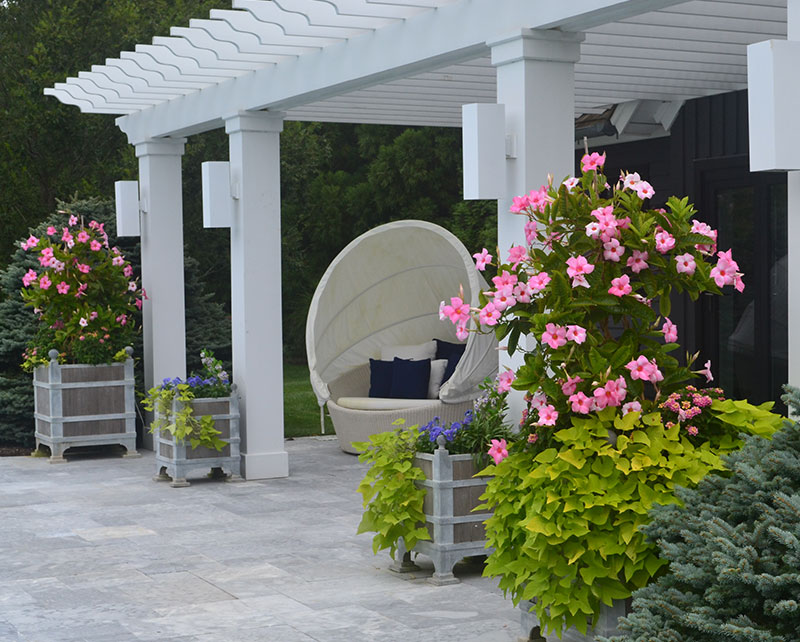
And then there are the tropicals — what we sometimes think of as the jewelry of the estate. Potted banana trees, cascading ferns, and vivid tropical blooms at pool edges, entryways, and along garden paths add a layer of lushness that transforms a property’s character. Because tropicals require their own irrigation schedule and a specific soil-and-drainage layering inside each vessel, we handle the potting program separately, working with homeowners to select containers and arrangements that complement the architecture and the mood they’re after. It’s a finishing touch that has an outsized effect on how a property feels from the moment you arrive.
The summer garden is not an impulse. It is a plan. And the best time to make that plan is now.
OUR PICKS AROUND TOWN
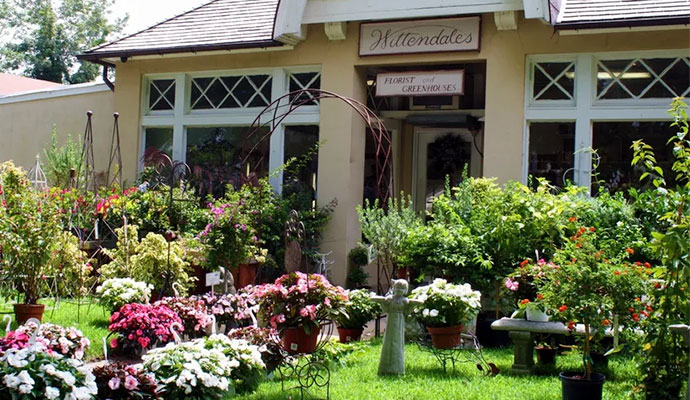
When it comes to sourcing the flowering perennials and annuals that bring our summer planting plans to life, Whittendale’s in East Hampton is our first call. Their selection is reliably excellent, their plants are well-tended, and their team understands the specific demands of East End gardens. If you’re looking to add color to your property this season, it’s well worth a visit.