





Privacy Screeening
Privacy is one of the most requested — and most misunderstood — elements of a Hamptons landscape. Most homeowners assume it simply means planting a row of evergreens along a property line, but effective privacy screening is far more deliberate. At Hampton Rustic Landscapes, every privacy planting is designed around two goals: beauty and growth. That means creating a soft, layered, year-round green backdrop today, while planning years ahead for how large specimens like cryptomeria, green giants, and heritage birch will mature, spread, and fill in over time.
Privacy screening on the East End isn’t limited to blocking out a neighboring house. Our clients call on us to screen roadways, pool and spa areas, tennis and basketball courts, outdoor entertaining spaces, service areas such as garages, generators, and pool equipment, and even employee parking on larger estates. Others need a windbreak to protect a waterfront investment, or a layered, naturalized border that still leaves room for kids and dogs to run. Whatever the goal, the same principle applies: privacy planting done right requires knowledge of mature plant sizes, correct spacing, deer pressure, irrigation needs, and long-term maintenance — not just a quick row of trees.
The Hampton Rustic Difference
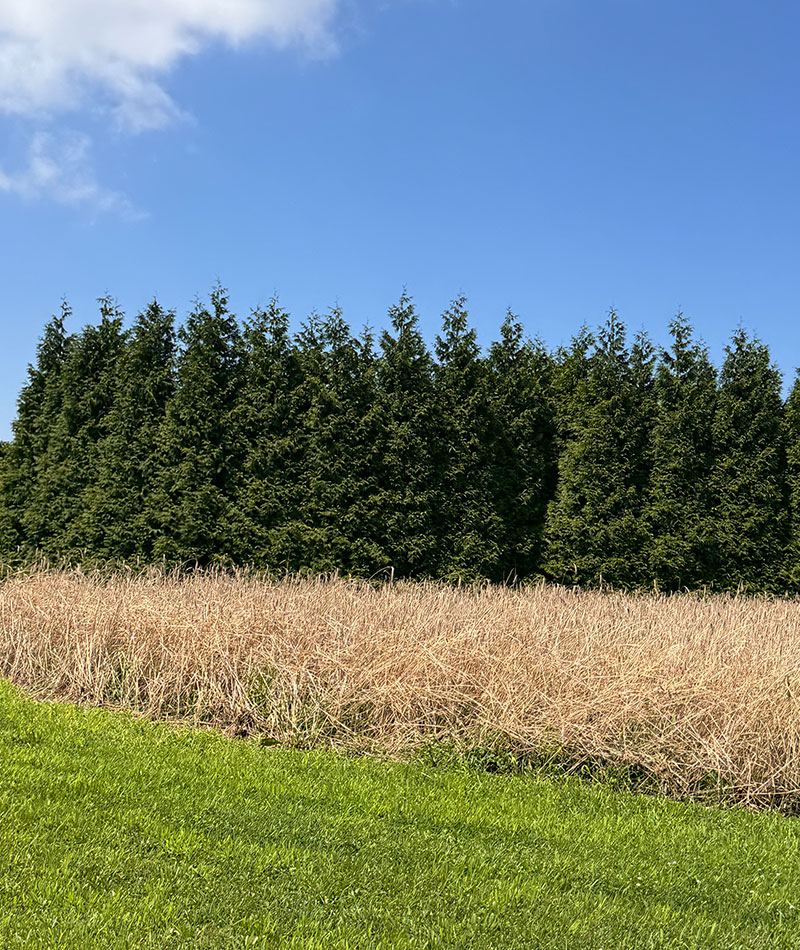
Beauty and Growth, Planned Together. Every privacy planting is designed with its mature footprint in mind. A cryptomeria delivered from the farm at 30 feet tall and 10 to 15 feet wide may eventually reach 80 feet or more, so we plant with the correct 20- to 25-foot spacing between trunks from day one — even though that means the screening isn’t complete on day one.
Deer-Resistant Buffer Planting. While specimen evergreens like arborvitae and cryptomeria are maturing, we plant deer-resistant material such as osmanthus at grazing height in front of them. This buffer keeps deer from reaching and damaging young trees before they’ve had the chance to establish.
Two-Zone Irrigation Planning. We separate irrigation into a tree zone and a border-planting zone from the start. Specimen trees typically need consistent watering for their first three years and then far less, while border plantings, perennials, and flowering shrubs continue to need regular water — so each zone can be adjusted or shut down independently instead of reworking the system later.
Patience Built Into the Design. We plant intermittent, faster-growing material — like narrow Wintergreen arborvitae — between young specimen trees to provide screening in the short term. As the permanent trees fill in over several years, that temporary planting is selectively pruned or removed, avoiding the overcrowding and die-back that comes from impatient overplanting.
Decades of On-Site Problem-Solving. From tagging and numbering specimen trees to match a grower’s row, to reworking a layout on the fly when a tree is damaged in transport, our team’s experience means privacy screening projects stay on track and look intentional — even when something doesn’t go exactly to plan.
Our Process
The East End presents a wide range of soil challenges. Here are three of the most common scenarios Hampton Rustic encounters and how we approach each one:
1. Understanding Your Privacy Needs
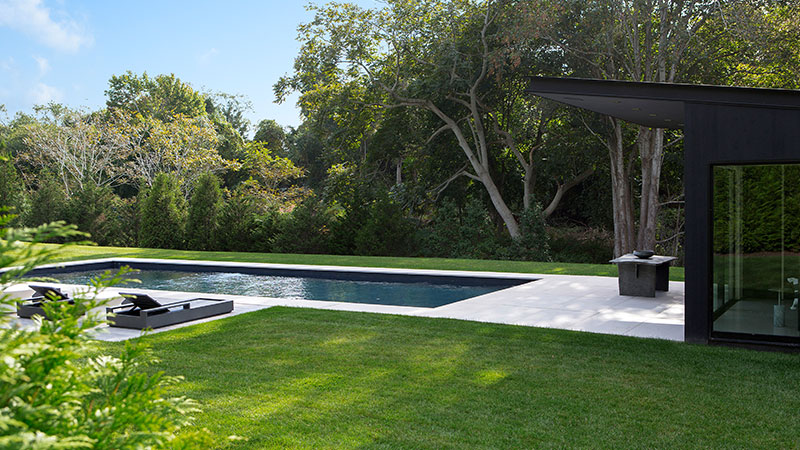
Every project starts with a conversation about what you’re actually trying to achieve. Screening a neighbor is only one reason clients call us. Just as often, it’s road noise and visibility, creating a secluded feel around a pool, spa, or outdoor entertaining area, reducing noise around a tennis or basketball court, hiding service areas like garages, generators, and pool equipment, or establishing a windbreak to protect a waterfront property and everything planted behind it.
2. Site Assessment & Long-Term Growth Planning
We evaluate sun, soil, drainage, and — critically — available space. Mature plant size and the number of years it takes to reach that size drive every spacing decision we make. We also determine whether the property calls for a naturalized border with layered heights, depths, and curves, or a straight hedgerow. On a multi-acre estate with open lawn, a soft, curving border of evergreens, ornamental trees, and grasses can create depth while still leaving room to play. On a tighter lot — common in areas like the Amagansett lanes — a straight run of arborvitae along a property line may be the only option the available space allows.
3. Species Selection
We select species based on the level of privacy needed, the site conditions, deer pressure, and the maintenance program you want to commit to. Larger specimen evergreens like cryptomeria and green giants form the backbone of most screening projects, with heritage birch, American holly, skip laurel, inkberry, spruce, and boxwood used to add texture and layering. For clients seeking a more formal, high-end look, we also install English hornbeam hedging, a classic feature of English gardens. Privet remains an option as well, though it requires substantially more maintenance to keep it dense and healthy.
4. Installation & Layering
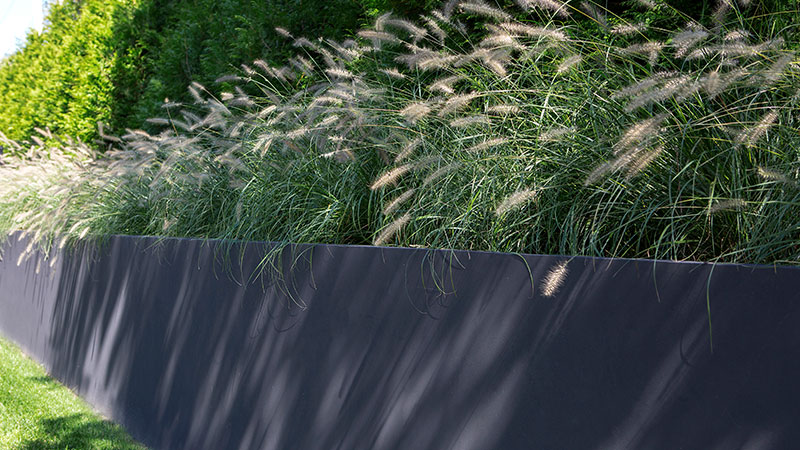
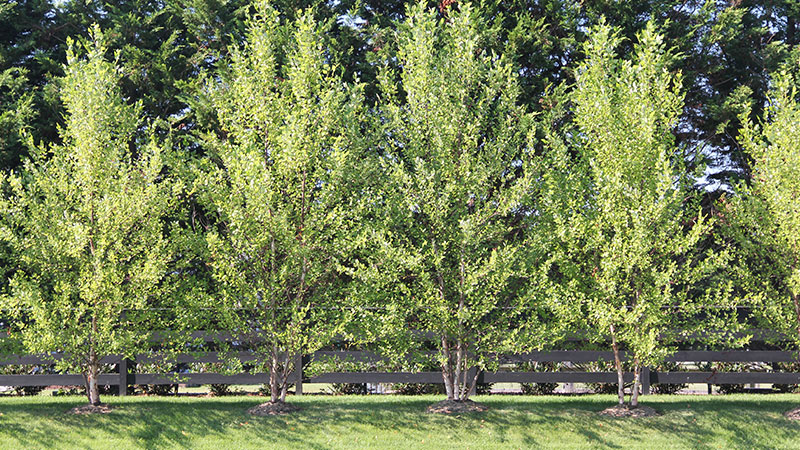
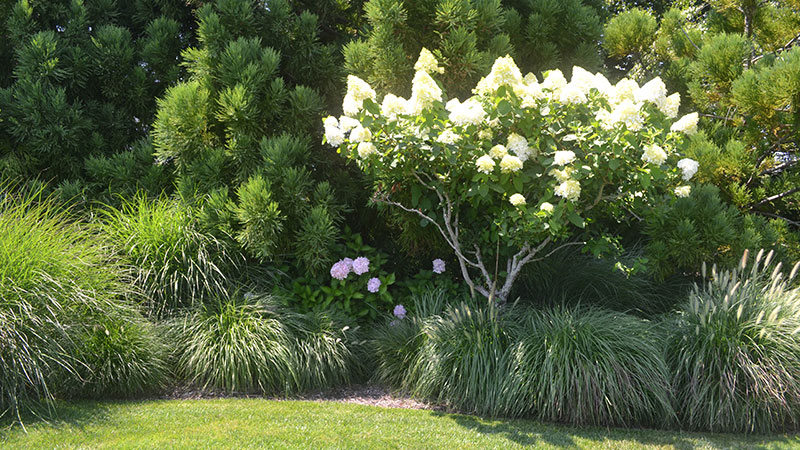
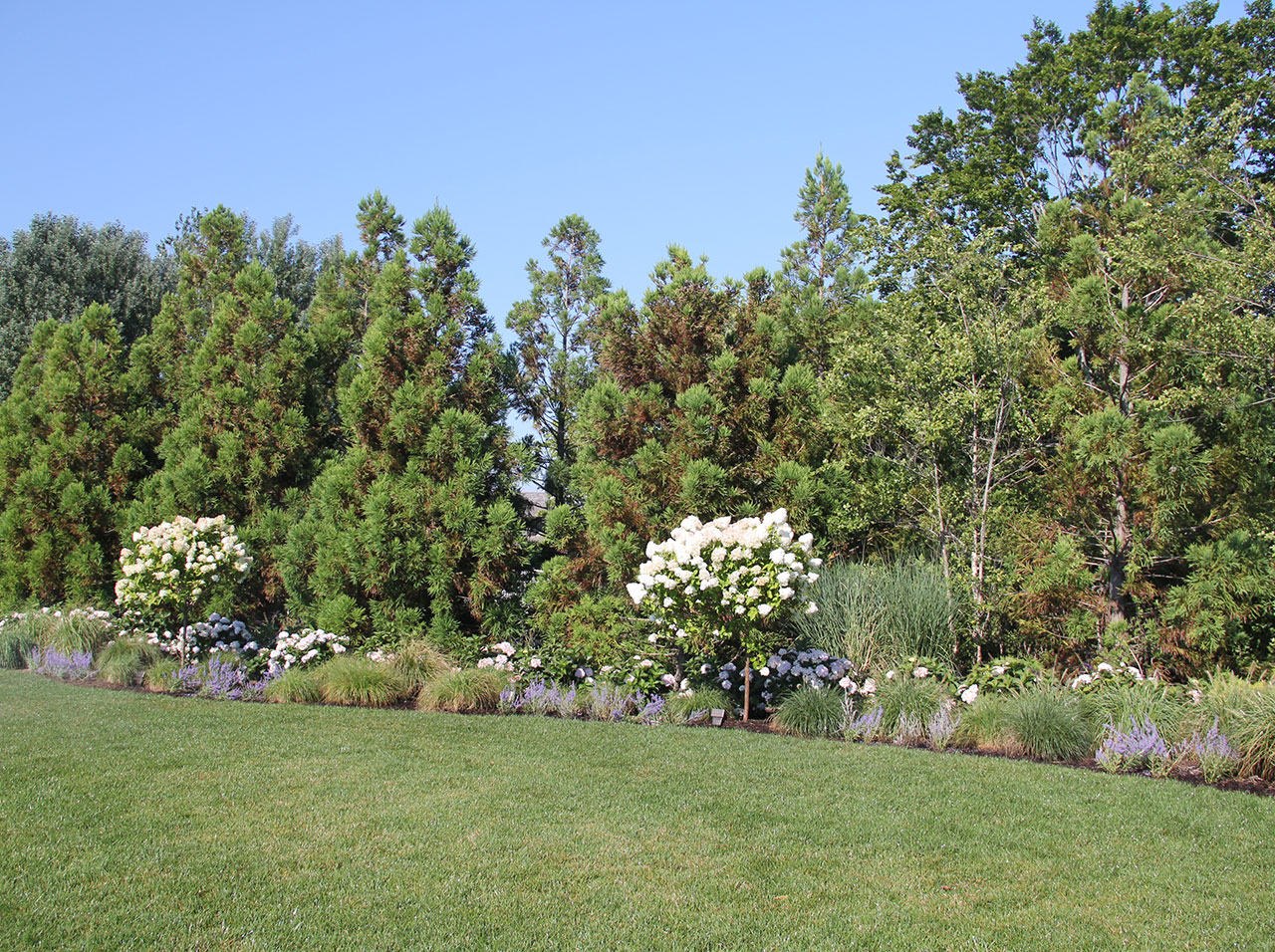
Specimen trees are tagged and sequenced to preserve the growers’ spacing and sizing, and each tree is handled individually during transport and planting to protect its branches and form. We layer plantings for depth — evergreens at the back, ornamental trees like heritage birch for texture, and lower borders of shrubs, grasses, and perennials in front — so the screening looks naturalized rather than like a straight wall of green. On exposed or waterfront sites, we’ve also sculpted protective dunes and layered salt- and wind-tolerant plantings, such as juniper and Russian olive, to buffer more delicate specimens planted behind them.
5. Irrigation Setup
Newly installed specimen trees need consistent water for roughly their first three years. Border plantings, perennials, and flowering shrubs need ongoing, often more frequent watering indefinitely. By installing separate irrigation zones for trees versus border plantings from the beginning, the system can scale back as trees establish without disturbing water to the plantings in front of them.
6. Ongoing Maintenance
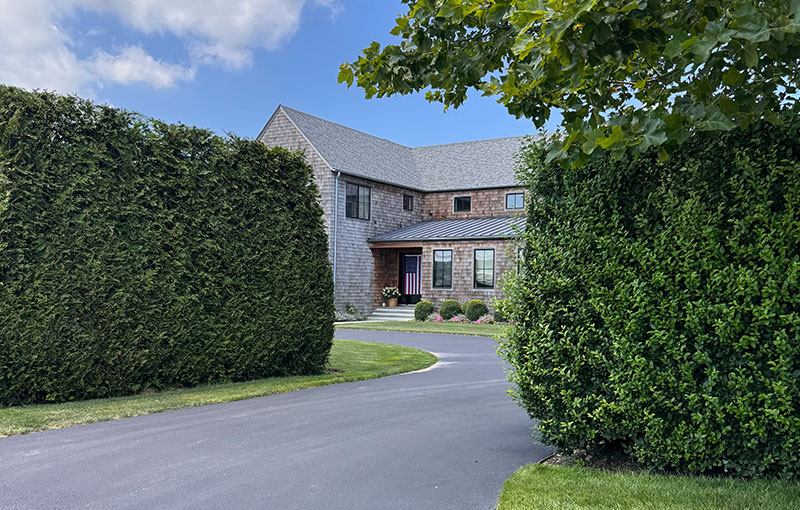
Maintenance needs vary dramatically by species, and we make sure clients understand what they’re signing up for before installation. Mature cryptomeria require little more than an occasional check-in, while green giants benefit from a winter shearing to maintain shape and encourage growth underneath. Privet, by contrast, requires precise pruning up to three times a year on a strict schedule, along with active deer management. Higher-end species like American holly benefit from a dedicated plant healthcare program, including targeted treatments for pests and fungal issues that can affect foliage in the moist, salt-air conditions of the East End. We walk through these maintenance realities up front so there are no surprises in your annual landscape budget.
Why Privacy Screening Requires Real Expertise
Overplanting is one of the most common mistakes we see. Homeowners want instant, full privacy, so they crowd specimens too closely together. Within a few years, branches are growing into one another, airflow is restricted, and die-back sets in — leaving gaps that are harder to fix than if the planting had been spaced correctly from the start. Our approach plans for the patience that real privacy screening requires: temporary, faster-growing material fills the gaps in the near term, and is removed as the permanent specimens mature into the screen they were always meant to become.
We also plan for the unexpected. On one recent project, a specimen arborvitae was damaged in transport just before installation, snapping several feet off its top — with no matching replacement available from the grower. Rather than disrupt the row, our team resequenced the remaining trees, selected a taller specimen from further down the line to take its place, and made a clean, angled, treated cut to protect the tree from disease. The finished planting reads as though it was always intended to look that way.
Case Study: A Waterfront Wind Buffer, Shelter Island
On a Shelter Island waterfront estate, our team sculpted a series of protective sand dunes above the bulkhead to create the first line of defense against wind and salt spray. Salt- and wind-tolerant plantings — juniper, Russian olive, and beach grass — were layered into the dunes, with heavier soil blends and specimen trees introduced closer to the house as the property’s elevation rose. The result is a layered buffer that protects the landscape investment closer to the home while preserving open water views from the upper floors and pool area.
Case Study: Privacy Between Cottages, The Inn at Windmill Lane
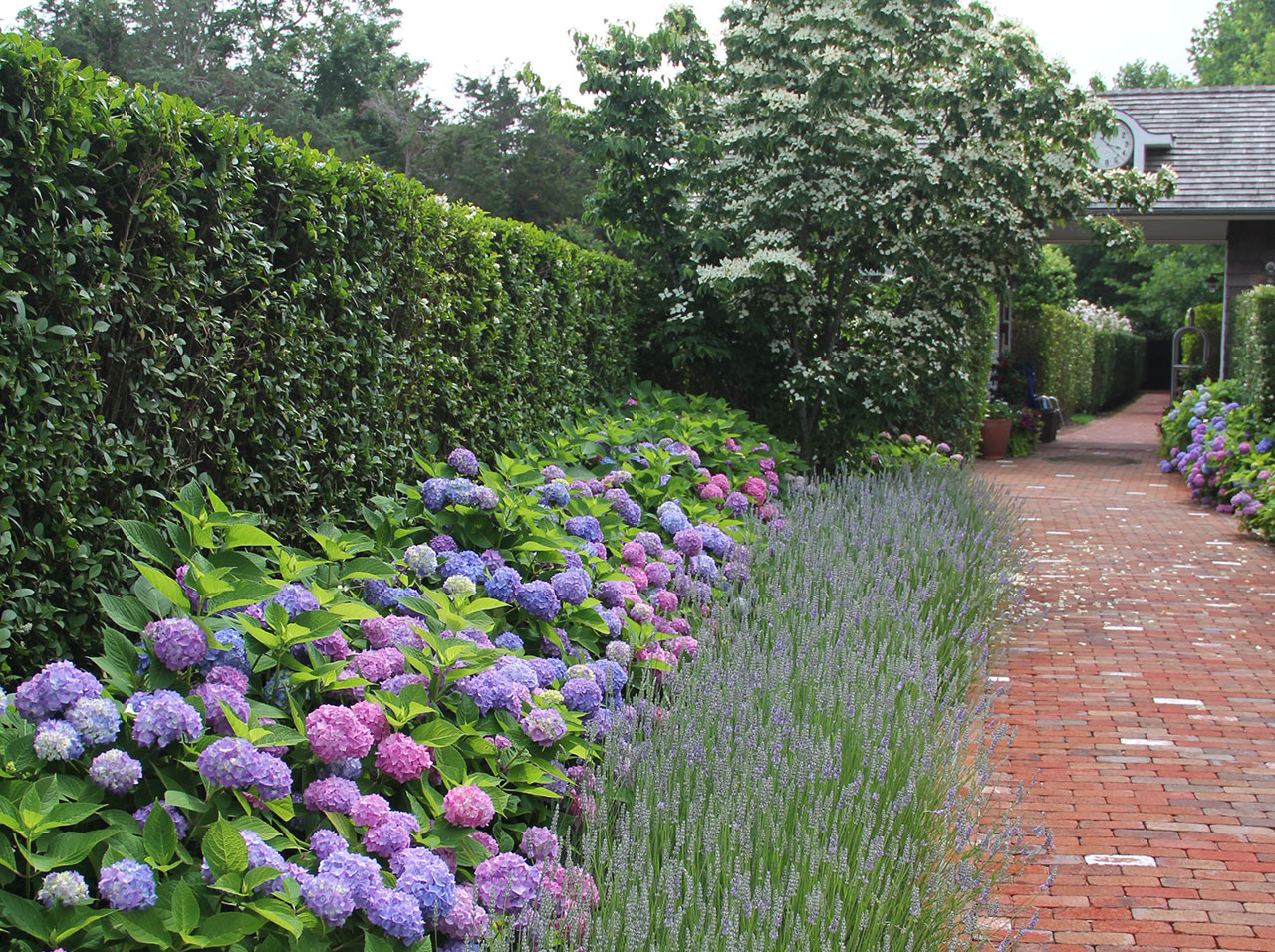
For this Amagansett hotel property, privacy wasn’t a preference — it was the mission of the design. Guests staying in individual cottages needed screening between buildings that stayed tall and narrow rather than wide, preserving walkway space between structures. We accounted for the higher maintenance demands of the plantings selected, including scheduled pruning and deer management, as part of the property’s ongoing landscape budget from the outset.