




Deer Protection & Custom Fencing
If you’ve invested in a landscape on the East End of Long Island, deer are not a hypothetical problem. They are a certainty. Eastern Long Island supports one of the highest whitetail deer densities in the United States, and the animals have become remarkably unbothered by human presence — drive east on Sunrise Highway at dusk and you will pass dozens of them grazing along the highway shoulder, undisturbed by cars passing within feet. On residential properties, they move through with a quiet, systematic confidence that catches homeowners off guard, particularly those whose primary residence is in the city and who have never encountered deer pressure at this scale.
The impact is not subtle. Anyone who has spent time in wooded or rural areas knows the browse line — that distinct horizontal threshold where everything below a certain height has been stripped clean and everything above it remains intact. That is what unprotected Hamptons plantings can become: decades of accumulated landscape investment reduced to bare trunks and stripped stems. A single herd can work through a newly installed planting in days. And once deer discover a food source on a property, they return — with others.
There is also the matter of tick pressure. Whitetail deer are a primary host for the ticks responsible for Lyme disease and other tick-borne illnesses. Properties with consistent deer activity carry a meaningfully higher tick burden, and that is a real health consideration for families, children, and pets using the space.
At Hampton Rustic Landscapes, deer protection is not an afterthought. It is a system — one that begins with a thorough property assessment and extends through ongoing monitoring, seasonal spray management, and rapid response when something changes. The East End demands a layered approach, and that is exactly what we provide.
The Hampton Rustic Difference
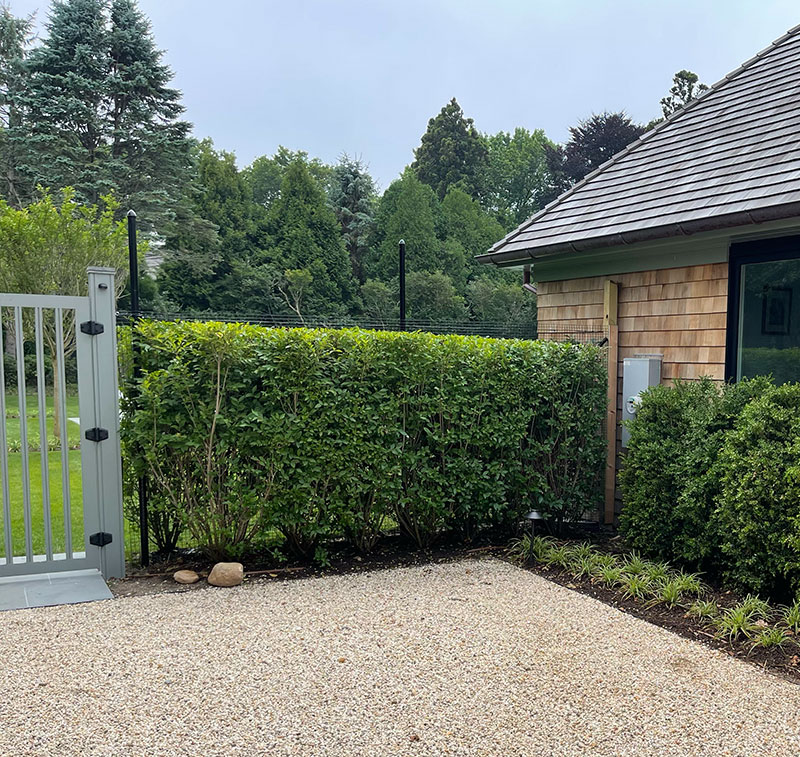
We own the equipment to do the job right. Installing deer fencing correctly requires a specialized tensioning machine that applies consistent, precise tension to the metal wiring across the entire fence line. Without it, fencing goes up slack — and a slack fence is a temporary fence. We own that machine and use it on every installation.
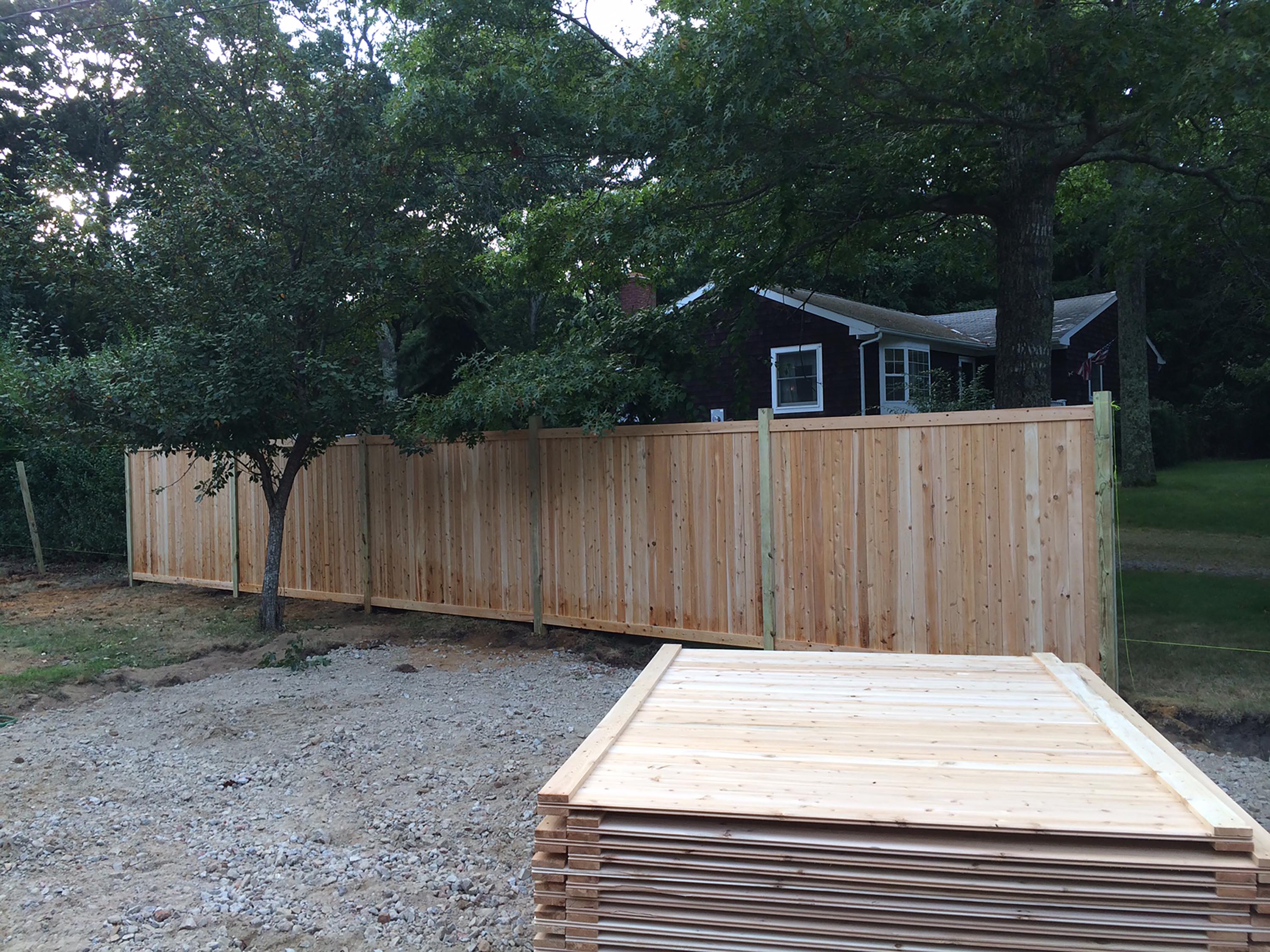
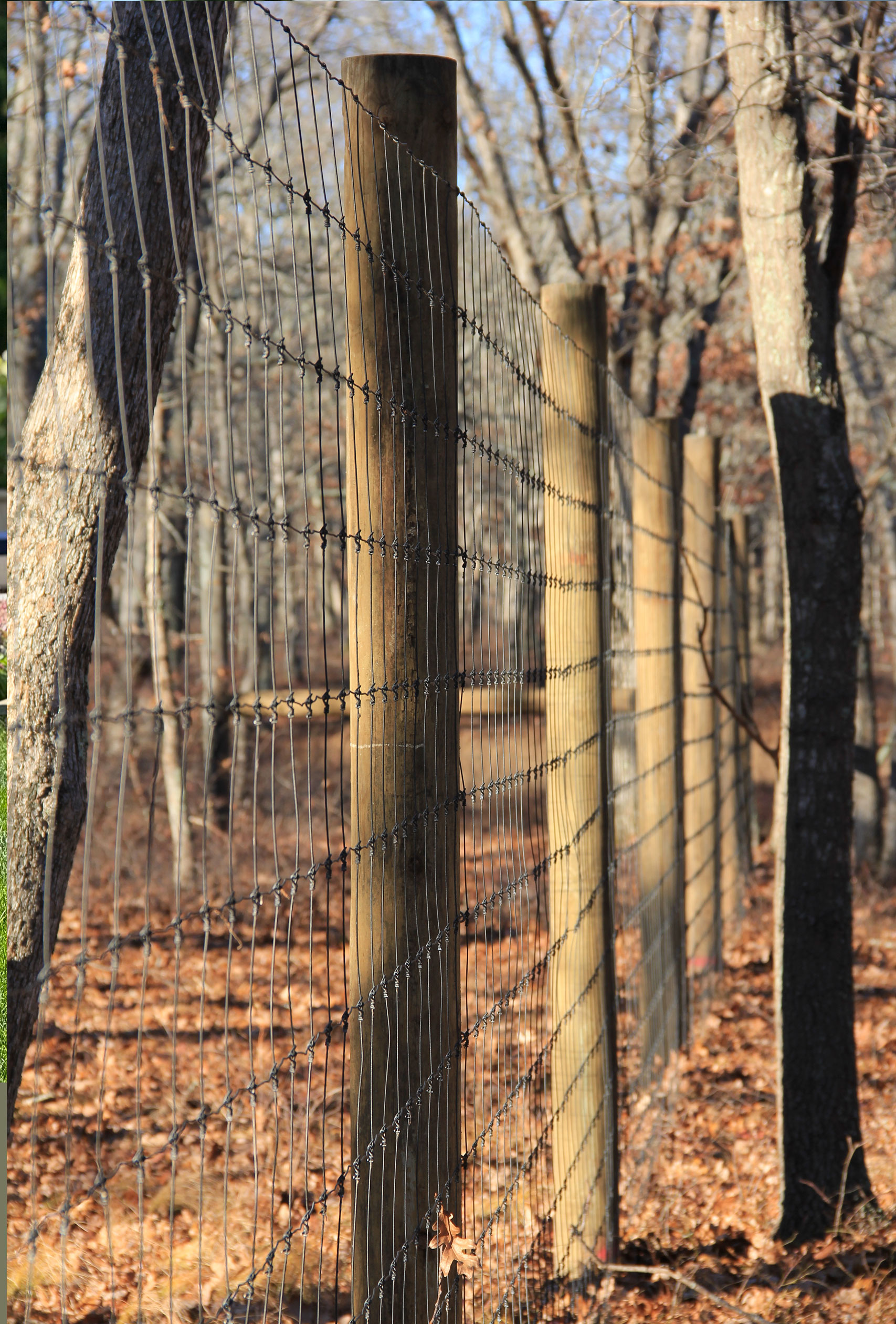
Cedar posts, always. On estates and residential properties, the aesthetic of the fence matters as much as the function. Hampton Rustic insists on natural cedar posts — they have bark on them, they blend into the surrounding landscape, and they are highly resistant to rot. We have never used pressure-treated lumber on a residential property, and we never will. The result is fencing that virtually disappears into the environment.
We understand deer behavior, not just deer fencing. Knowing how to install a fence is one thing. Knowing where deer enter a property, where they bed, how they test new obstacles, how their patterns shift with new construction nearby or after a storm — that is experience that only comes from decades working the same terrain. The Hampton Rustic team live and work on the East End year-round, and their understanding of local deer behavior directly informs every recommendation they make.
Spray programs that actually work long-term. Most homeowners don’t know that deer can acclimate to repellent sprays. A product that works well for two years may stop working entirely as deer grow accustomed to the scent or taste. We rotate spray formulations proactively, before effectiveness drops off — rather than waiting until plants are already damaged.
Integrated monitoring through your maintenance program. The most effective deer protection is not a one-time installation. It is a system maintained by people who are on your property every week, trained to notice fence damage, pattern changes, and new pressure points before they become problems.
How the Process Works
When a client contacts us about deer damage or deer protection, we treat it as urgent — because it is. Once deer discover they can access a property, they will return repeatedly. The window for containing the problem closes quickly. Our response is systematic and covers every layer of the property.
Step 1: Property Assessment
We begin with a comprehensive walkthrough of the property. The goal is to understand the full picture: where are deer entering, where are they bedding, and what neighboring properties or landscape features are creating pressure. An honest assessment of existing fencing is part of this step. On properties with older fencing, we will check the tension on the top wire — a floppy wire means deer have learned they can jump it. He evaluates post condition (cedar posts that are leaning or rotted at the base compromise the entire line), fence height relative to current deer activity, and every point where the fence meets a building, changes elevation, or has a gap at grade. These transition points are where deer consistently find entry.
Step 2: Perimeter Protection
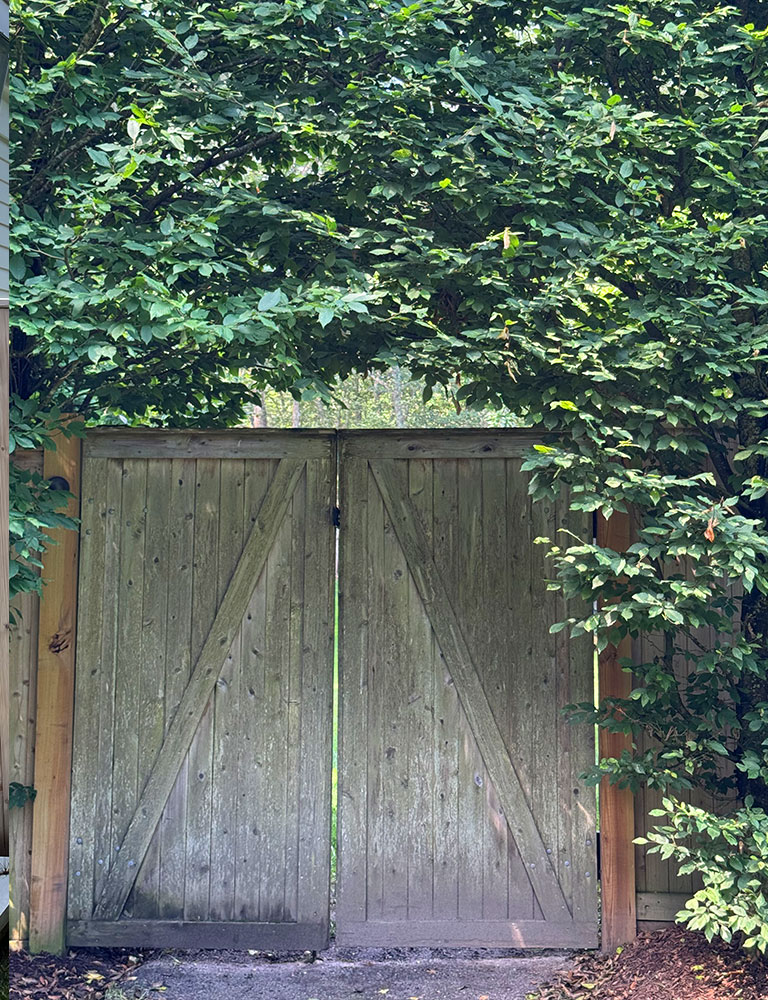
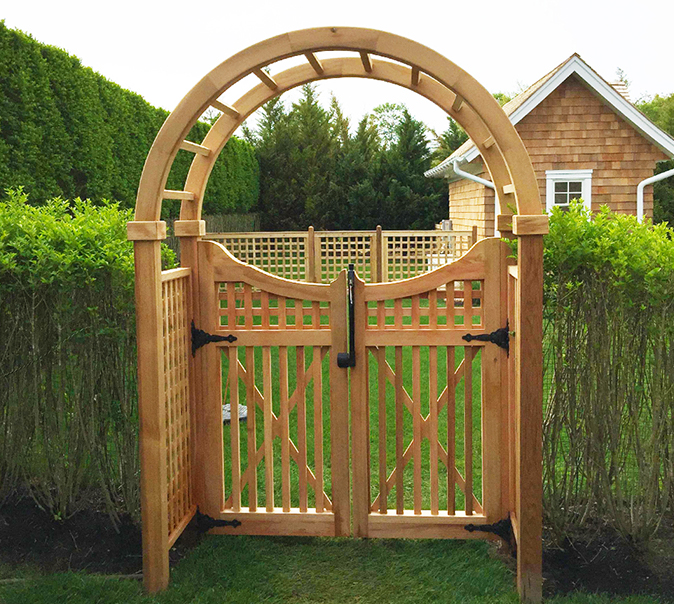
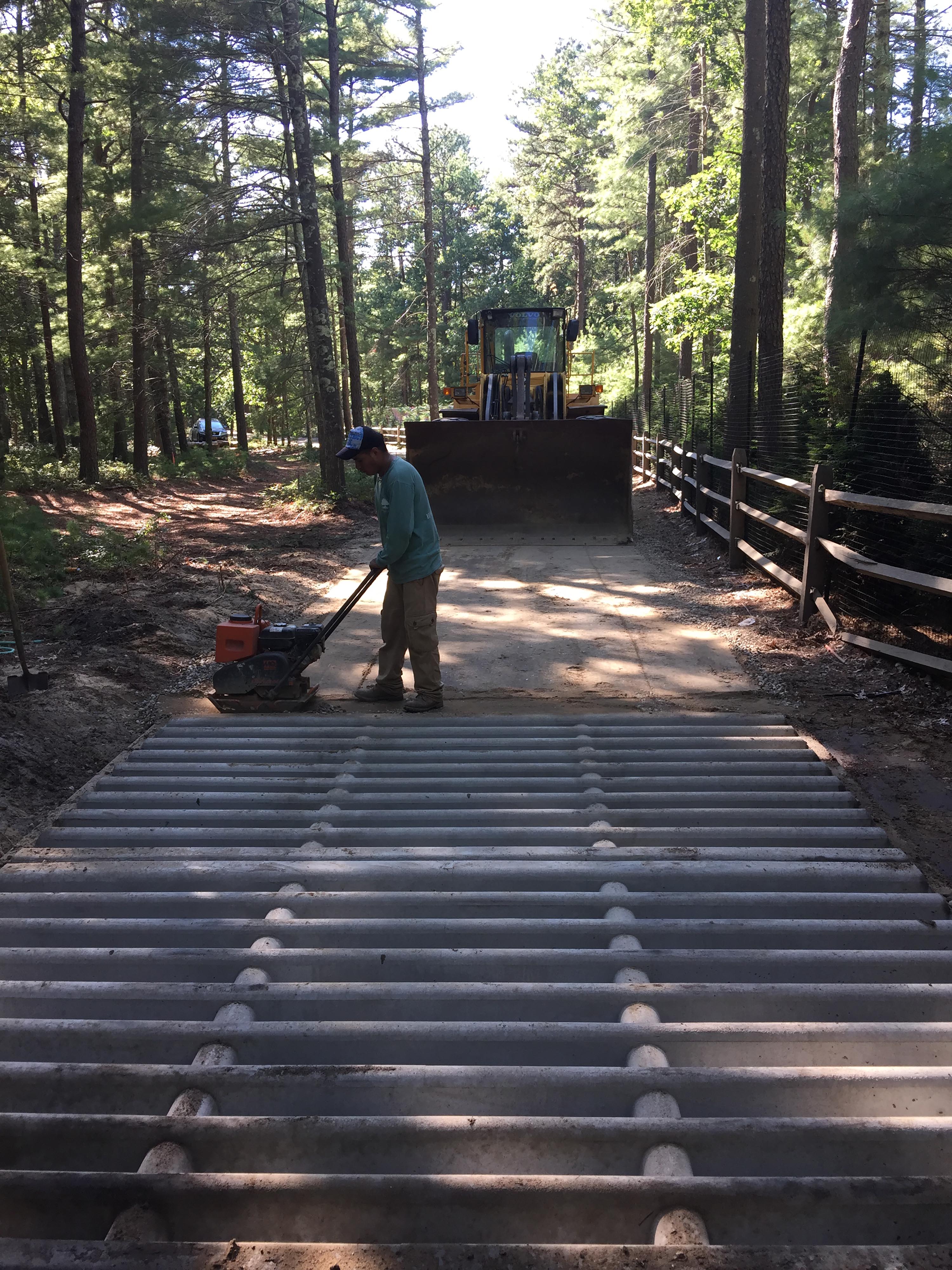
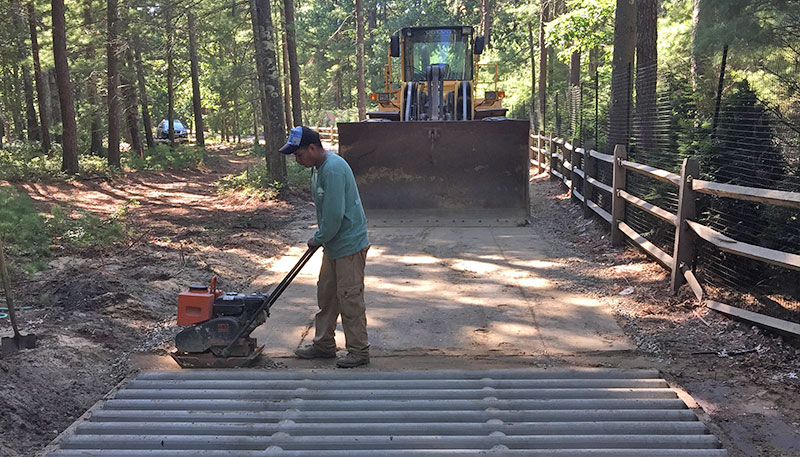
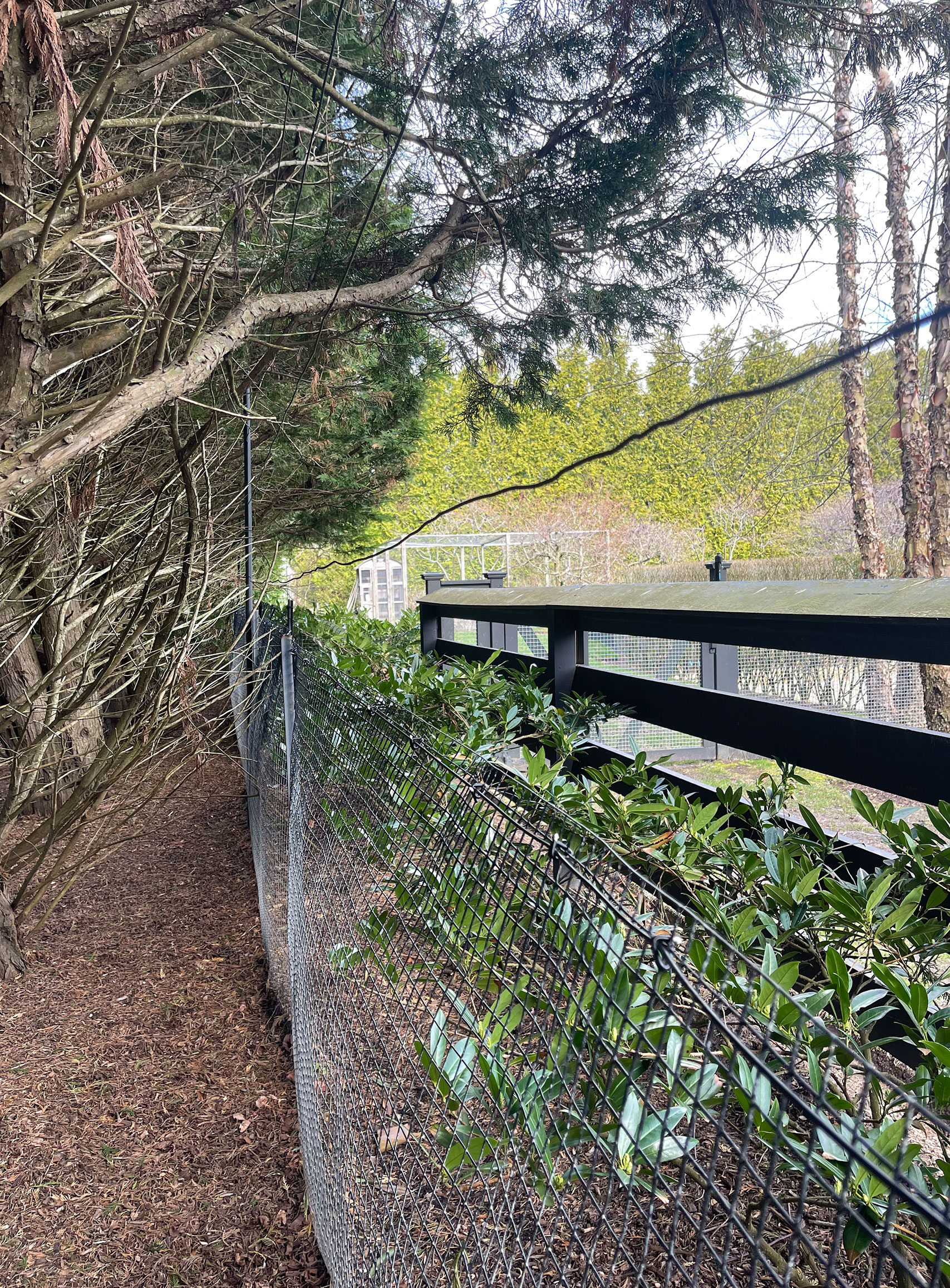
The standard for deer fencing on the East End is seven to eight feet in height — eight feet for larger properties or areas with heavy pressure. We use natural cedar posts set at appropriate intervals, tensioned metal fencing installed with our dedicated machine, and careful attention to all the points where fence lines change direction, meet structures, or transition across grade changes. Driveway openings that need to remain accessible are handled with cattle grates — recessed steel or concrete barriers set flush in the driveway surface that deer will not cross. Concrete grates are the more economical option; custom steel grates are a permanent installation that will outlast the property. For clients who need gates, we work with trusted local gate specialists who handle the mechanical and security components. The fencing itself is ours to install; the gate hardware and electronics are theirs to do right.
Step 3: Strategic Planting Design
Fencing is the primary defense, but the plantings directly on and near the perimeter matter as well. Certain species act as an invitation — privet in particular is a preferred food source and should not be planted along fence lines. Others are more reliably avoided, though nothing on the East End is truly deer-proof. We evaluate what is planted at and near the perimeter and makes specific recommendations to layer in less-preferred species. One example that surprises many homeowners: arborvitae is a reliable privacy screen that deer largely ignore in summer, but they actively target it in winter when other food sources thin out. Placement relative to the fence line, and the need for a seasonal spray program, both factor into how that screening performs year-round. Holly is another nuanced case — deer avoid the mature, prickly leaves, but they will systematically pick every new tender leaf bud in spring, working around the thorns to get at the soft growth. Knowing when to spray, and what to spray for, is not guesswork. It is a function of understanding the plant material and the animal.
Step 4: Deer Behavior Deterrence
For established plantings that cannot be moved or replaced, and for perimeter areas that need an additional layer of protection, we design and manage a deer repellent spray program. Most of the products we use are organic-based — cedar oil, egg-based formulations — and are applied on a schedule calibrated to the property and the season. The critical factor that most clients don’t know about: deer acclimate. A spray program that works well for the first two years will gradually lose effectiveness as deer grow accustomed to the scent. We track our spray history by property and proactively rotate formulations on a roughly two-year cycle, before the effectiveness drops off and before any damage occurs. We also strategically recommend motion-activated lighting in known pressure zones — another deterrent that is most effective when positioned thoughtfully rather than placed at random.
Step 5: Active Deer Management
The best deer management system is one where trained eyes are on the property regularly. Clients enrolled in our 12-month maintenance program have a crew on site every week throughout the season. That crew is trained to notice what changes: a section of fence damaged by a fallen branch after a storm, a new entry point created because a neighbor’s property change altered where the herd is coming from, a plant that was untouched last year that is now being targeted. Catching these things early is the difference between a quick repair and a significant plant loss. We document what we see and communicate proactively rather than waiting to be asked.
Step 6: Rapid Response & Recovery
When deer get in — and at some point, on some properties, they will — the response has to be fast. The Hampton Rustic team is available for same-day response when deer are on the property. That includes guiding mature deer off the property through the driveway, as well as safely handling the fawns that squeeze under fencing in areas adjacent to farm fields or nature preserves. Young deer that get under the fence line are wrapped in burlap and carried off the property by hand — a calm, low-stress removal that gets the animal out without injury. Following any deer intrusion, we assess what allowed it to happen: a gap at grade, a fence section under tension, a point where small deer can push underneath. Where needed, we add a steel rabbit-mesh layer along the base of the deer fencing, dug down twelve inches into the soil and fastened appropriately to the existing structure. In some cases, this is done proactively along sections adjacent to heavy pressure zones.