

PRIVATE GOLF COURSE CONSTRUCTION
On the East End of Long Island, a private golf course or putting green isn’t a novelty — it’s an extension of a lifestyle. For the discerning homeowners who call the Hamptons home, a well-executed private green is a deeply personal amenity: a place to sharpen a game, host informal competitions, or simply enjoy the quiet discipline of the sport on your own terms.
But building one correctly is among the most technically demanding work in residential landscaping. Beneath every pristine green lies an engineered subsurface system — layers of gravel, fabric, sand, and precision-selected turf — that must be excavated, graded, drained, and sculpted to exacting tolerances. Do it right, and you have a feature that performs and endures for decades. Cut corners, and settling, drainage failure, or turf deterioration will require costly reconstruction.
At Hampton Rustic Landscapes, our team brings more than twenty years of site development expertise to every golf course and putting green project. Working in close partnership with professional golf course designers — including the team at The Bridge — Hampton Rustic has successfully constructed full multi-hole courses and private putting greens across the East End’s most demanding properties. What we build, we build to last.
The Hampton Rustic Difference
Matt Stengel began his career under the mentorship of a respected local landscape expert, learning the fundamentals of specimen tree moving at age 22. Over the subsequent twenty-plus years, he has continuously refined these skills, developing proprietary techniques and tackling increasingly challenging moves. Each project has added to our collective knowledge—understanding root systems, mastering the biomechanics of large trees, perfecting timing and methodology, and learning which species transplant successfully and which prove more temperamental.
This isn’t work you learn from a manual or weekend seminar. It’s knowledge gained through decades of actually moving trees, problem-solving unexpected challenges, and refining techniques based on long-term survival rates. When we move a specimen tree, we’re drawing on hundreds of previous moves—knowledge that simply cannot be rushed or replicated.
- Twenty Years of Site Development Expertise. Golf course construction is, at its core, a precision site work project. Hampton Rustic’s decades of hands-on grading, drainage, and sub-base work translate directly to the quality of what gets built. The foundation of every green we install is engineered with the same rigor we apply to full landscape installations.
- Laser-Guided Precision Throughout. Our team uses a transit laser at every stage of the build — from initial excavation through sub-base installation — to verify elevations, confirm contours, and ensure that every surface drains and performs exactly as designed. On a project with variable terrain and multiple green elevations, this level of measurement discipline is non-negotiable.
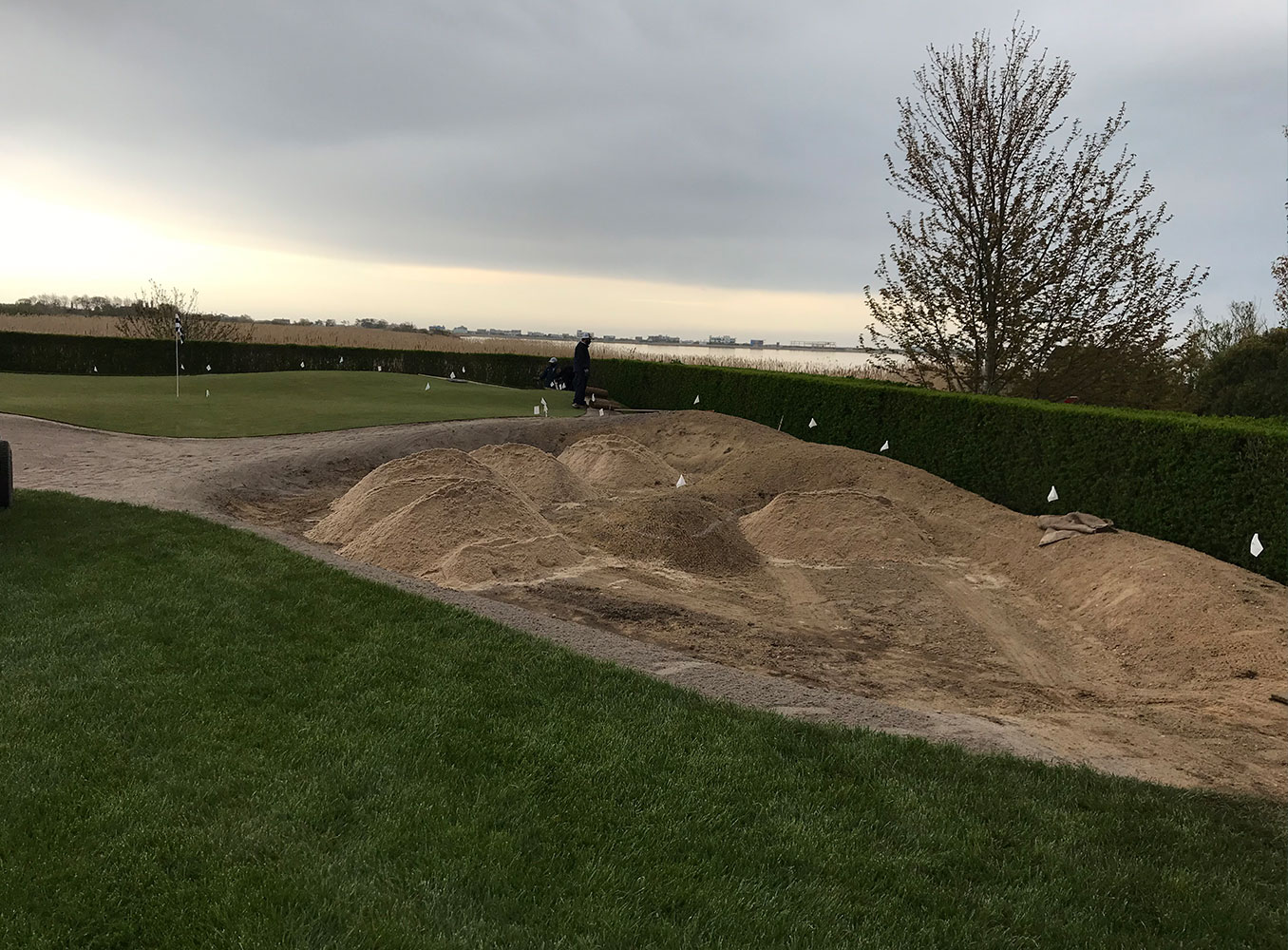
- Hand-Sculpted Subsurface Construction. The sand layer above the gravel base isn’t poured and forgotten. Our crews sculpt it by hand using a system of wooden stakes set to precise heights, raking and sifting the material until every contour, pitch, and roll matches the design intent. This is detail work that cannot be rushed or mechanized.
- Partnership with Trusted Golf Course Professionals. For full-course construction, Hampton Rustic works closely with professional golf course designers. We serve as the construction contractor — executing the drainage, sub-base, sculpting, and turf installation — while design experts determine layout, hole configuration, and technical difficulty. This collaboration produces results that rival professional-grade facilities.
- Built Right the First Time. The cost of redoing a poorly constructed green — excavating failing drainage, removing settled sub-base, relaying turf — can equal or exceed the original project cost. The Hampton Rustic approach prioritizes getting the foundation right from the start, so the green performs as intended for years without requiring renovation.
Full Course Construction vs. Private Putting Greens
Not every golf project looks the same, and the first step in any consultation is understanding what you actually want to build — and why.
Full Multi-Hole Private Courses
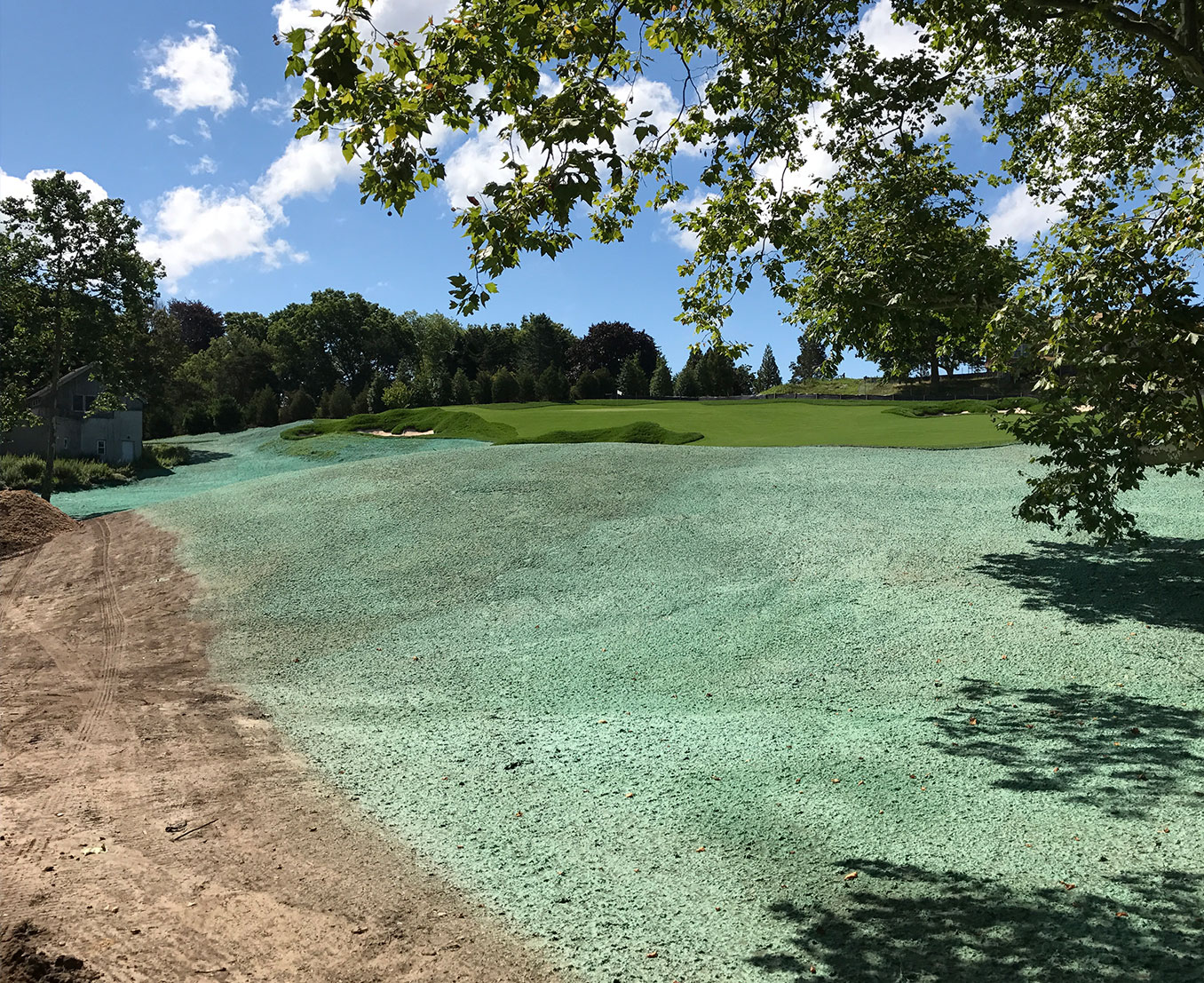
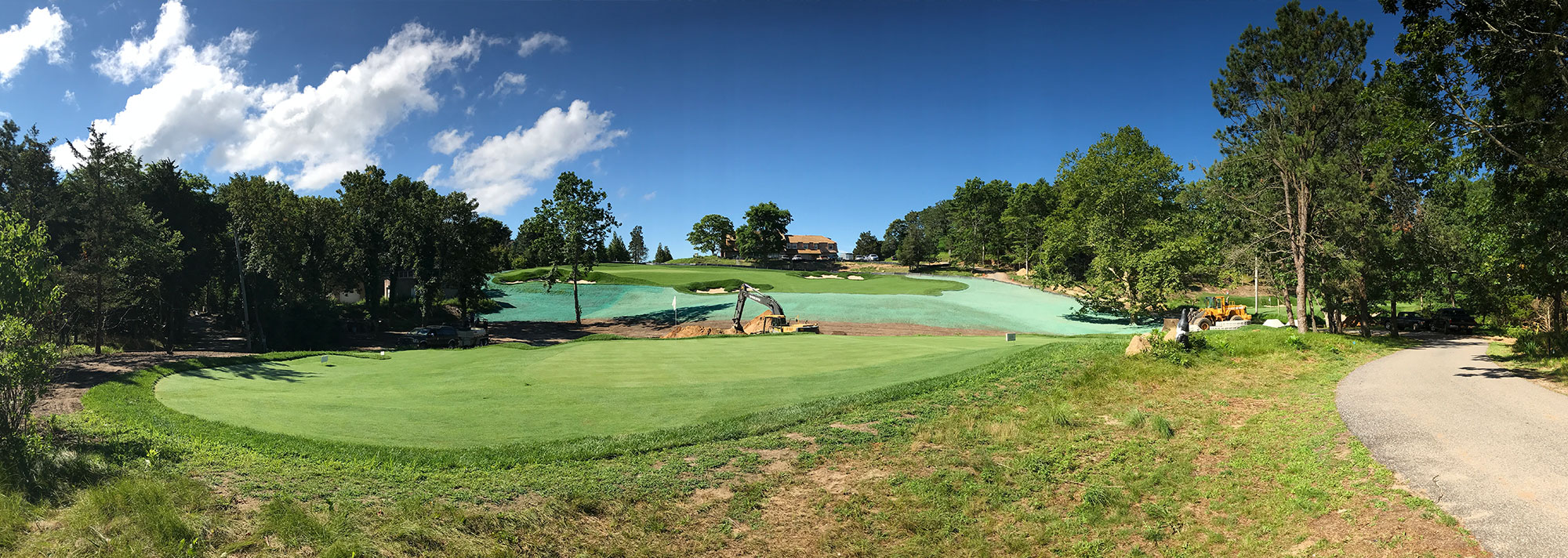
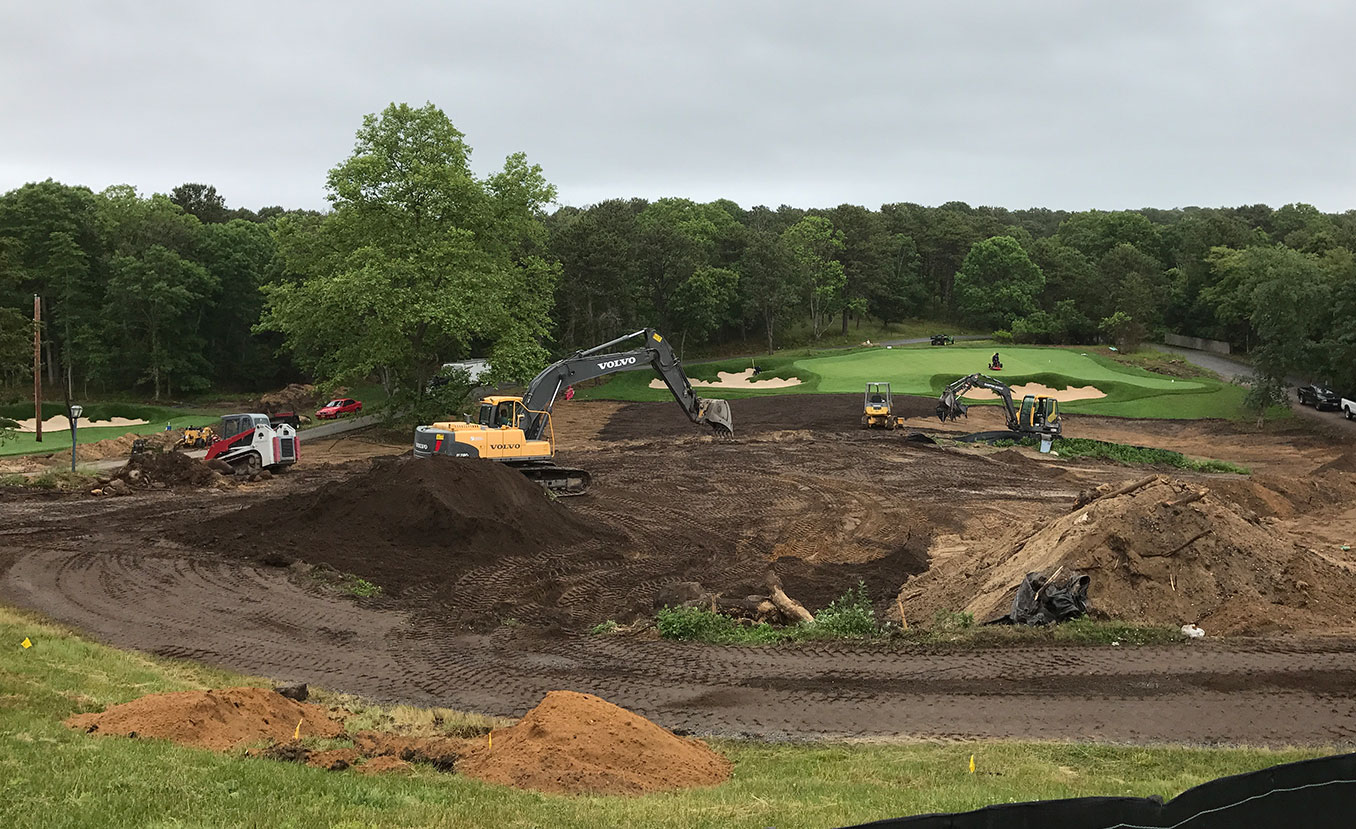
Hampton Rustic has built private courses encompassing nearly two acres with multiple holes, tee boxes, sand traps, and significant grade changes. These projects are designed by professional golf course architects and executed by Hampton Rustic as the general contractor. The scope involves full excavation, engineered drainage systems, retaining walls, layered sub-base construction, specialty turf installation, and integrated irrigation — all coordinated across complex terrain.
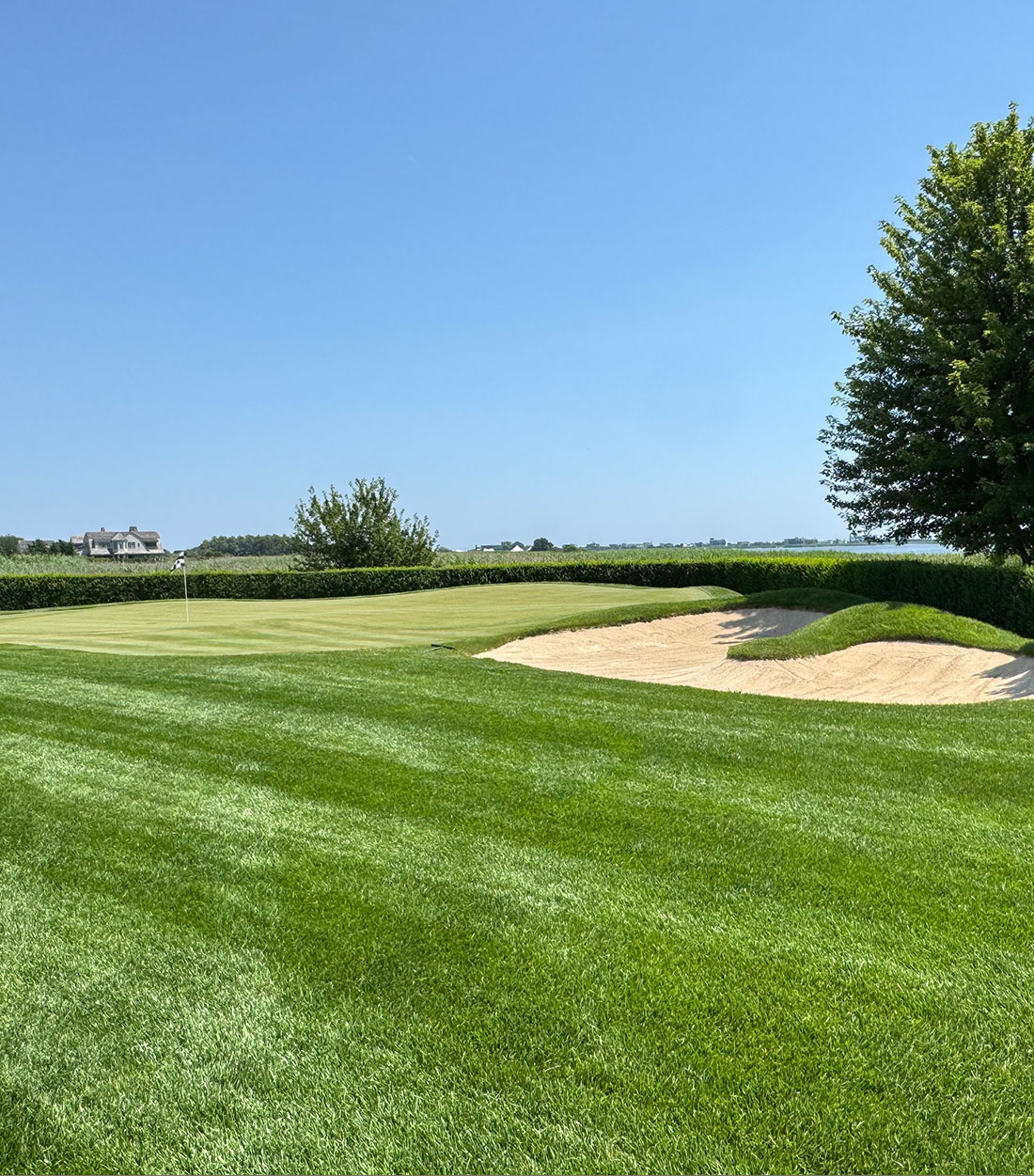
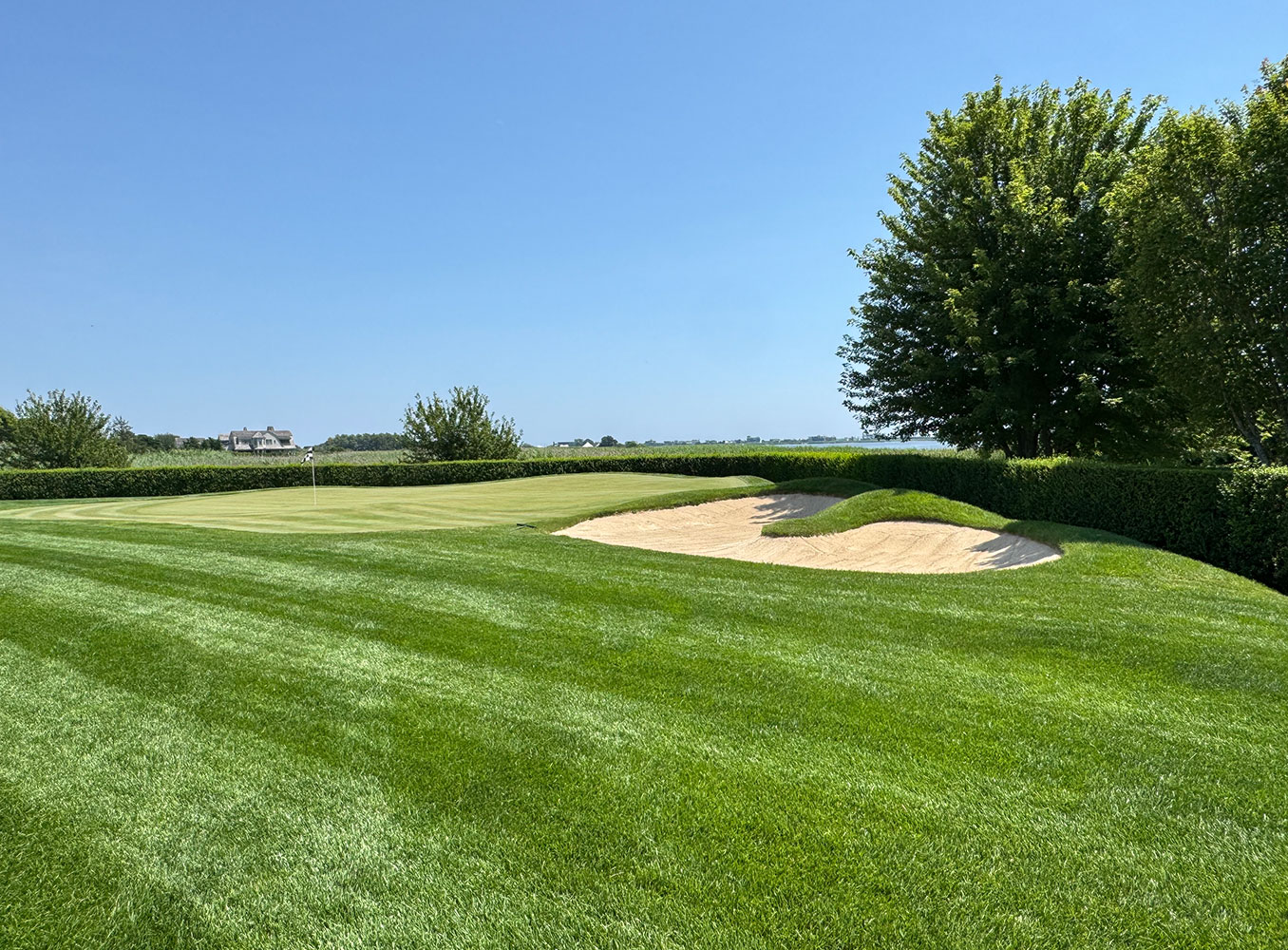
Our largest completed project involved a three-hole course set on a sloped estate with views of Shinnecock Bay, where the greens wound down through the natural topography of the hillside. The scale and complexity of that build required Hampton Rustic to invest in specialty equipment purchased specifically for the project. The finished result was maintained post-installation by the golf course design team — a testament to the professional-grade quality of what was constructed
Private Putting Greens
Putting greens are the more common residential project, and they are highly personal. Before any design work begins, we work directly with the homeowner to understand the intended use:
- Practice and skill development. For golfers who play seriously and use their home green to maintain or improve their game, the layout can be tailored to replicate challenging conditions — specific breaks, elevation changes, or even the feel of a hole on a course the client plays regularly.
- Recreation and entertaining. For families, guests, and informal play, a putting green can be designed for fun and accessibility — a beautifully integrated landscape feature that gets used and enjoyed without requiring a low handicap to appreciate.
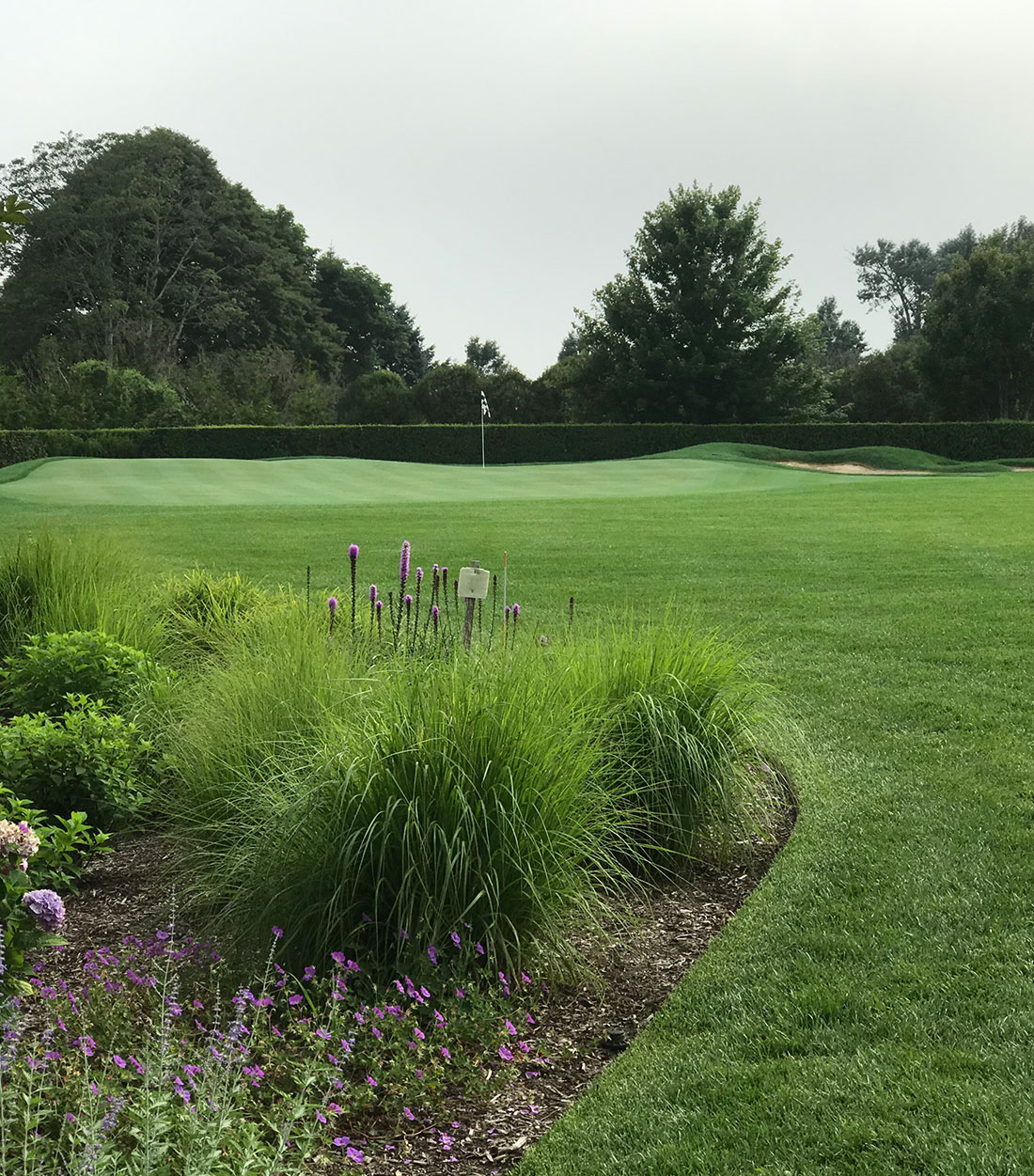
Placement is equally thoughtful. We evaluate sight lines from the home, patio, and pool areas, sun and wind exposure, seasonal conditions, and how the green will integrate with surrounding plantings and outdoor living spaces. The result should feel like a natural feature of the landscape — subtle sculpted mounding and elevation changes that blend in rather than stand apart.
The Science of the Subsurface: How a Golf Green Is Built
The quality of a private golf green is determined almost entirely by what you can’t see. The visible turf is the final layer of a carefully engineered base system, and every layer below it has a specific function.
- Gravel Base (12 inches). The foundation layer is twelve inches of compacted gravel, which provides structural stability and serves as the primary drainage medium. Without adequate gravel depth, the green is vulnerable to settling and poor drainage — two of the most common failure points in poorly constructed installations.
- Landscape Fabric. A layer of landscape fabric is installed above the gravel to prevent migration of the sand layer downward into the stone over time. This separation is critical to maintaining the integrity of the sub-base through seasonal freeze-thaw cycles and years of use.
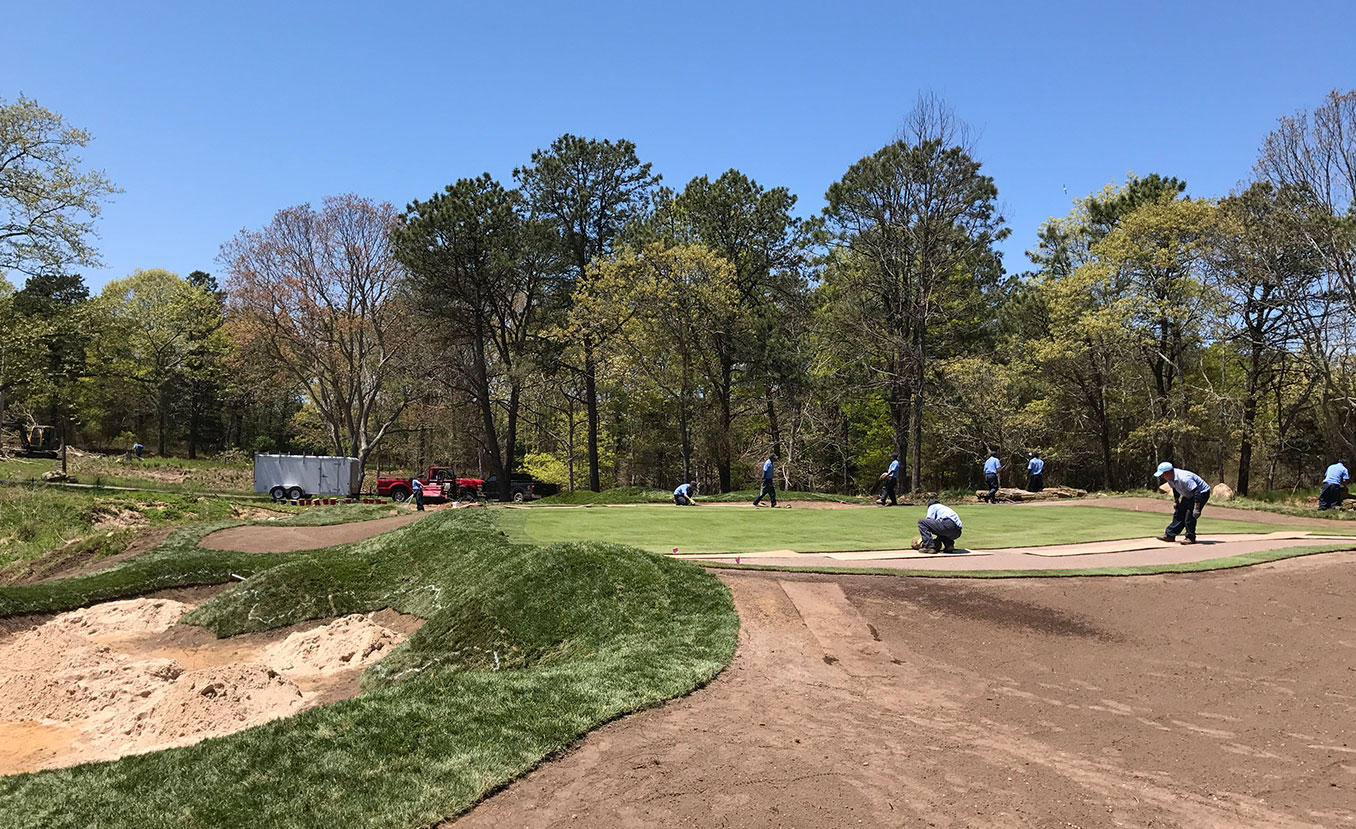
- Sand and Organics Layer (15 to 18 inches). Above the fabric is a deep bed of sand blended with a smaller proportion of organic material. This layer is where the sculpting happens. Using a system of wooden stakes set to precise heights, our crew works by hand — raking, sifting, and shaping — until the surface achieves the exact contours, pitch, and undulation specified in the design. This is painstaking work, and it cannot be shortcut.
- Bentgrass Turf. The playing surface of the putting green is Bentgrass — a fine-bladed, dense variety grown specifically for golf applications. It is installed from seed or sod and mowed to extremely tight heights, creating the firm, uniform surface that allows for consistent ball roll. Bentgrass is not interchangeable with standard lawn turf; it requires its own care regimen and performs best under conditions specific to golf green management.
Tee Boxes
Tee boxes use the same layered sub-base system as putting greens but are surfaced with Kentucky Bluegrass — a more resilient turf variety that can be mowed to different heights depending on the intended shot and player preference. Kentucky Bluegrass is installed from seed or sod and maintains a firmer, more durable playing surface suited to the repeated foot traffic and club contact of a tee area.
Sand Traps (Bunkers)
Sand traps on a private golf course are not filled with ordinary sand. Bunker sand has a higher silica content than standard construction or beach sand, which gives it the durability, quick-draining properties, and firmness necessary for golf play — ensuring balls land and sit predictably rather than sinking into soft material. Bunker sand is typically bordered by Kentucky Bluegrass, which provides a clean visual contrast and a defined edge to the hazard.
Drainage and Irrigation
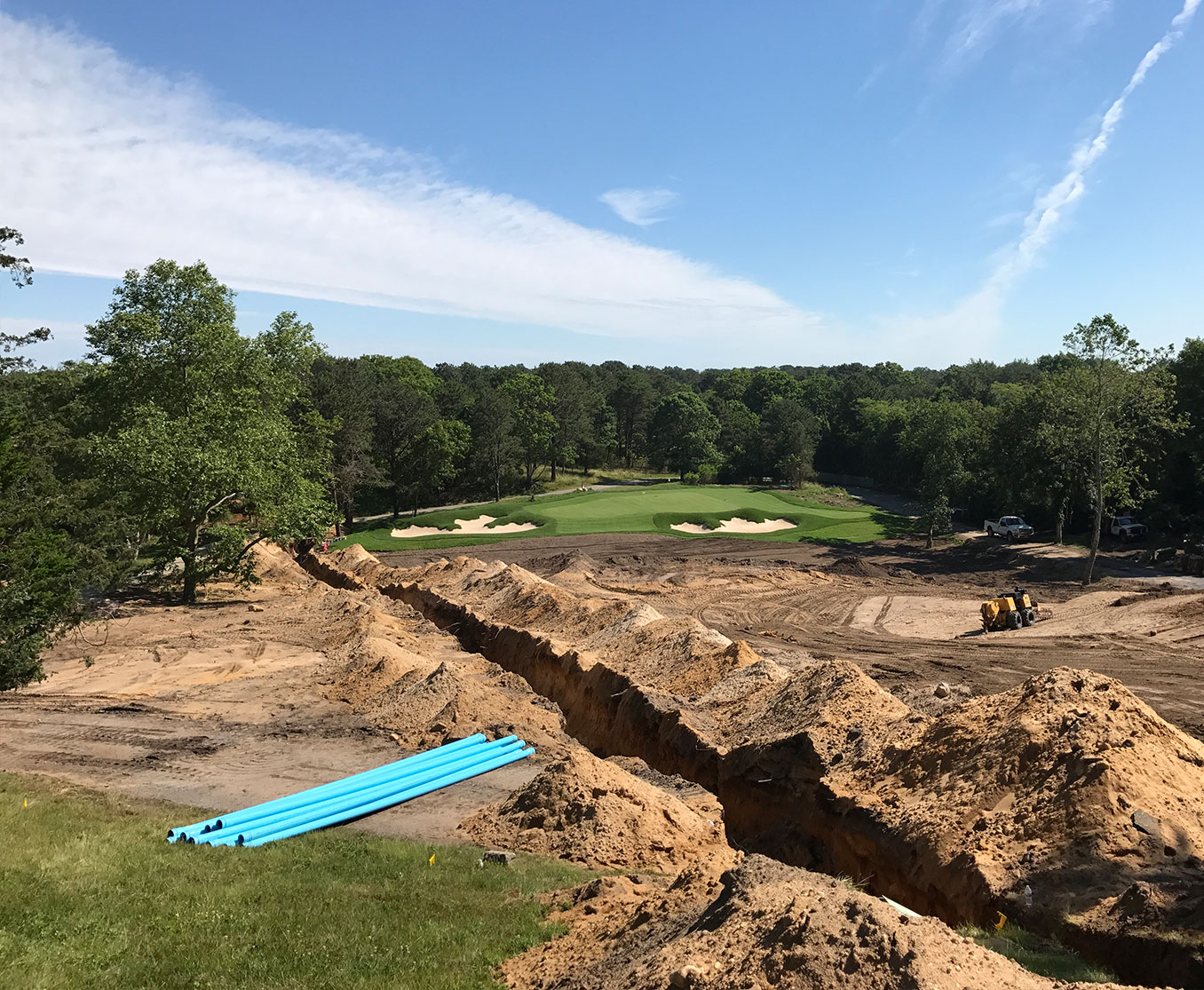
Proper drainage is not a secondary consideration in golf green construction — it is one of the primary design criteria. Water that pools on or beneath the playing surface will rapidly deteriorate the turf and compromise the structural integrity of the sub-base.
On sloped or multi-elevation properties, this is especially complex. Our team uses our transit laser continuously throughout the build to verify that drainage is moving in the correct direction at every grade change, and that runoff from the green and tee areas is directed away from the playing surfaces through the drainage system rather than across them.
Irrigation for putting greens is handled through a dedicated zone within the property’s irrigation system — one that operates independently from lawn and planting bed zones. The heads are positioned around the perimeter of the green rather than within it, delivering water by reach rather than direct spray. The watering schedule for a golf green is distinct from the rest of the property and is calibrated and monitored by our crew to meet the specific needs of the turf.
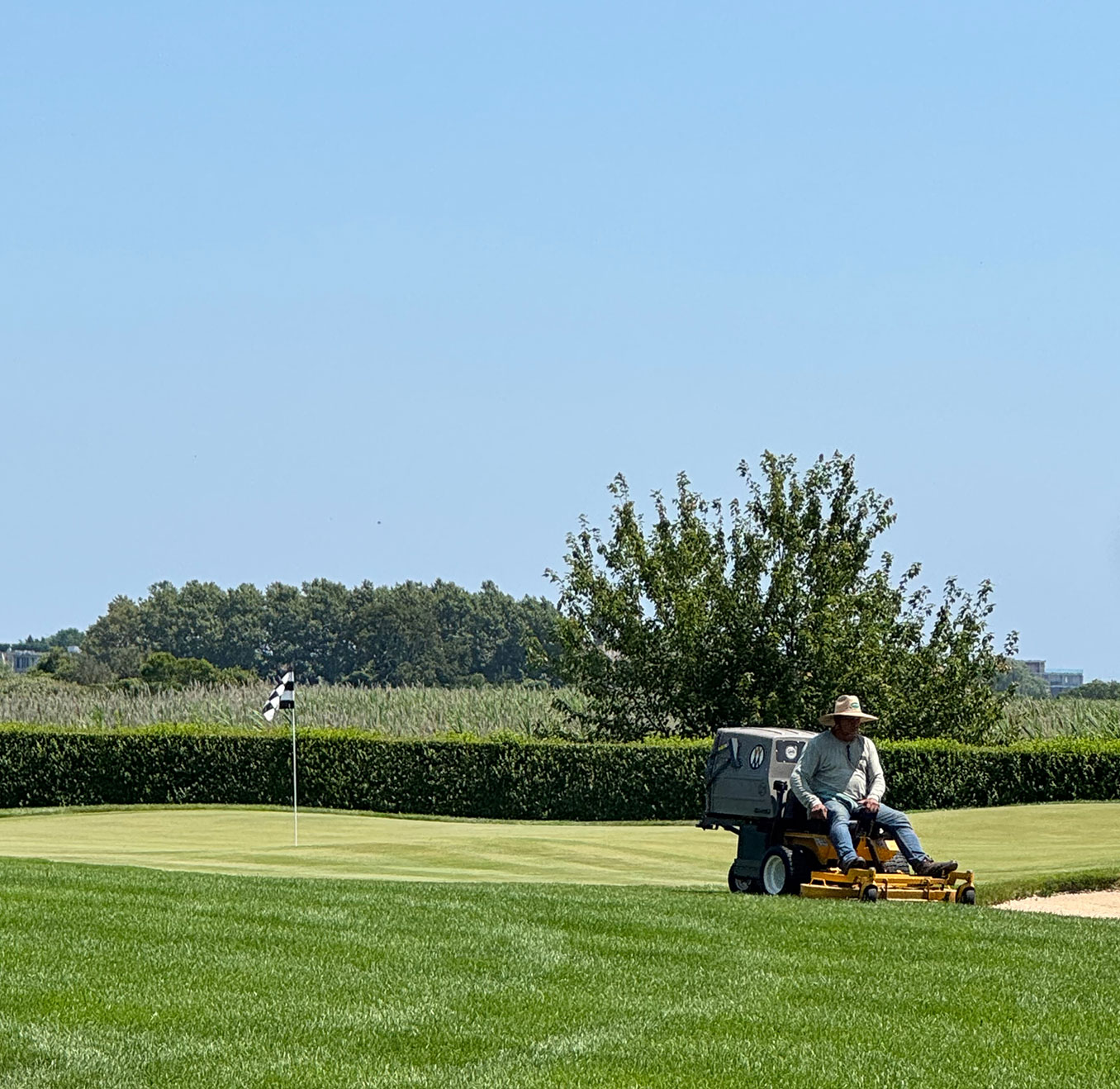
Understanding Maintenance Requirements
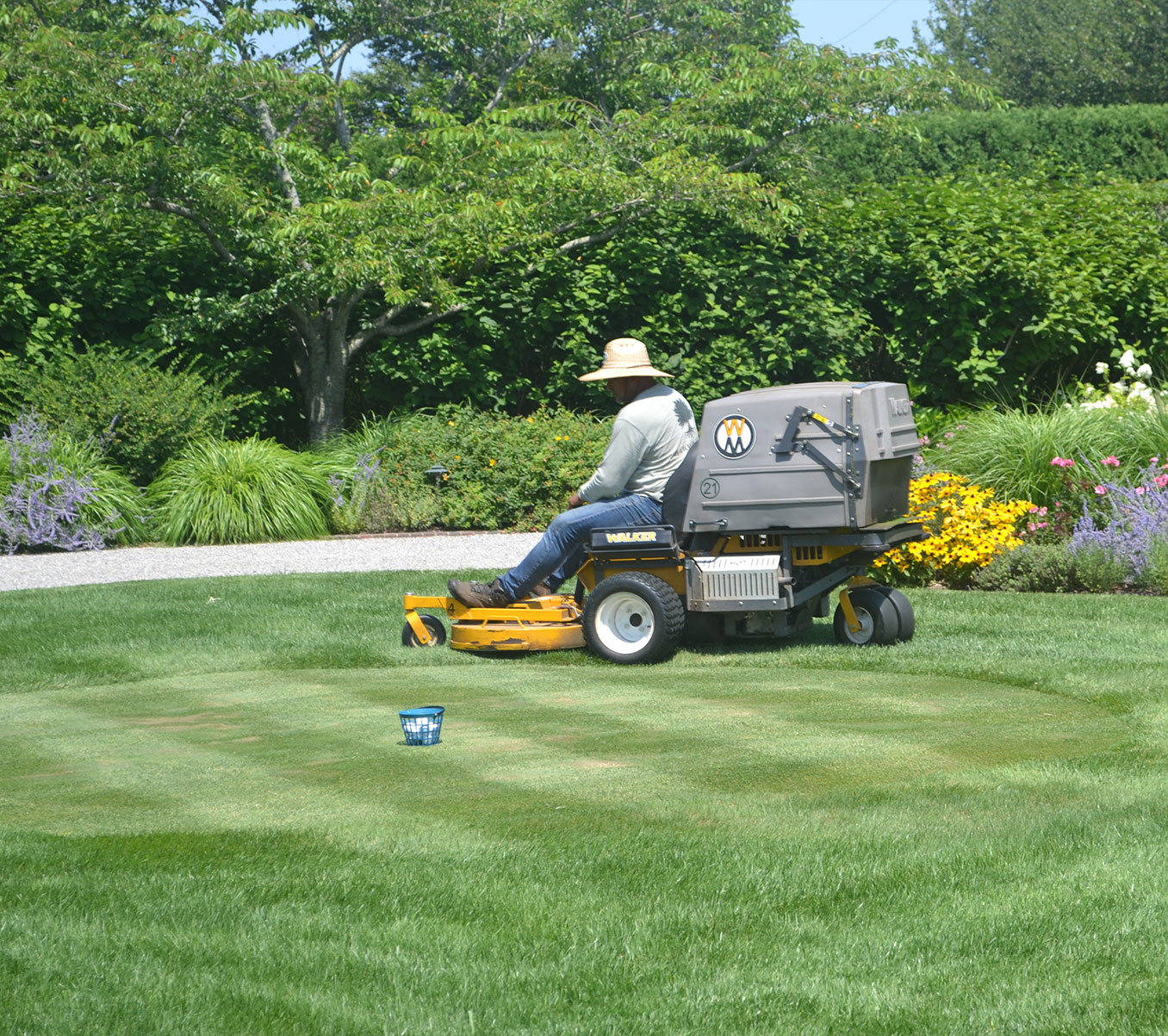
A private putting green or golf course is a high-maintenance feature by nature. Bentgrass in particular requires consistent, expert care to perform well — and without it, the turf will deteriorate quickly. Homeowners considering this investment should understand what ongoing care involves:
- Mowing every day or every other day.
- Watering on a daily basis, calibrated to conditions.
- Fertilizing on a weekly schedule.
- Continuous monitoring for disease, stress, and drainage issues.
Because of the specialized knowledge and licensing required to maintain golf-grade turf, Hampton Rustic does not provide ongoing green and tee box maintenance. We build the foundation, install the turf, and commission the irrigation — but post-installation care of the playing surfaces is handled by specialized turf management professionals. For large-scale projects, we can coordinate directly with the golf course design and management partners we work with during construction.
This transparency is part of how we operate. We would rather set accurate expectations at the outset than leave a client unprepared for what their new feature requires.
Why the Foundation Is Everything
Unlike a lawn or a planting bed, a golf green cannot be maintained through the surface alone. If the subsurface is improperly graded, inadequately drained, or built on an unstable base, the problems that follow — settling, waterlogging, turf deterioration — cannot be corrected without excavating the entire installation and starting over.
We’ve seen what happens when a green is built without the right depth of gravel, without proper drainage routing, or without the precision grading that keeps water moving in the right direction. The turf fails. The base settles unevenly. And the repair cost is often comparable to the original project budget.
Our two decades of site development experience — the same knowledge that informs how we approach every drainage system and grading project at Hampton Rustic — is what separates a green that holds up from one that doesn’t. The artistry of the finished surface depends entirely on the discipline of the foundation beneath it.