

Spring Estate Readiness: A Seven-Step Guide for Hamptons Properties
FROM THE GARDEN
March along the East End has a particular quality that’s hard to name — it’s neither winter nor spring, but rather the charged, expectant space between the two. The low winter light still arrives at an angle, casting long shadows across lawns that look tired and matted from months under snow. The hedgerows haven’t moved yet. The garden beds are still quiet. And yet something is clearly shifting: the air carries a different weight, the soil is just beginning to yield underfoot, and if you walk the property in the early morning, you can sense the landscape gathering itself.
This in-between season is when the real work of spring begins — not in the beds, but in the planning. For estate owners and property managers across the Hamptons, March is the moment to take stock: What did winter leave behind? What needs attention before the first guests arrive in June? What will it take to bring this property back to its full expression after months of dormancy?
At Hampton Rustic, we’ve developed a seven-step process for exactly this question — a structured, seasonal transition that Matt and his team are moving through across our properties right now, this week, boots on the ground.
THE HAMPTON RUSTIC APPROACH
Every spring begins the same way, and it begins with careful observation. Before a single tool is lifted, Matt conducts a full property walkthrough — a post-winter assessment that covers the entire estate with a trained eye that most homeowners simply won’t have. This winter on the East End was a dynamic one, and the evidence is everywhere once you know what you’re looking for: broken branches and winter burn on evergreens, frost heave along bluestone pathways and terraces, salt damage at driveways and entry points, compaction and mold in lawn areas that sat under heavy snow cover, and signs of deer or pest activity in the plant beds. From this walkthrough, Matt develops a clear, prioritized plan for the season ahead — and it becomes the blueprint for everything that follows.
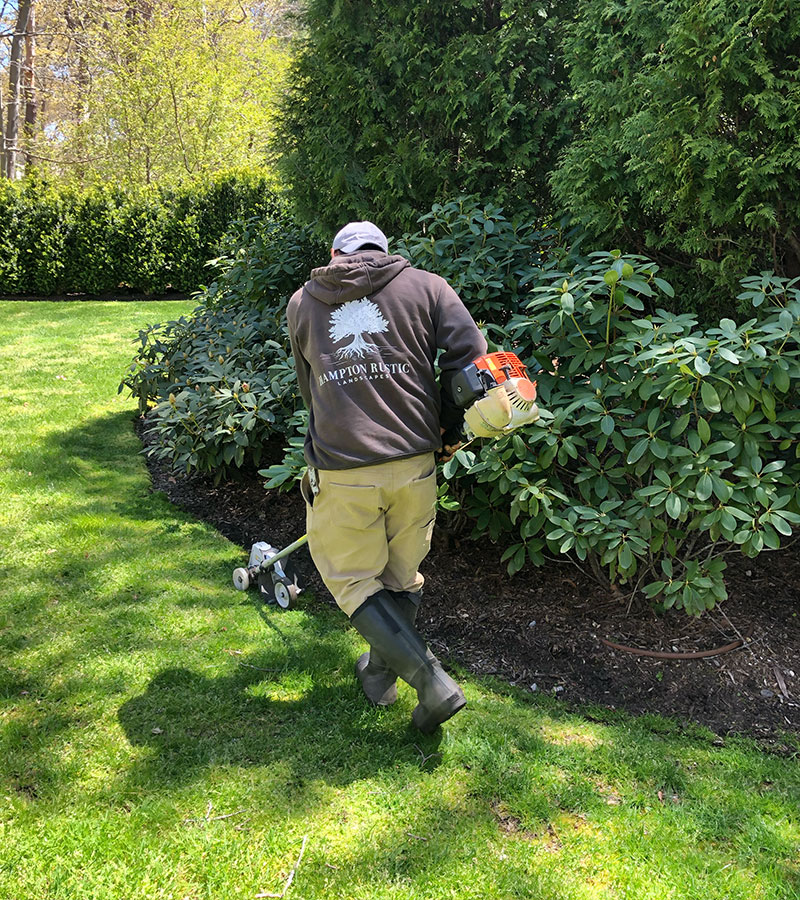
With that assessment in hand, the spring cleanup can begin in earnest. This is a precise and methodical process: removing fallen branches and winter debris, cutting back perennials and ornamental grasses that held their form through the cold, and clearing leaves from garden beds where they’ve settled over months. One of the most important steps here — and one that separates professional work from a basic cleanup crew — is the redefining of bed edging. Using specialized tools, Matt’s team cuts a clean, precise line where lawn or weeds have crept into plant beds over winter, resetting the property’s visual structure and giving new growth a clean canvas to emerge from.
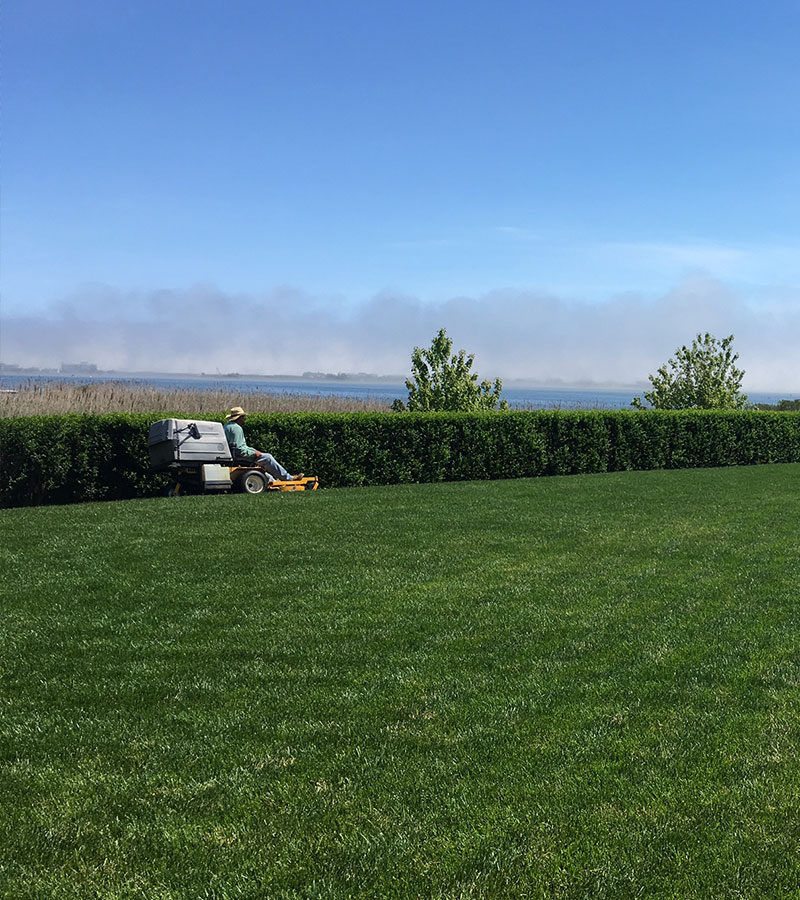
Tree, shrub, and hedge care comes next, and this is where the scale of Hamptons estates becomes apparent. Right now, Matt’s team is in the middle of trimming a hedge that runs 150 yards long and stands 40 feet wide — the kind of project that requires scaffolding, pole trimmers, and the kind of arm strength that only comes with years of this work. Structural pruning removes winter-damaged branches, reshapes foundation plantings, and addresses any disease or pest pressure that may have taken hold during the colder months. Appropriate fertilization follows, giving the plant material what it needs to come back strong.
The lawn itself requires its own focused attention. After winter dormancy, the turf needs to be coaxed back — a process that involves dethatching to remove dead growth, overseeding thin or bare areas, and early fertilization to support recovery. Matt’s team checks carefully for snow mold, compaction, and any fungal issues that can develop under prolonged cover. The goal is to have the lawn filling in fully before summer heat arrives and the stakes get higher.
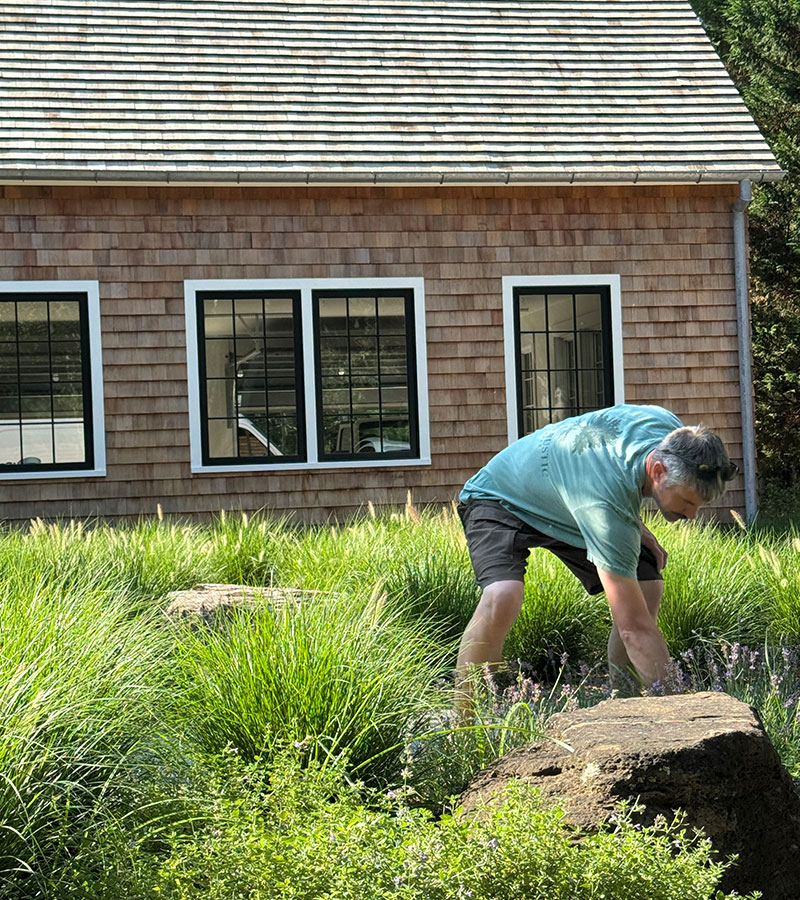
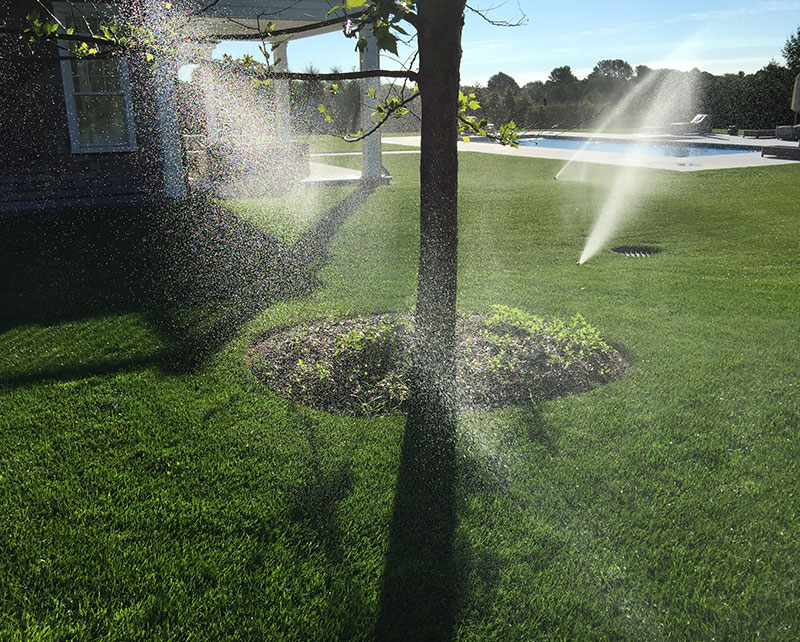
Irrigation startup is the step that most homeowners never see but would never want to skip. Repressurizing the lines, testing every head and drip zone, inspecting the control clocks, and clearing debris from irrigation boxes that have sat sealed since fall — this is detailed, careful work. A winter of freezing and thawing takes a toll on plastic piping, and cracks can appear in unexpected places; a mole tunneling along a line can do the same damage overnight. Matt marks and repairs minor issues in the field, and for anything more significant, he coordinates with trusted irrigation subcontractors to ensure the system is functioning efficiently and conserving water before the season opens.
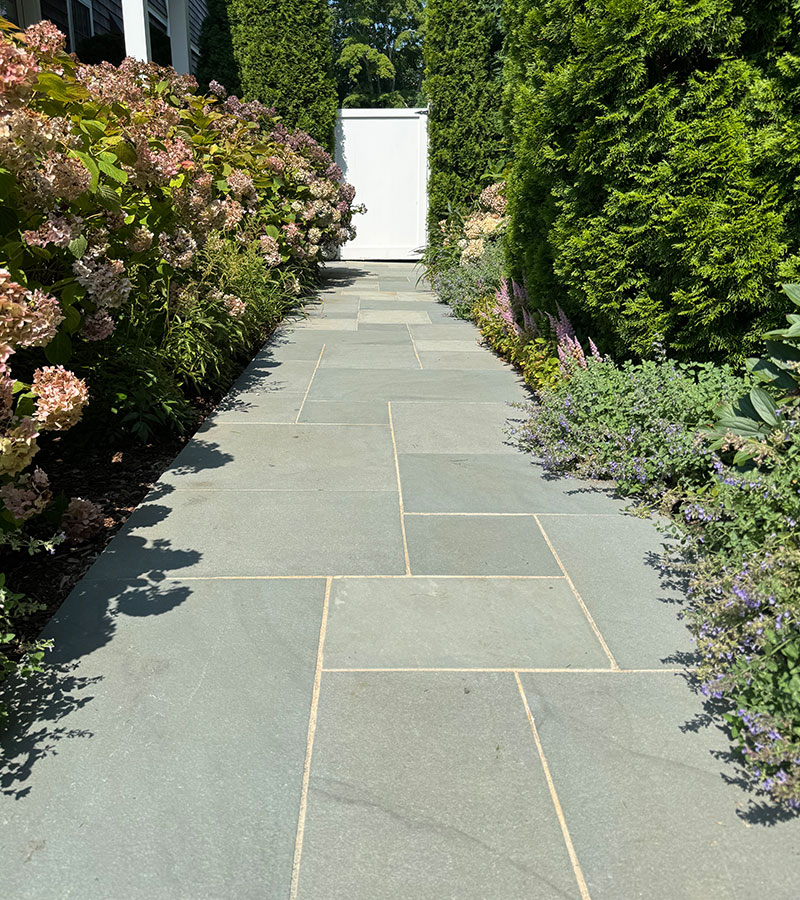
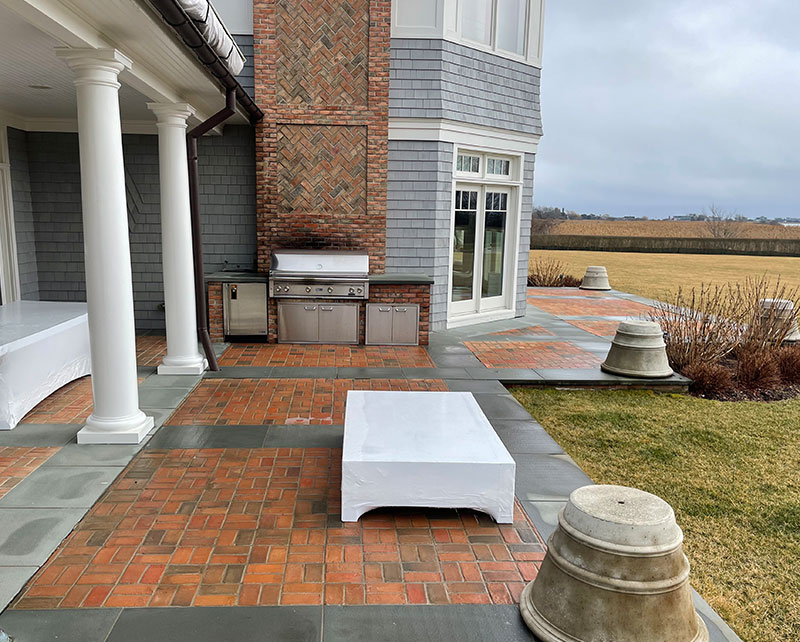
The estate’s outdoor living spaces receive their own thorough detailing. Patios, terraces, outdoor kitchens, stone pathways, and gravel drives all tend to develop a green mold coating over the course of a wet fall and winter. Matt’s team treats these surfaces with Simply Green — a non-toxic solution that eliminates the mold before power washing the stonework clean. It’s also when winter salt damage to bluestone and other hardscapes gets carefully documented, and homeowners are notified about any replacements or repairs that should be addressed before the season begins. For anything beyond routine maintenance — a cracked paver, a damaged fixture — Matt sends photos, a brief video, and an estimate directly to the property owner so decisions can be made quickly.
The final step — and Matt will tell you it might be the most important — is mulching. This is the finishing touch that pulls the entire property together, and it’s done last, after everything has been edged, pruned, trimmed, weeded, and prepared. Mulching is not as simple as it sounds. Hampton Rustic applies no more than two inches across all bed areas — a hard rule, because excess mulch creates the conditions for mold and fungus that can strangle the plants it’s meant to protect. One thing Matt won’t tolerate is what he calls a “mulch volcano” — the towering mound that builds up around the base of a tree when material is piled on season after season without care. If you spot a mulch volcano on a property, you’re looking at a sure sign that the landscaper doesn’t know what they’re doing. It’s one of the first things a trained eye catches, and it’s one of the easiest things to prevent.
What makes all seven of these steps work as a system is the people doing them. Matt brings more than 20 years of East End experience to every property walkthrough, and the crews who follow him have been with Hampton Rustic for 10, 15, sometimes 20 years. They know these properties intimately — the spots where water pools, the hedges that always come back fast, the family’s preferred setup for the lawn furniture. They’ve met the dogs, watched the kids grow up, and developed a sense of ownership and pride that is genuinely difficult to replicate when you’re cycling through crews. That accumulated knowledge is one of the most valuable things you’re getting when you work with a boutique firm — and it’s something you feel in the result every time.
OUR PICKS AROUND TOWN
This month, we’re highlighting a local institution that has become an essential part of how Hampton Rustic does the work — particularly when it comes to that all-important final step: Long Island Compost
Long Island Compost has earned its reputation over decades as the region’s trusted source for premium mulch and compost. Their production process is controlled and carefully maintained — keeping clean organic material separate from anything that would compromise the quality of the finished product. What arrives on your property is consistent, clean, and free of the weed seeds, plastic fragments, and contaminants you’d find in a discount bag of mulch from a big-box store. We’ve seen firsthand what cheap mulch introduces to a property — and spent many summer hours weeding it out. Quality material from a trusted local producer isn’t just a preference at Hampton Rustic; it’s a standard. For any Hamptons estate where the expectations are high and the maintenance investment is real, starting with the right mulch is simply the smarter long-term decision.