

The Jewelry of the Landscape: Building a Summer Tropical Container Program
FROM THE GARDEN
May in the Hamptons carries a particular kind of anticipation. The spring flowering is winding down, the gardens have found their footing, and everything turns now toward summer. On estates from East Hampton to North Haven, the question isn’t whether the season will be beautiful. It’s whether you’ve given yourself every possible opportunity to make it so.
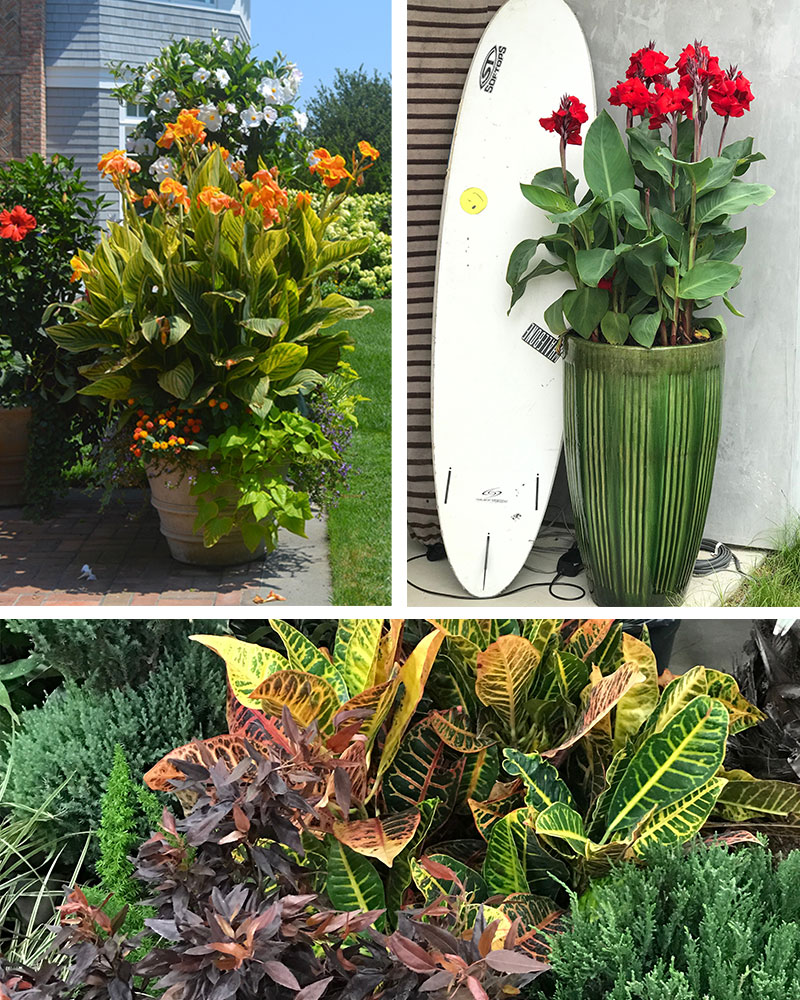
For many of our clients, that opportunity arrives in the form of a container. A well planted pot can transform a pool deck, an entryway, or a shaded terrace corner in a way that no in ground planting quite replicates. It’s immediate, sculptural, and when designed with care, absolutely lush
THE HAMPTON RUSTIC APPROACH
We think of pots as the jewelry of the landscape. The bones of a property, its hedging, perennial beds, and specimen trees, give an estate its character. The containers are where you get to play. And with tropicals, the palette expands dramatically: plants that couldn’t survive a Hamptons winter in the ground become possible, even spectacular, in the contained and curated environment of a well prepared pot.
Long Island sits in plant hardiness zones 6 and 7. Tropical species are zone 10 plants, native to places like Florida and the Caribbean, where warmth and moisture are a given. In our climate, they belong in a controlled setting, treated as the intentional seasonal planting they are: glorious for a summer, and changed out fresh each year. That temporary quality is part of the appeal. It means the program can evolve, and the design can surprise.
Starting with the Survey
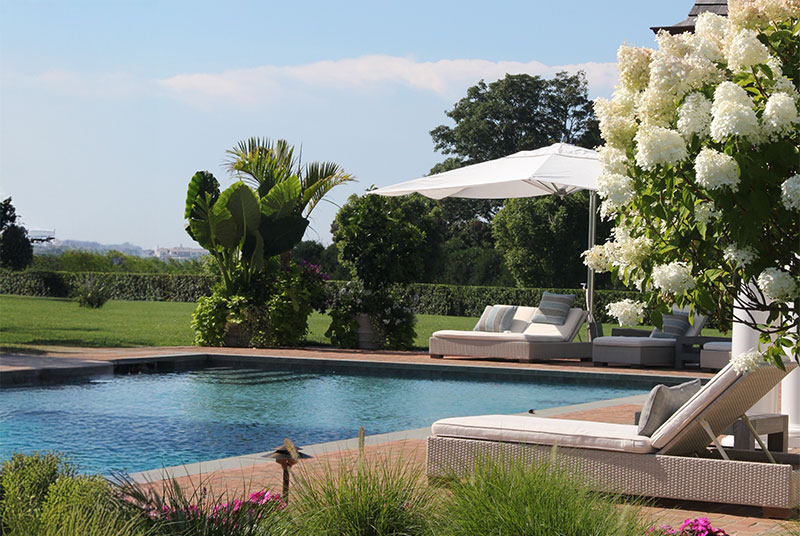
When the Hampton Rustic Team begins a new season’s container program, the first step is always the property survey. For returning clients, we maintain a full photograph inventory of every pot: its size, its position, its history. Each season each season can build from what worked. For new clients, we walk the property and considers placement from every angle: sun and shade patterns, proximity to entryways and pool areas, and wind exposure. A banana tree in a sheltered courtyard is a showstopper. That same tree on an exposed ocean side corner will have its leaves shredded within a week.
Radiant heat from stone and brick surfaces is another factor most people overlook. Dark materials absorb and release heat that can stress a root system or scorch trailing vines that brush the ground, something our team accounts for before a single plant is chosen.
Size, Scale, and Plant Selection
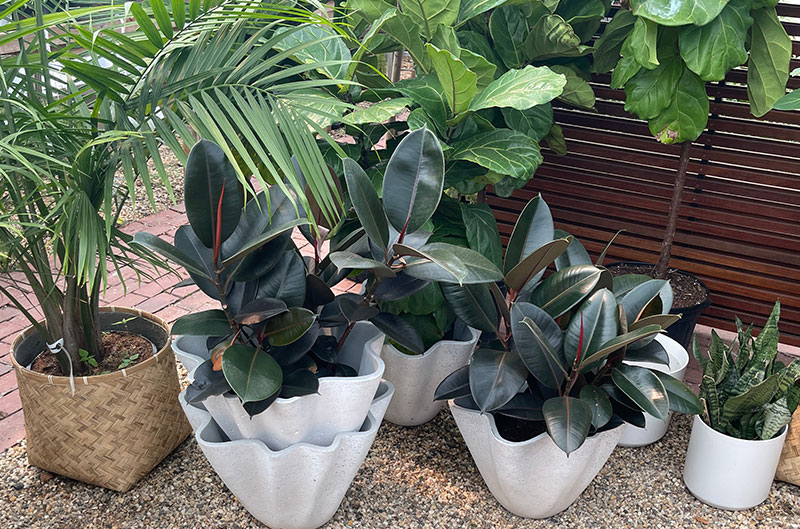
Once placement is mapped, we work with clients on size, scale, and level of complexity. Pots range from modest twelve-inch plantings tucked along patio corners up to forty-eight-inch statement vessels that anchor an entry or frame a pool house. Larger containers can even function as living dividers, creating soft separation between spaces without hard fencing or walls.
Pricing is based on height, variety, and the number of species in a pot. A single-species planting in a smaller container is straightforward and economical; a layered composition with five different varieties at varying heights and textures is a more significant investment and a more significant impact. Clients choose their level, and we build from there.
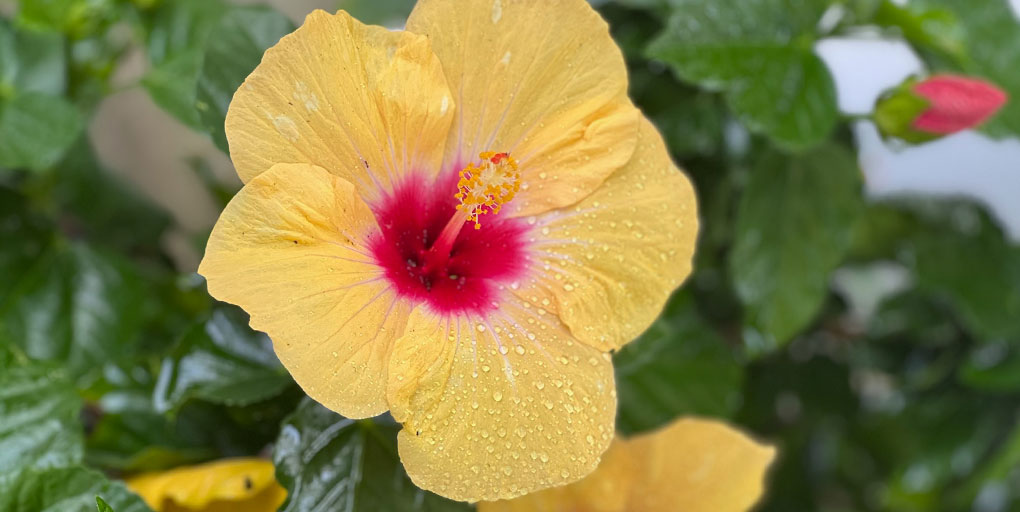
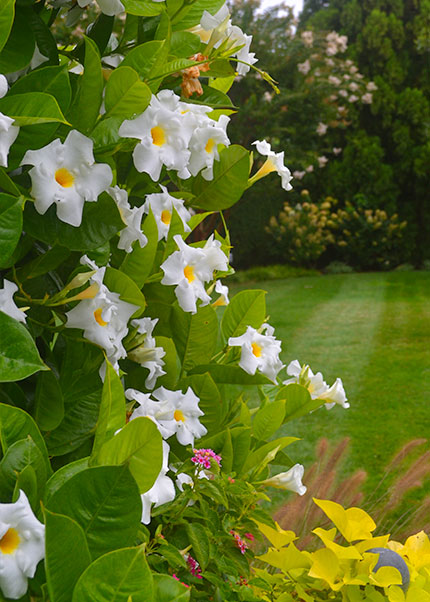
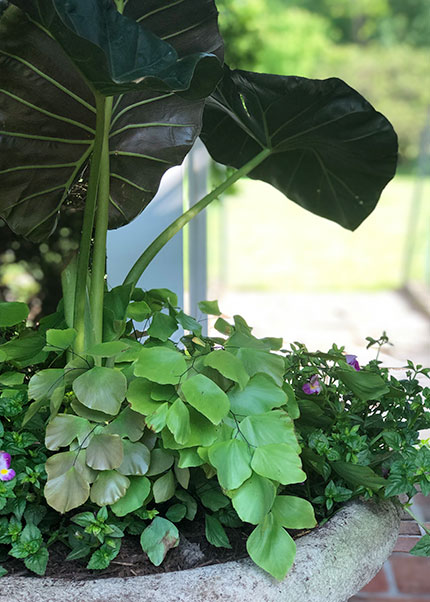
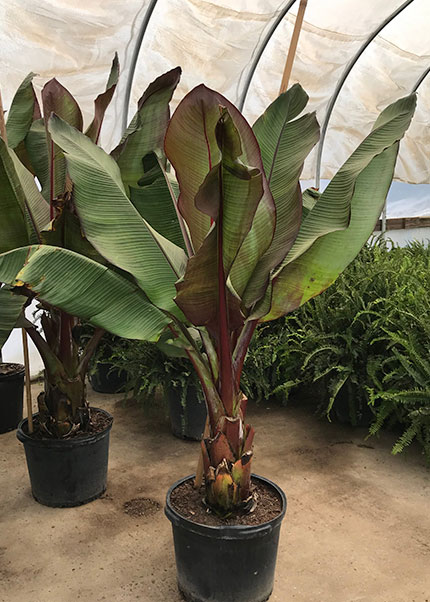
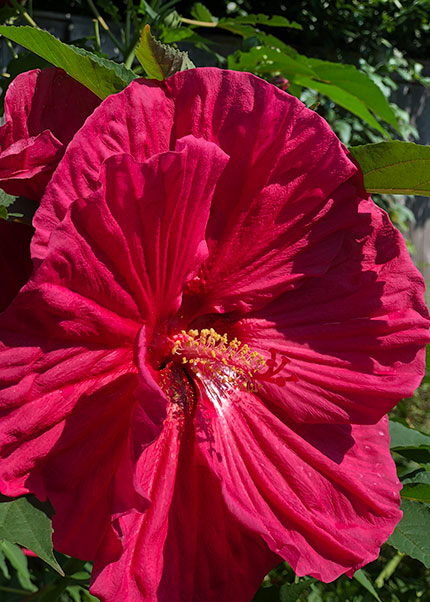
On the plant side, the Mandevilla vine is one of our most-requested tropicals year after year, available in pink, red, and white, elegantly trained up a spike and then sending shoots skyward through the season, nearly bulletproof. The Princess Flower has become a favorite in recent seasons as well: its silvery, textured leaves and vibrant purple blooms are striking, and because the spent flowers simply fall away on their own, it’s among the lowest maintenance tropicals we use. Banana trees and elephant ears bring dramatic scale and a genuine tropical presence, though they require more careful handling, both in transport and ongoing maintenance. And on the higher maintenance end, hibiscus and petunias are beautiful, but they need regular deadheading; skip it, and you’ll have staining on your stone from dropped blooms by late summer.
The honest conversation we have with every client is about maintenance preference. Understanding whether you want a set it and forget it program or are open to a more demanding composition determines the plant list from the start.
Drainage, Layering, and Irrigation
The drainage system is where Hampton Rustic’s approach really shows. A large pot filled entirely with potting soil looks fine on the surface but creates poor aeration and water retention problems that stress roots and shorten bloom life. Our method begins with a layer of burlap at the base, followed by a deep fill of chunky pine bark nuggets, coarse open material that fills volume without compacting, then another layer of burlap, and finally the potting mix above. The system took years to refine, but it keeps root systems healthy and well aerated through the full heat of a Hamptons August.
Watering is the other place where the best intentions fall short. The combination of summer heat and the radiant warmth of stone terraces means tropical containers need consistent moisture, more than a housekeeper’s schedule or a weekend visit can reliably provide. Micro irrigation is the answer. If a property already has an irrigation system, wcan tie a dedicated drip line directly into it for a modest additional cost. Once it’s in, it runs on a quiet, steady schedule: not too wet, not too dry, just the even moisture tropical plants need to perform all season.
End of Season
When the property winds down in late September or October, our crews remove all plant material and bring it back to the shop for recycling. Pots are stored on site for winter, turned upside down in place or tucked into a shed or storage area as the client prefers. The whole program closes out cleanly, and resets fresh for the following year.
OUR PICKS AROUND TOWN
Buckley’s is one of the first stops Hampton Rustic makes at the start of every season when sourcing tropical material. Their garden center on Montauk Highway is open to the public and well worth a visit if you’re curious about what a summer container program might look like in person. (Their wholesale facility near East Hampton High School is trade only, and there’s actually someone posted at the gate all summer to make sure of it.) Their tropical selection is exceptional, and the Mandevilla vines in particular sell out early. If you’ve been thinking about them, don’t wait.
Buckley’s Flower Shop | 75 Montauk Highway, East Hampton (near Red Horse Market)